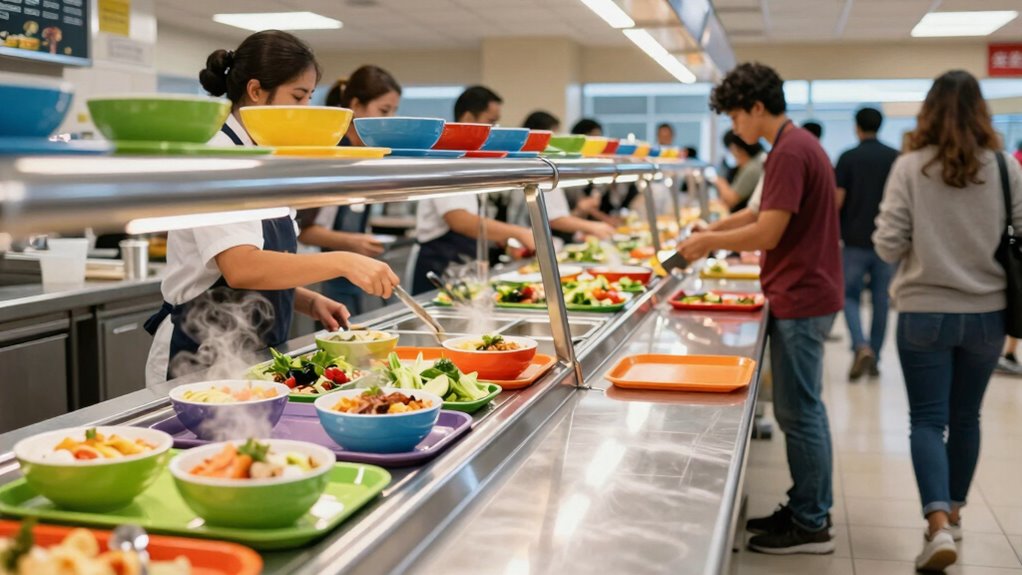

To build effective cafeteria flow with serving lines and tray slides, focus on creating a layout that guides customers smoothly from entry to meal pickup. Place tray slides strategically for easy accessibility and minimize congestion by organizing the space efficiently. Use attractive finishes and clear signage to enhance the atmosphere and encourage positive engagement. Thoughtful design, combined with proper spacing and layout, ensures quick service and a pleasant experience—keep exploring to discover how these principles come together seamlessly.

Get kitchen staples and gadgets delivered free with Prime
- Fast, free delivery on millions of items
- Prime Video, Amazon Music and more included
- Member-only deals all year
Key Takeaways
- Proper placement of tray slides ensures easy access and quick movement from kitchen to customer pickup area.
- Layout design guides smooth patron flow, minimizing congestion and bottlenecks during peak times.
- Clear signage and lighting enhance visibility, encouraging efficient customer navigation and interaction.
- Organized service zones optimize space utilization, supporting streamlined operations and quick service.
- Attractive finishes and cohesive design create an inviting atmosphere that improves customer perception and engagement.

Serving lines and tray slides are essential components in food service operations, streamlining the process from kitchen to customer. When you design these elements effectively, you not only improve efficiency but also influence the overall atmosphere of your space. The way your serving line is laid out impacts the kitchen aesthetics, creating a cohesive look that feels inviting and organized. A clean, well-maintained serving line with attractive finishes can elevate the entire dining environment, making customers feel more comfortable and engaged as they approach the tray slide. Remember, the visual appeal of your service area can directly affect customer engagement; a thoughtfully designed setup encourages guests to relax and enjoy their experience.
A well-designed serving line enhances aesthetics, comfort, and customer engagement, creating an inviting and organized dining experience.
The flow of your cafeteria depends heavily on how smoothly your serving line guides customers from entry to meal pickup. You want the layout to minimize congestion, which means considering the natural movement patterns of your patrons. When you plan the placement of tray slides, think about accessibility and convenience. Positioning these slides strategically ensures quick service and prevents bottlenecks, keeping the line moving at a steady pace. As customers proceed through the service process, a well-organized flow keeps frustrations low and satisfaction high. Additionally, understanding cafeteria flow and how patrons move through the space helps in designing a layout that maximizes both efficiency and comfort. Incorporating principles of space utilization can further optimize throughput and minimize waste of valuable space. Recognizing the importance of service area organization can lead to a more streamlined operation and improved customer experience. Ensuring that the layout supports a smooth customer journey can significantly enhance operational efficiency and satisfaction. Implementing these design principles also supports maintaining a clean and inviting environment, which is crucial for customer satisfaction.
Customer engagement is heightened when your serving line feels inviting and efficient. If your setup is cluttered or confusing, customers may feel disconnected or impatient. Conversely, when you incorporate clear signage, consistent lighting, and a visually appealing layout, you draw customers into the process and make them feel part of a well-orchestrated experience. Tray slides that are user-friendly and positioned for ease of use also foster interaction, making the transition from selection to pickup smooth and satisfying. When customers don’t have to struggle with their trays or navigate awkward pathways, they’re more likely to enjoy their overall experience and return. Moreover, a well-designed layout demonstrates professionalism and attention to detail, reinforcing a positive perception of your establishment.
As an affiliate, we earn on qualifying purchases.
Frequently Asked Questions
How Do You Customize Serving Line Layouts for Different Cafeteria Sizes?
You customize serving line layouts for different cafeteria sizes by focusing on layout flexibility and space optimization. You assess your available space and adjust the flow to minimize congestion, guaranteeing efficient service. Incorporate modular components that can be easily reconfigured, and prioritize compact arrangements for smaller areas. For larger cafeterias, expand the layout with multiple lines or stations. This approach ensures a smooth flow, regardless of size, maximizing efficiency and guest satisfaction.
What Materials Are Most Durable for Tray Slide Construction?
For durable tray slides, metal often outperforms plastic thanks to its material longevity and strength. Metal slides resist wear, warping, and breakage, ensuring years of reliable use. Plastic might be lightweight and inexpensive, but it’s more prone to cracks and damage over time. If you prioritize longevity and durability, you’ll want to choose sturdy metals like stainless steel, which withstands moisture and constant use, keeping your cafeteria flowing smoothly.
How Is Safety Ensured in Busy Cafeteria Serving Areas?
You guarantee safety in busy cafeteria serving areas by implementing strict food safety protocols and maintaining cleanliness to prevent contamination. Use clear signage and trained staff to manage crowd control effectively, guiding students smoothly through the line. Regularly inspect equipment for hazards, and organize the flow to minimize congestion. These steps help create a safe environment, reduce accidents, and keep food safety top of mind during busy service hours.
Can Serving Lines Be Adapted for Special Dietary Needs?
You can definitely adapt serving lines for special dietary needs, and it’s more common than you might think. By integrating nutritional accommodations and allergen considerations, you guarantee everyone gets safe, suitable options. You might set up separate sections or labels for gluten-free, nut-free, or vegan choices. This way, you’re actively making the cafeteria more inclusive, and the coincidence of thoughtful planning enhances everyone’s dining experience.
What Maintenance Is Required for Tray Slides Over Time?
You need to regularly perform tray slide maintenance to keep them functioning smoothly. This includes applying tray slide lubrication to reduce friction and prevent sticking. You should also conduct component inspection to identify any signs of wear or damage early. Addressing issues promptly helps avoid breakdowns and guarantees the slides operate efficiently, providing a seamless cafeteria flow. Regular maintenance keeps everything running smoothly and prolongs the life of your tray slides.
Conclusion
Think of serving lines and tray slides as the arteries of a cafeteria, keeping everything flowing smoothly. When these systems work seamlessly, dining becomes as effortless as a well-choreographed dance. You’ll notice how efficiently everyone moves, and the experience feels as satisfying as a perfectly plated meal. By understanding and maintaining these essential components, you create a welcoming space where students and staff alike can enjoy their time without a hitch.
NFL season / tailgating Picks
team gear
As an affiliate, we earn on qualifying purchases.