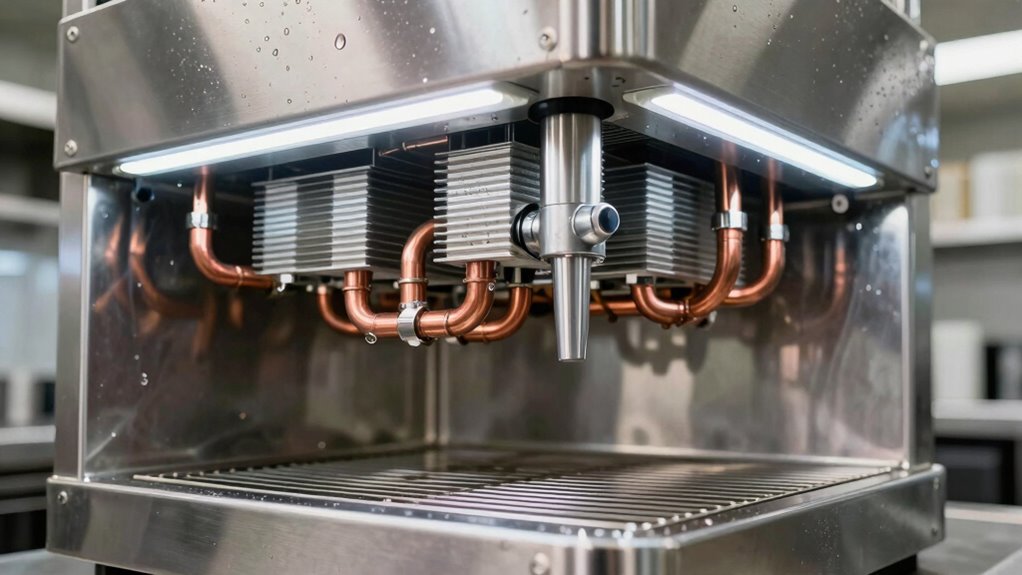

Cold plates in fountain drink dispensers are hidden but essential parts that help keep your beverages cold and invigorating. They actively transfer heat away from the liquid by absorbing it through high thermal conductivity materials like copper or aluminum. This efficient heat transfer prevents the drinks from warming up, ensuring your beverage stays perfect. Understanding how these special metal plates work can reveal just how much science goes into delivering the drinks you enjoy every day.
Key Takeaways
- Cold plates in fountain drink dispensers absorb heat from the beverage to maintain optimal serving temperatures.
- They are typically made from high thermal conductivity materials like copper or aluminum to transfer heat efficiently.
- The cold plate works with refrigeration systems to quickly cool and stabilize the beverage before dispensing.
- Proper design and material selection ensure rapid cooling, preventing syrup or water from overheating during high demand.
- These hidden components are essential for delivering fast, cold drinks consistently and maintaining equipment reliability.
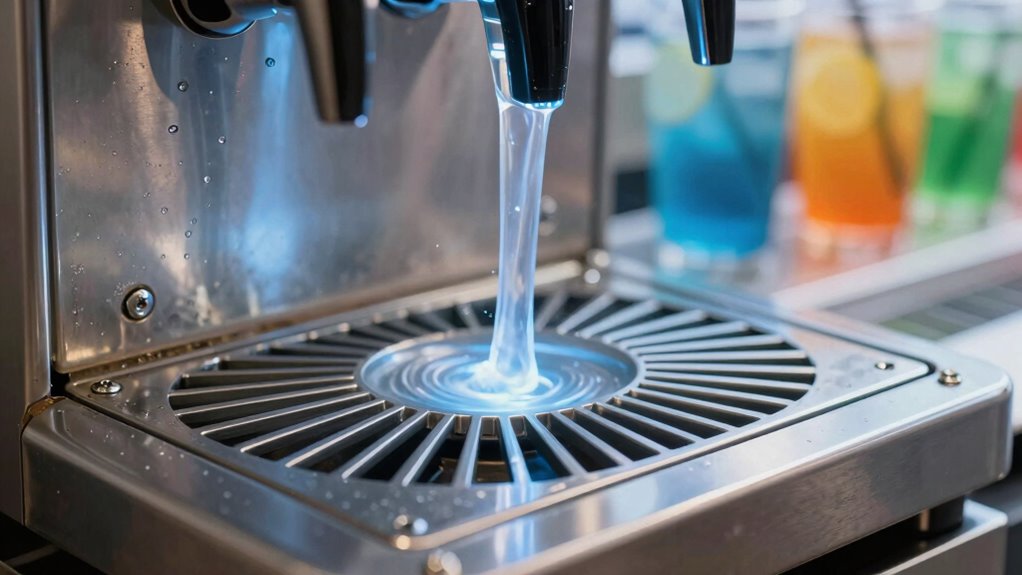
Have you ever wondered how electronic devices stay cool under heavy use? It’s because of a crucial component called a cold plate, which plays a vital role in managing heat. Cold plates are specially designed to absorb and transfer heat away from sensitive equipment, ensuring optimal performance and preventing overheating. When you think about how they work, the key factors are thermal conductivity and material selection. These determine how effectively a cold plate can conduct heat away from components and keep everything running smoothly.
Cold plates transfer heat efficiently, ensuring electronic devices stay cool and perform optimally.
Thermal conductivity measures how well a material can transfer heat. The higher the thermal conductivity, the faster the heat moves through the material. For cold plates, this means selecting materials that quickly draw heat away from electronic parts or fluids that need cooling. Copper and aluminum are common choices because they boast high thermal conductivities, making them excellent at dispersing heat rapidly. Copper, in particular, is known for its superior thermal conductivity, but it’s also more expensive and heavier than aluminum. Aluminum offers a good balance between cost, weight, and thermal performance, making it popular in many applications.
Material selection isn’t just about thermal conductivity; it also involves considering factors like corrosion resistance, manufacturability, and durability. For example, if a cold plate is used in a corrosive environment, you might choose a material with high corrosion resistance, even if it means sacrificing some thermal performance. Some cold plates use composites or specially coated metals to enhance longevity. The design and material choice influence how efficiently heat is transferred and how quickly the cold plate can be cooled or heated, depending on the application. Understanding thermal properties is essential for optimizing cold plate design and ensuring system reliability.
The process of selecting the right material also involves understanding the specific thermal load and operating conditions. You need to consider the maximum heat that will be generated and how quickly you want to remove it. This ensures the cold plate maintains a stable temperature, preventing thermal buildup. Proper material selection also affects maintenance, cost, and compatibility with other system components.
In essence, the effectiveness of a cold plate hinges on understanding thermal conductivity and making smart material choices. These factors determine how well the device will perform under demanding conditions, whether cooling electronic circuits, industrial machinery, or even beverage dispensers. When designed correctly, a cold plate can efficiently manage heat, prolong equipment life, and keep systems running at peak performance. That’s the hidden hardware behind many everyday cooling solutions, often overlooked but absolutely essential.
Frequently Asked Questions
How Long Do Cold Plates Typically Last Before Needing Replacement?
Cold plates typically last about 3 to 5 years before needing replacement, depending on your maintenance schedule. Regular cleaning and proper care can extend their lifespan, ensuring efficient cooling and preventing malfunctions. Keep an eye on their performance; if you notice inconsistent chilling or leaks, it’s time to contemplate a replacement. Proper maintenance helps maximize the replacement lifespan, saving you money and keeping your fountain drinks flowing smoothly.
Are Cold Plates Energy-Efficient Compared to Traditional Cooling Methods?
You might think cold plates waste energy, but surprisingly, they’re quite efficient. They offer better energy savings by maintaining consistent temperature control with less power than traditional cooling methods. This means you get cold drinks faster without skyrocketing energy bills. So, while they seem simple, cold plates actually optimize energy use, proving that sometimes, the hidden hardware behind your favorite fountain drinks is smarter than it looks.
Can Cold Plates Be Used for Beverages Other Than Fountain Drinks?
Yes, cold plates can be used for alternative beverage cooling beyond fountain drinks. Their versatility allows you to chill a variety of beverages like bottled water, soda, or even wine efficiently. You just need to make sure the cold plate’s size and temperature range suit your specific beverage. With their adaptability, cold plates offer a practical solution for maintaining ideal serving temperatures across different types of drinks.
What Maintenance Is Required to Keep Cold Plates Functioning Properly?
Keep your cold plates in tip-top shape by following simple maintenance. Regular cleaning protocols prevent buildup and ensure ideal cooling, while inspecting for leaks helps avoid bigger issues down the road. Think of it as keeping your car well-tuned; neglecting maintenance can lead to costly repairs. By staying proactive, you’ll extend the life of your cold plates and keep beverages chilled and ready to serve.
Are Cold Plates Environmentally Friendly and Recyclable?
Cold plates are generally eco-friendly and recyclable because they’re made from sustainable manufacturing practices and eco-friendly materials like aluminum or copper. You can recycle cold plates easily, reducing waste and conserving resources. Choosing products made with environmentally conscious materials helps you support sustainability efforts. Proper disposal and recycling guarantee these cold plates can be reused or repurposed, making them a responsible choice for environmentally aware consumers.
Conclusion
Now that you see how cold plates silently work behind the scenes, keeping your fountain drinks icy and invigorating, you realize they’re the unsung heroes of your favorite beverages. Without them, your soda would be nothing more than warm, flat liquid. Think of cold plates as the invisible hands that grasp your drink’s chill, ensuring every sip hits just right. Next time you enjoy a cold drink, remember the hidden hardware making it happen—truly a cool marvel in disguise.