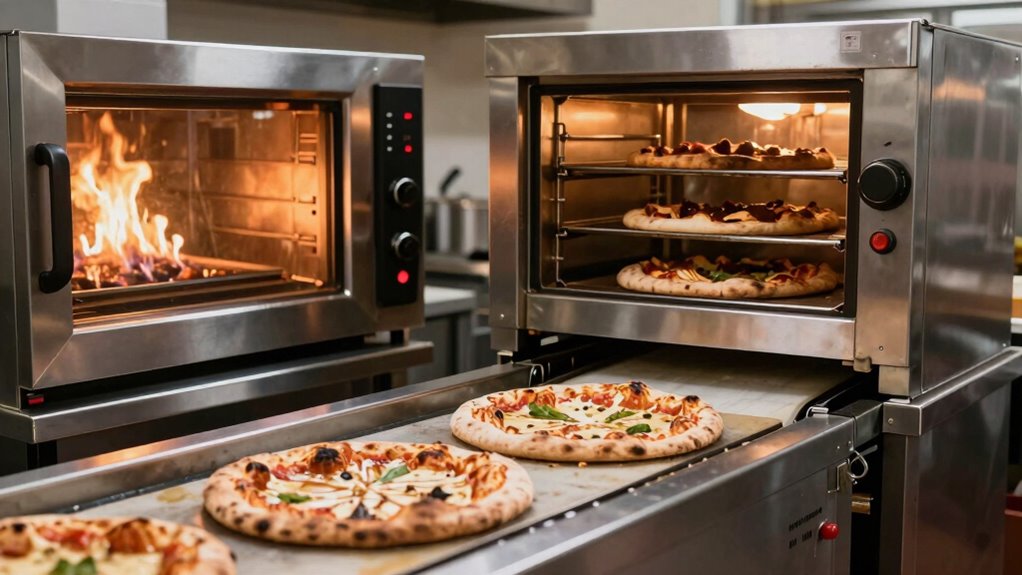

Choosing between deck and conveyor pizza ovens impacts your menu’s flexibility, speed, and maintenance. Deck ovens excel at baking thicker crusts and diverse styles, offering more customization but requiring more space and attention. Conveyor ovens boost high-volume production with quick, consistent results, ideal for streamlined menus. Each has trade-offs in cleaning and setup. To make the best choice, consider your menu goals and operational needs—further details can help guide your decision.
Key Takeaways
- Deck ovens excel at baking thicker, artisanal pizzas with customizable styles, enhancing menu diversity.
- Conveyor ovens are ideal for high-volume, consistent thin-crust pizzas, supporting speed and efficiency.
- Deck ovens require more space and maintenance but offer versatility in dough types and styles.
- Conveyor ovens streamline workflow with quick cleaning, suitable for fast-paced, uniform menu items.
- The choice impacts menu flexibility, production speed, and operational complexity, shaping your overall pizza offerings.
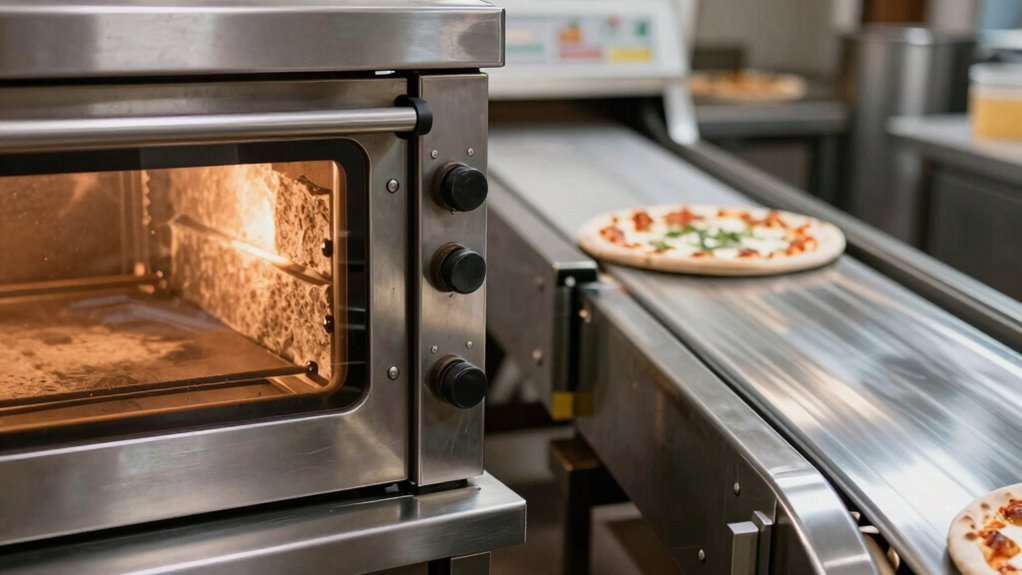
When choosing the right pizza oven for your business, understanding the differences between deck and conveyor ovens is vital. Each type impacts not only your workflow but also the quality and variety of pizzas you can serve. One key factor to think about is how each oven handles pizza dough thickness. Deck ovens excel at baking pizzas with thicker dough, giving you a crisp crust on the outside and a chewy interior. Their flat surfaces allow for greater control over dough thickness, letting you customize each pie to your customers’ preferences. Additionally, deck ovens often incorporate energy-efficient technology, which can reduce operational costs and support sustainable practices. Conveyor ovens, on the other hand, are typically better suited for thinner crusts. Their continuous belt system quickly moves pizzas through the heat, making them ideal for consistent, high-volume output of thinner, evenly baked pies. If your menu features a range of dough thicknesses, this distinction becomes vital.
Deck ovens excel with thicker doughs, offering crisp crusts and customizable thickness control.
Another important aspect is oven cleaning methods. Deck ovens usually have a more straightforward cleaning process, especially models with removable stones or decks, allowing you to scrub and maintain them easily. This ease of cleaning helps maintain hygiene standards and guarantees consistent baking results. Conversely, conveyor ovens often require specialized cleaning procedures because of their moving parts and enclosed chambers. Some models might have accessible panels for cleaning, but the process can be more time-consuming and complex. If your operation demands quick turnaround times and minimal downtime, the ease of cleaning might sway your decision toward a deck oven.
Beyond these specifics, you should think about your menu ambitions and kitchen space. Deck ovens typically take up more space but offer versatility, enabling you to bake a variety of styles and dough types simultaneously. Conveyor ovens are more compact and efficient for high-volume, uniform pizzas, making them popular in fast-casual settings. Speed and consistency are critical factors here; conveyor ovens deliver a steady flow of pizzas with minimal operator intervention, perfect for catering to a large crowd quickly. Conversely, deck ovens might require more attention and skill but provide greater flexibility in baking different pizza styles.
Ultimately, your choice hinges on your menu, volume, and operational priorities. Consider how pizza dough thickness impacts your offerings and how easy it is to maintain each oven through cleaning methods. By weighing these factors, you’ll find the oven that best aligns with your business goals, ensuring you deliver top-quality pizzas efficiently and consistently.
Frequently Asked Questions
Which Oven Type Is More Energy-Efficient?
You’ll find conveyor ovens generally more energy-efficient because they heat continuously with consistent energy consumption, reducing waste. Deck ovens tend to use more energy due to their localized heating and longer preheat times. Choosing a conveyor oven can lower your environmental impact by cutting energy consumption, making it a smarter choice for sustainability. So, if energy efficiency matters, a conveyor oven helps you save power and reduce your carbon footprint.
How Do Maintenance Costs Compare Between Deck and Conveyor Ovens?
Imagine your oven humming smoothly, but over time, deck ovens may require more maintenance due to their static parts, leading to higher maintenance expenses. Conveyor ovens, with their moving parts and complex mechanisms, also need regular upkeep but often have lower energy consumption, which can reduce overall costs. You’ll find that maintenance costs vary, but keeping both types in good shape ensures efficient operation and fewer surprises.
Can Conveyor Ovens Handle Different Pizza Styles Effectively?
Yes, conveyor ovens can handle different pizza styles effectively. You can bake various pizza crusts and manage a wide topping variety easily because of their consistent heat and adjustable settings. This makes them ideal for multitasking in a busy kitchen, ensuring each pizza, whether thin crust or deep dish, cooks evenly and quickly. Their versatility helps you serve diverse menu options without sacrificing quality or efficiency.
What Is the Typical Lifespan of Each Oven Type?
You can expect deck ovens to last around 15-20 years, thanks to their durable construction and traditional design, providing excellent equipment longevity. Conveyor ovens typically have a shorter lifespan of about 10-15 years because of their moving parts and continuous operation. Proper maintenance enhances oven durability, so investing in regular servicing guarantees your equipment stays reliable longer, maximizing your investment and ensuring consistent pizza quality over the years.
Are There Size Limitations for Deck or Conveyor Ovens?
Yes, there are size limitations for deck and conveyor ovens, which you need to take into account during oven installation. Your kitchen layout plays a vital role in fitting these ovens comfortably. Deck ovens tend to be more compact but may require more space for multiple decks, while conveyor ovens can be larger and need sufficient clearance for operation. Make sure to measure your space carefully to choose the right oven size for your kitchen.
Conclusion
Choosing between deck and conveyor pizza ovens depends on your menu and workflow. Did you know that conveyor ovens can cook up to 600 pizzas an hour? That speed makes them perfect for high-volume places, while deck ovens offer superior crust quality for artisanal pies. Assess your needs carefully—if speed is key, conveyor might be best; for quality and customization, deck ovens shine. Make the right choice to elevate your menu and satisfy your customers.