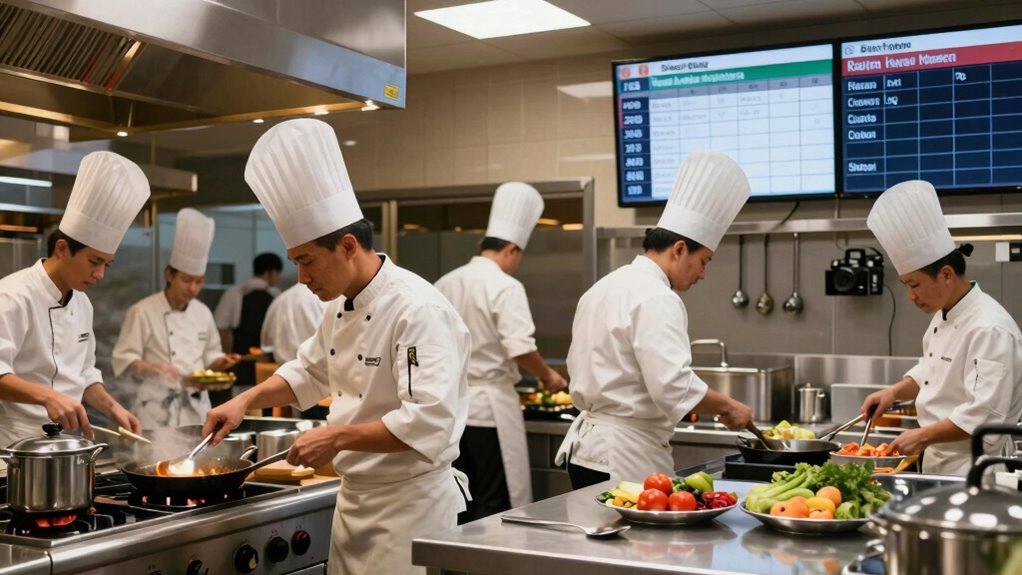

In restaurant labor planning, deployment means strategically assigning your staff based on customer demand and peak times. You focus on scheduling the right employees with the right skills during busy periods, while using slower times for training or less experienced staff. Good deployment reduces costs, improves service, and keeps your team efficient. When you understand how to align staffing with demand, you’ll be better prepared to boost both guest satisfaction and profitability. Keep exploring to find out how to optimize this process even further.
Key Takeaways
- Deployment refers to strategically assigning staff based on predicted customer demand and peak times.
- It involves scheduling the right personnel with appropriate skills for specific shifts.
- Deployment aims to optimize labor costs while maintaining service quality.
- It uses data and technology to adjust staffing levels proactively.
- Effective deployment aligns staff capabilities with operational needs for better customer experience.
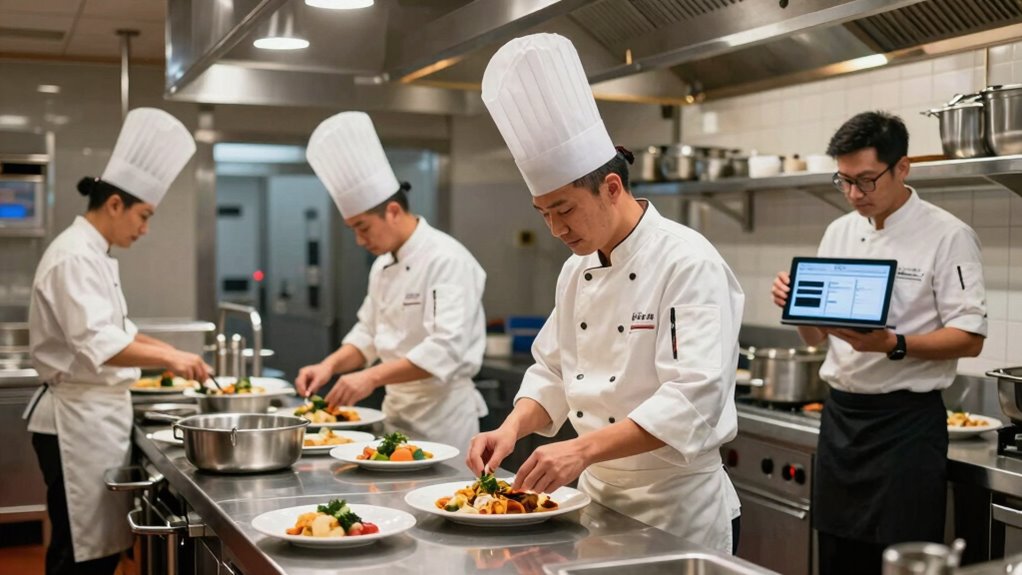
Effective labor deployment is vital for restaurants aiming to optimize operations and enhance customer satisfaction. When we talk about deployment in labor planning, you’re really focusing on how to arrange your staff efficiently to meet the demands of your business. It’s not just about having enough employees on shift; it’s about deploying the right number of staff with the right skills at the right times. This is where employee scheduling plays an essential role, ensuring that your restaurant is adequately staffed during busy hours and not overstaffed during slower periods. Proper deployment minimizes wasted labor costs while maintaining high service standards, which is key to running a profitable operation.
Staff optimization is at the heart of effective labor deployment. It involves analyzing your restaurant’s patterns—such as peak dining hours, special events, and seasonal fluctuations—and adjusting your workforce accordingly. When you optimize your staff deployment, you’re making sure that each shift is staffed with workers who can perform their tasks efficiently. This might mean scheduling more cooks during lunch rushes or adding extra servers on weekends when your restaurant sees increased foot traffic. By aligning your staffing levels with actual demand, you reduce idle time and prevent staff burnout, ultimately leading to better service quality and happier customers. Additionally, understanding labor costs and how to control them is essential for maintaining profitability. Incorporating data-driven insights can further refine your staffing strategies, ensuring you’re responsive to real-time needs.
In practical terms, deployment requires a clear understanding of your team’s capabilities and the expected volume of customers. You need to plan employee scheduling not only based on the number of staff needed but also considering individual strengths and availability. For example, assigning more experienced servers during busy hours ensures smoother operations, while less busy times can be covered with newer staff for training purposes. This strategic allocation improves overall staff productivity and contributes to a more seamless dining experience. It’s also important to communicate clearly with your team about schedules and expectations, which helps reduce no-shows and last-minute staffing gaps. Embracing technology-powered scheduling can greatly enhance your deployment strategies, allowing you to adjust staffing in real-time based on actual demand.
Technology can greatly enhance your deployment strategies. Many restaurants now use workforce management tools that analyze historical sales data and predict staffing needs, making employee scheduling more precise. These tools help you identify patterns and adjust your staffing levels proactively rather than reactively. When you embrace staff optimization through such systems, you gain a competitive edge by controlling labor costs while maintaining excellent service standards. Ultimately, effective deployment in labor planning isn’t just about putting bodies on the floor—it’s about strategically aligning your team’s skills and schedules to deliver the best possible experience for your guests. Recognizing employee capabilities and aligning them with demand is critical for maximizing efficiency and service quality.
![Express Schedule Free Employee Scheduling Software [PC/Mac Download]](https://m.media-amazon.com/images/I/41yvuCFIVfS._SL500_.jpg)
Express Schedule Free Employee Scheduling Software [PC/Mac Download]
- User-friendly drag & drop interface: Simple shift planning
- Manage time-off and leave: Add sick leave, breaks, holidays
- Email schedules to employees: Send schedules directly via email
As an affiliate, we earn on qualifying purchases.
As an affiliate, we earn on qualifying purchases.
Frequently Asked Questions
How Is Deployment Different From Scheduling in Restaurants?
Deployment differs from scheduling because it focuses on staff flexibility and shift optimization in real-time, ensuring that the right team members are in the right place at the right time. While scheduling sets the initial plans, deployment adjusts those plans based on current needs, customer flow, and staff availability. This dynamic approach helps maximize efficiency, improve service, and respond swiftly to changes, making your restaurant run smoothly.
What Tools Assist With Restaurant Deployment Planning?
Think of deployment tools like a conductor’s baton, guiding your team smoothly through busy hours. They help you with staff allocation and guarantee equipment readiness, so your restaurant runs seamlessly. Tools like scheduling software (e.g., HotSchedules, 7shifts) and labor management platforms streamline deployment, giving real-time insights. This way, you optimize staff, reduce wait times, and keep everything in harmony—like a well-rehearsed performance.
How Does Deployment Impact Employee Satisfaction?
Deployment directly impacts your employee morale and staff engagement. When scheduling aligns with staff strengths and preferences, employees feel valued and motivated, leading to higher satisfaction. Conversely, poor deployment can cause fatigue and frustration, diminishing morale. By thoughtfully planning deployment, you foster a positive work environment where employees are more engaged, productive, and committed, ultimately enhancing overall restaurant performance and customer service quality.
Can Deployment Strategies Vary by Restaurant Size?
Think of deployment strategies like a tailor adjusting a suit—one size doesn’t fit all. Smaller restaurants often have flexible deployment, allowing quick shifts based on daily needs. Larger establishments, however, require more structured plans to manage staff efficiently across multiple roles. Your approach should match your restaurant size, balancing deployment flexibility with operational demands, ensuring you serve your guests smoothly while keeping staff satisfied.
What Are Common Challenges in Restaurant Deployment?
You face challenges like balancing staff flexibility with predictable schedules, making sure you allocate resources efficiently during busy and slow periods. Managing sudden fluctuations in customer volume can strain your deployment plan, leading to understaffing or overstaffing. Ensuring your team adapts quickly to changing needs while optimizing resource use requires constant adjustments. These hurdles can impact service quality and staff morale, so proactive planning and clear communication are essential to overcome them.
Conclusion
Think of deployment in labor planning as orchestrating a symphony—you’re aligning each instrument just right to create harmony. When you master this, your restaurant runs smoothly, with staff perfectly timed like a well-choreographed dance. It’s all about placing the right people in the right spots at the right moments, ensuring your service hits all the right notes. Mastering deployment transforms chaos into a masterpiece, making every shift a seamless performance.