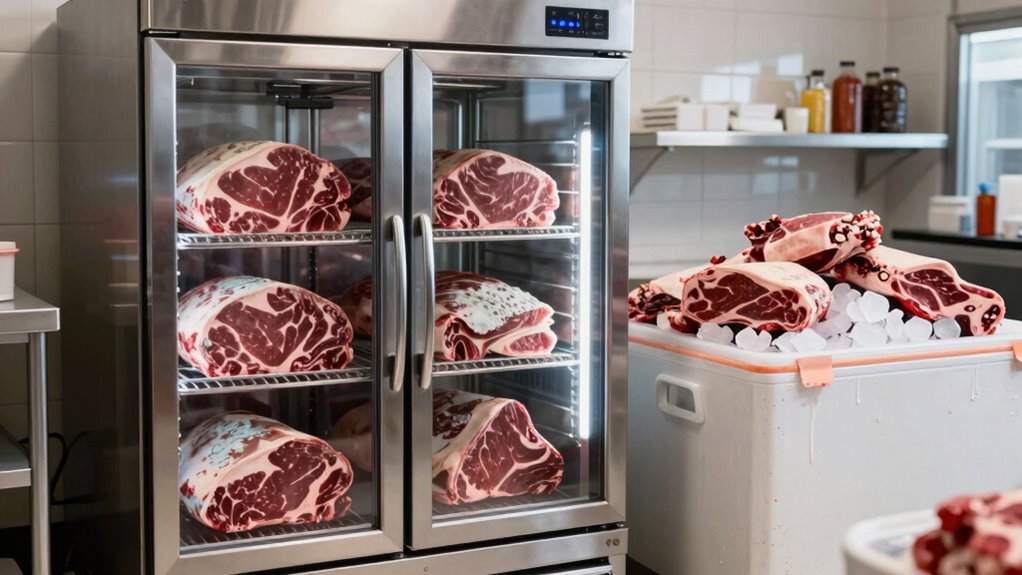

Dry aging refrigerators are ideal for professional butchers and high-end kitchens that need precise control of temperature and humidity to develop rich, tender beef. They fit well where investment and space aren’t an issue and where consistent, safe aging is essential. However, they’re not suitable for casual home cooks due to their high cost, maintenance needs, and specialized environment requirements. Want to discover where else they excel or fall short? Keep exploring to learn more.

Get kitchen staples and gadgets delivered free with Prime
- Fast, free delivery on millions of items
- Prime Video, Amazon Music and more included
- Member-only deals all year
Key Takeaways
- Ideal for high-end butcher shops and professional kitchens aiming for consistent, controlled dry aging environments.
- Not suitable for casual home use due to high cost, maintenance, and space requirements.
- Require precise temperature and humidity controls to prevent spoilage and mold growth.
- Best used with prime, well-marbled cuts like ribeye or porterhouse for optimal flavor development.
- Regular cleaning and monitoring are essential to ensure food safety and equipment longevity.
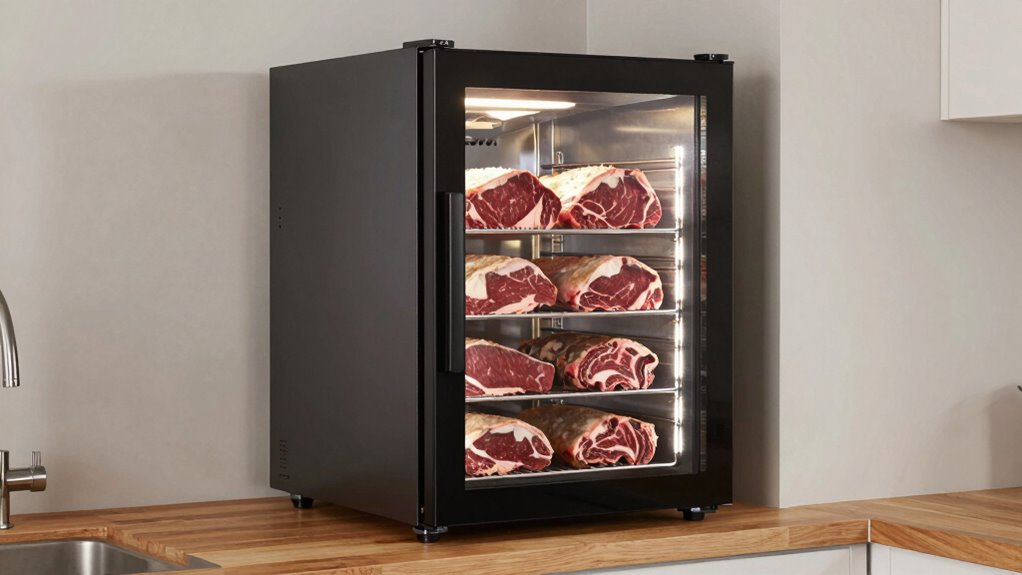
Have you ever wondered how elite steakhouses achieve that rich, intensely flavored meat? The secret often lies in the aging process, specifically dry aging, which enhances beef flavor in ways that other methods can’t match. Dry aging refrigerators are designed to control the environment needed for this process, creating the perfect conditions for meat to develop depth and complexity. When beef is put through dry aging, it sits exposed to air in a controlled temperature and humidity setting, allowing natural enzymes to break down muscle tissue. This breakdown intensifies the beef flavor, resulting in a more tender, flavorful steak that’s full of nuance. The aging process can take anywhere from a few weeks to several months, depending on the desired flavor profile, and a dry aging refrigerator maintains these conditions precisely, preventing spoilage and ensuring consistency. Additionally, environmental control is crucial, as it ensures optimal conditions for the aging process and minimizes risks like mold growth or spoilage. Proper climate management is essential to maintain the delicate balance needed for successful dry aging, especially since any deviation can lead to spoilage. Moreover, advancements in refrigeration technology have made it easier to achieve precise environmental control, which is vital for consistent results. These technological improvements also aid in maintaining food safety standards during the aging process. However, these specialized refrigerators aren’t for everyone. For one, they come with a hefty price tag, making them less practical for casual home cooks. They’re typically found in high-end butcher shops or professional kitchens where the investment is justified by the volume of meat processed and the premium quality it produces. Plus, not all cuts of beef benefit equally from dry aging. Prime, well-marbled cuts like ribeye or porterhouse are ideal candidates because they develop the most flavor and tenderness during the aging process. Leaner cuts, on the other hand, don’t benefit as much and can even become overly dry or lose their desirable texture. So, if you’re contemplating a dry aging refrigerator for your home, think about the type of beef you prefer and whether you’re ready to commit to the maintenance and costs involved. Another aspect to weigh is that dry aging refrigerators aren’t suitable for every setting or every meat type. They require careful calibration and monitoring to prevent spoilage or mold growth, which can happen if conditions aren’t perfect. The environment inside must be meticulously maintained, with precise control over temperature, humidity, and airflow. For optimal results, some experts also recommend regular cleaning to prevent bacterial buildup and ensure the longevity of the equipment. For casual or beginner cooks, traditional wet aging or purchasing aged meat from a trusted butcher might be better options. These alternatives can still deliver excellent beef flavor without the need for specialized equipment or the time commitment that dry aging demands. Proper storage conditions, including the right environment and handling, are essential to achieve the best results and prevent food safety issues.
As an affiliate, we earn on qualifying purchases.
Frequently Asked Questions
How Long Should I Dry Age Meat in a Refrigerator?
You should dry age meat in a refrigerator for about 2 to 4 weeks, ensuring proper temperature control at around 34-38°F. This period allows the meat to develop flavor and tenderness while maintaining a safe shelf life. Keep in mind, longer aging can increase flavor complexity but also risks spoilage, so monitor the temperature and humidity carefully. Regularly check the meat to prevent any spoilage or spoilage-related issues.
Can Dry Aging Improve All Types of Meat?
Dry aging can improve the meat quality of certain cuts, especially beef, by enhancing flavor and tenderness through the aging process. However, it doesn’t benefit all types of meat equally; poultry and pork, for instance, don’t develop the same flavor or texture improvements from dry aging. You should consider the specific meat and its characteristics before dry aging, as some cuts respond better to this process than others.
What Is the Cost Difference Between Regular and Dry Aging Refrigerators?
You’ll find that dry aging refrigerators cost considerably more than regular ones, thanks to advanced aging technology and specialized refrigeration costs. While a standard fridge handles everyday needs, these luxury units can double or even triple the price, often making them a status symbol for foodies. If you’re contemplating investing, remember: you’re paying for precision moisture control, ideal air circulation, and the art of aging meat, not just a fancy box.
Are Dry Aging Refrigerators Energy-Efficient?
Dry aging refrigerators aren’t typically very energy-efficient. They require precise temperature consistency and humidity control to properly age meat, which means running specialized equipment that consumes more power than standard refrigerators. You might notice higher energy bills because maintaining stable conditions for extended periods uses extra energy. If energy efficiency is a priority, consider alternative methods, but for ideal dry aging, these refrigerators guarantee the right environment despite their higher energy use.
How Often Should I Clean and Maintain a Dry Aging Fridge?
You should clean your dry aging refrigerator at least once a month to maintain ideal humidity control and temperature stability. Regular cleaning prevents mold, bacteria, and odors from developing. Wipe down interior surfaces, check for excess moisture, and ensure vents are clear. Maintaining a consistent temperature and humidity level is key, so also calibrate your fridge periodically. Proper maintenance keeps your dry aging process safe and effective.
Conclusion
In the world of meat preparation, dry aging refrigerators are truly game-changers, transforming ordinary cuts into culinary masterpieces. They’re perfect if you crave a rich, intense flavor that can only come from meticulous aging. However, if you’re just after quick, casual meals, they might be overkill—like trying to turn a bicycle into a race car. Think of these fridges as your secret weapon for gourmet greatness, elevating your cooking from good to legendary!
NFL season / tailgating Picks
team gear
As an affiliate, we earn on qualifying purchases.