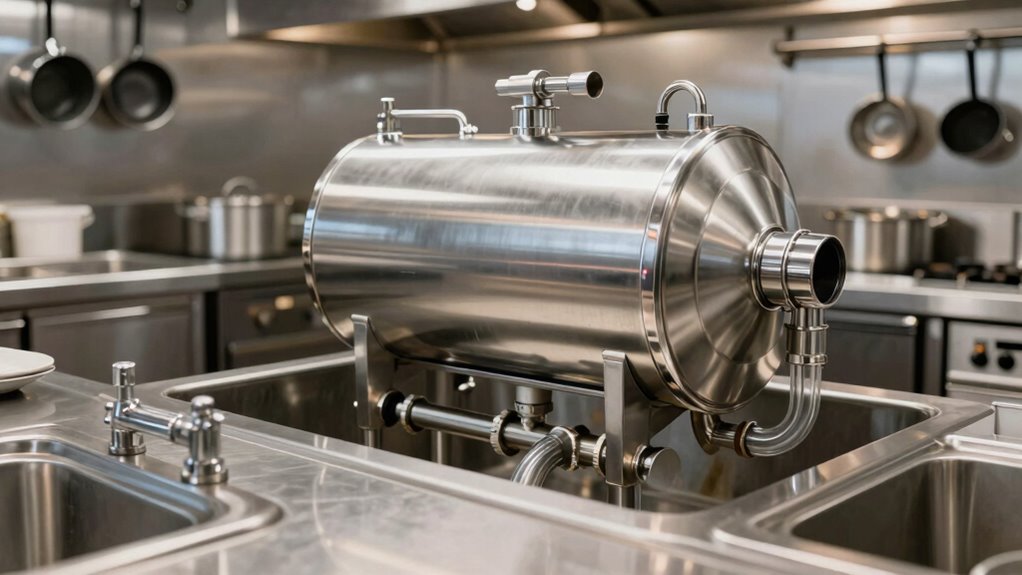

Grease interceptors trap fats, oils, and grease (FOG) before they reach the sewer, helping you prevent clogs, backups, and costly repairs. Proper maintenance, like regular cleaning and inspections, guarantees they work efficiently and stay compliant with local regulations. Choosing the right size and placement is key to avoiding issues and prolonging your plumbing system’s life. Keep up with regulations and maintenance practices, and you’ll keep your kitchen running smoothly—more details await if you continue exploring.

Get kitchen staples and gadgets delivered free — and shop member deals
- Fast, free delivery on millions of items
- Access to Prime Big Deal Days deals on October 6–7
- Prime Video, Amazon Music and more included
Key Takeaways
- Grease interceptors capture fats, oils, and grease to prevent sewer clogs and ensure smooth kitchen operations.
- Proper maintenance, including regular cleaning and inspections, extends the lifespan of grease interceptors.
- Adhering to local regulations and installation standards prevents fines and legal issues.
- Correct sizing and placement are essential to optimize performance and avoid frequent cleaning or system failure.
- Routine staff training on waste disposal and maintenance practices maintains system efficiency and compliance.
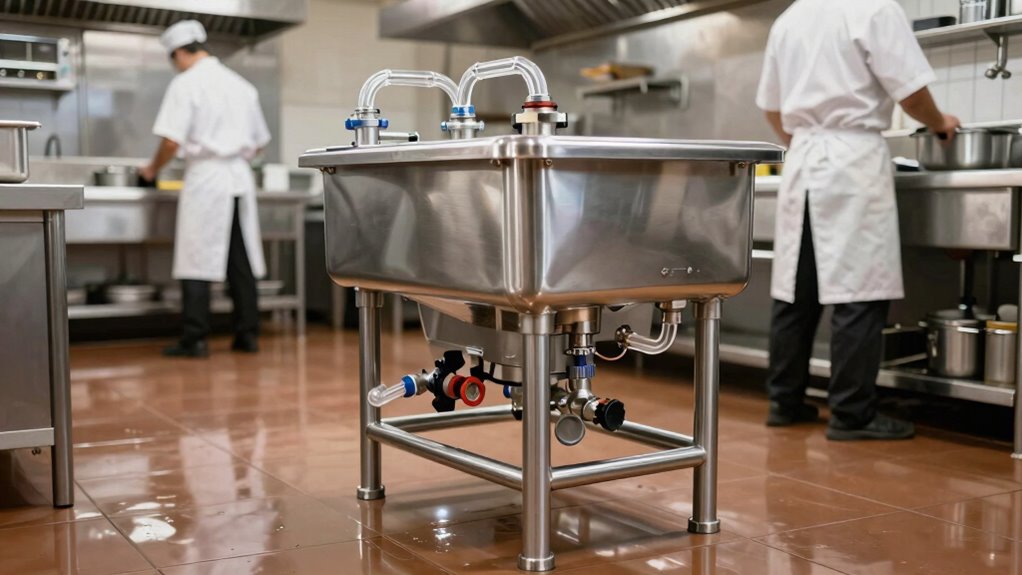
If you’re running a restaurant, installing a grease interceptor is essential to managing fats, oils, and grease (FOG) that can clog your plumbing and cause costly backups. Grease interceptors, also known as grease traps, help prevent FOG from entering your plumbing system by capturing it before it reaches the sewer lines. This not only keeps your kitchen maintenance smooth but also guarantees compliance with plumbing regulations that are designed to protect public health and infrastructure.
Proper kitchen maintenance involves regular cleaning and inspection of your grease interceptor to keep it functioning efficiently. Neglecting this component can lead to foul odors, blockages, and overflows, all of which disrupt daily operations and create safety hazards. By maintaining your grease trap, you reduce the risk of plumbing issues that could result in expensive repairs or fines. Many plumbing regulations specify the minimum size and installation requirements for grease interceptors, which vary depending on your restaurant’s size and the volume of FOG generated. Staying compliant with these regulations is imperative because non-compliance can lead to penalties, shutdowns, or legal liabilities. Understanding regulatory compliance and adhering to local codes is critical for avoiding legal issues. Regularly consulting local plumbing codes can help ensure your setup remains compliant as regulations evolve.
Installing the right size grease interceptor is essential. An undersized unit will fill up quickly, requiring frequent cleaning and risking FOG escaping into your plumbing. Conversely, a too-large unit might be unnecessary and more costly upfront. You should consider your kitchen’s FOG output, the menu type, and local regulations when choosing a model. Some jurisdictions mandate specific installation standards, such as positioning the interceptor outside the building or ensuring easy access for cleaning. Following these plumbing regulations not only keeps your operation compliant but also prolongs the lifespan of your plumbing system. Regularly scheduled maintenance is key to maximizing the effectiveness of your grease interceptor. This involves periodically removing accumulated FOG, cleaning the baffles, and inspecting for leaks or damages. Many restaurant owners find that establishing a routine cleaning schedule, based on the volume of FOG produced, helps avoid emergencies and keeps the system working efficiently. Additionally, understanding grease trap regulations and staying updated on local requirements can help ensure ongoing compliance and prevent potential fines. Proper staff training on waste disposal can further reduce the risk of FOG buildup and promote adherence to proper maintenance practices, ultimately supporting your restaurant’s operational efficiency.
As an affiliate, we earn on qualifying purchases.
Frequently Asked Questions
How Often Should Grease Interceptors Be Inspected?
You should inspect your grease interceptor regularly, ideally every 30 days, to prevent clogs and guarantee proper functioning. Regular grease trap cleaning helps maintain efficiency and extends interceptor lifespan. The size selection of your grease trap impacts cleaning frequency; larger interceptors require less frequent attention. Always monitor the interceptor’s condition and schedule inspections accordingly to avoid overflows and compliance issues. Proper maintenance keeps your restaurant running smoothly and avoids costly repairs.
Are There Specific Regulations for Grease Interceptor Installation?
You’ll find that specific regulations govern grease interceptor installation, making regulation compliance vital. These rules ensure installation standards are met to prevent plumbing issues and environmental harm. Local codes or health departments often dictate requirements, so it’s important to check with your municipality. By adhering to these regulations, you guarantee your system functions efficiently, avoids fines, and contributes to a cleaner, environmentally responsible operation.
What Maintenance Practices Extend Interceptor Lifespan?
To extend your grease interceptor’s lifespan, you should regularly remove grease buildup and debris, which can clog the system. Maintain a consistent pumping schedule—typically every three to six months—based on your restaurant’s usage. Keep an eye on the interceptor’s levels and avoid overloading it. Proper maintenance helps prevent backups, reduces odors, and makes sure your system functions efficiently for years to come.
Can Restaurants Use Alternative Grease Management Solutions?
You can definitely explore alternative grease management solutions, especially with recent technological advancements. Eco-friendly options like biodegradable separators or grease recovery devices are gaining popularity, helping you reduce environmental impact while maintaining compliance. These innovations often integrate seamlessly into your existing setup, offering efficient, sustainable alternatives to traditional interceptors. Embracing these solutions not only supports your green initiatives but also enhances your restaurant’s reputation for environmental responsibility.
How Do Weather Conditions Affect Grease Interceptor Performance?
Weather impact, especially extreme temperatures and heavy rain, can substantially affect your grease interceptor’s performance. Cold weather may cause fats and oils to solidify, reducing flow and efficiency, while heat can speed up grease buildup. Climate considerations like persistent rain or freezing temperatures can lead to blockages or system damage. To maintain ideal operation, you should regularly inspect and adapt your maintenance schedule based on weather conditions and climate factors.
Conclusion
Now, picture your restaurant’s grease interceptor as a vigilant guardian, quietly working behind the scenes to keep your kitchen running smoothly. It traps greasy messes before they cause clogs or odors, like a filter catching stray sparks before they ignite. When properly maintained, it’s a silent hero, ensuring your pipes flow freely and your dining space stays inviting. Embrace this essential tool, and watch your restaurant’s efficiency and cleanliness shine brightly each day.
Halloween Picks
halloween
As an affiliate, we earn on qualifying purchases.