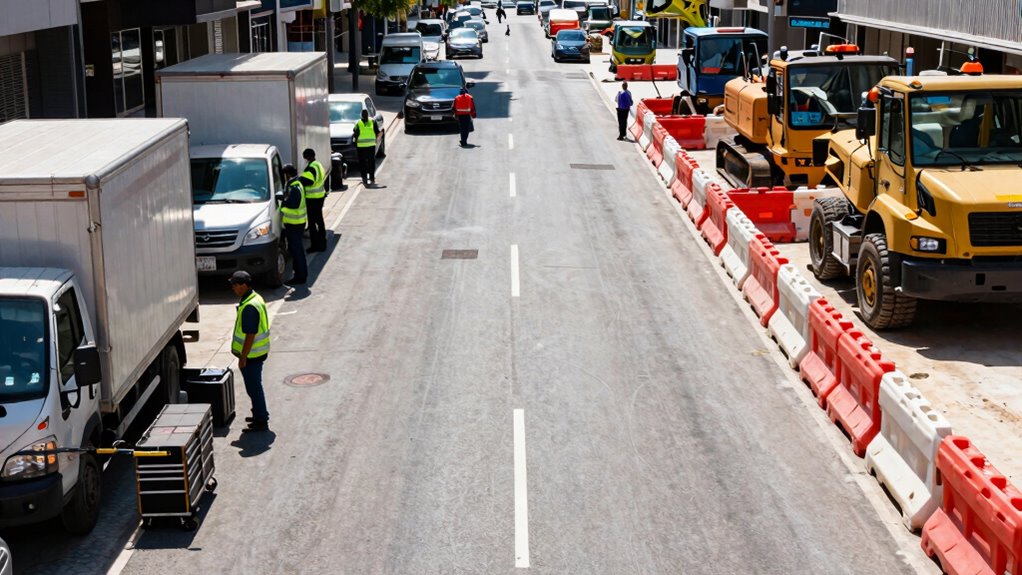

A service lane runs parallel to the main highway and allows you to access businesses, gas stations, or parking without disrupting traffic flow. In contrast, a work lane is designated for construction or maintenance, often marked with barriers, cones, and signs. Work lanes are usually closed or restricted during work activities to keep workers safe. Understanding these differences helps you navigate safely and efficiently—keep going for more details on how to recognize and use them effectively.

Get kitchen staples and gadgets delivered free — and shop member deals
- Fast, free delivery on millions of items
- Access to Prime Big Deal Days deals on October 6–7
- Prime Video, Amazon Music and more included
Key Takeaways
- Service lanes provide access for local stops and businesses, while work lanes are designated for construction or maintenance activities.
- Service lanes run parallel to the main highway and are open for regular traffic; work lanes are typically closed or restricted during work zones.
- Work lanes are marked with cones, barriers, and signage to indicate restrictions, unlike service lanes which are marked for access points.
- Using service lanes appropriately reduces congestion; ignoring work lane restrictions can cause delays and safety hazards.
- Traffic regulations and signage guide drivers differently in each lane, emphasizing caution in work zones.
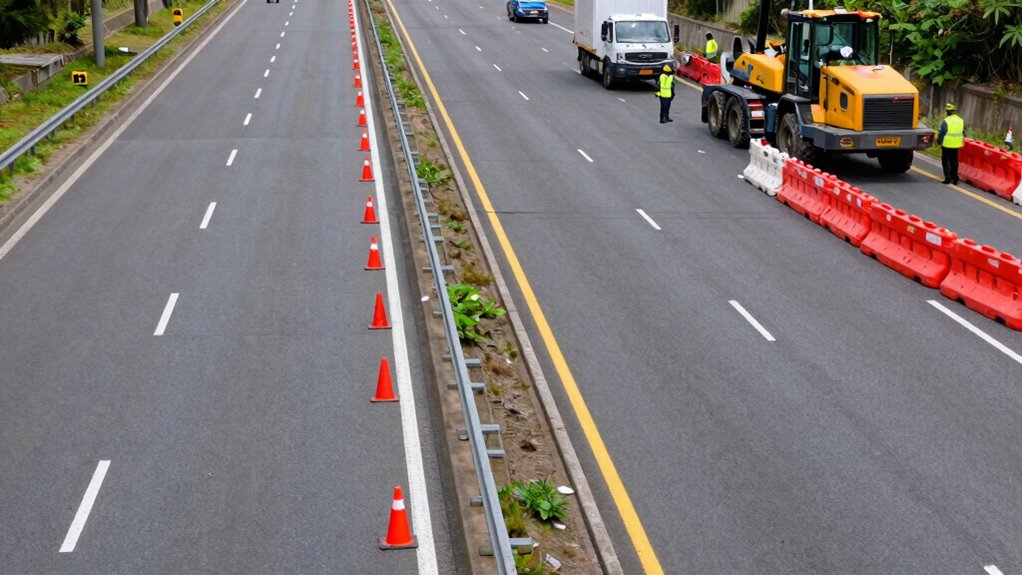
When steering a highway, understanding the difference between a service lane and a work lane can make your drive safer and more efficient. These lanes serve distinct purposes, and recognizing their roles helps you navigate the road properly. Service lanes are designed primarily for vehicle accessibility, allowing drivers to access businesses, gas stations, or parking areas without entering the main flow of traffic. They’re usually positioned parallel to the main highway and are open to vehicles making local stops. Knowing where these lanes are and how to use them ensures you don’t unintentionally disrupt traffic flow or violate lane regulations.
In contrast, work lanes are designated for construction or maintenance activities. These lanes are typically closed or partially closed to traffic, and their primary goal is to protect workers and equipment while repairs or upgrades happen on or near the roadway. As a driver, you need to recognize when a work lane is in effect and follow posted signs and signals carefully. Ignoring lane regulations around work zones can lead to fines or accidents and jeopardize the safety of everyone involved. Being aware of lane regulations helps you avoid confusion and potential hazards in these areas.
Vehicle accessibility is a key difference that influences how you approach each lane. Service lanes are meant to facilitate movement for vehicles needing quick access to local destinations, reducing congestion on the main highway. They often have specific entry and exit points, and you should use them only if your destination is nearby. Work lanes, on the other hand, are generally not accessible to through traffic during active construction. Instead, they’re marked with cones, barriers, or signs indicating that you should merge away or follow detours. Failing to adhere to these restrictions can cause traffic delays and increase the risk of accidents. Additionally, traffic control devices are essential tools to help drivers navigate these zones safely.
Furthermore, understanding how lane markings indicate different zones can help you make better decisions while driving. Lane regulations around these lanes are critical for maintaining safety and order. Service lanes usually have designated entry and exit points, and their use is often governed by local rules or signs. You need to stay within the lane and obey any posted speed limits. Work lanes have stricter regulations, often requiring you to slow down, merge, or stop altogether. When approaching a work zone, pay close attention to flashing lights, barriers, and signage, which signal you to follow specific instructions. Ignoring lane regulations in these zones can result not only in fines but also in endangering construction workers and other drivers. Understanding lane regulations is essential for safe driving through these areas. Moreover, being familiar with highway signage can further enhance your ability to respond correctly to different lane markings and instructions.
As an affiliate, we earn on qualifying purchases.
Frequently Asked Questions
Are Service Lanes and Work Lanes Interchangeable?
Service lanes and work lanes aren’t interchangeable because lane signage and traffic flow rules differ. Service lanes typically support vehicle access for customer service or deliveries, while work lanes are designated for construction or maintenance activities. Mixing them up can cause confusion, disrupt traffic flow, and create safety hazards. So, always pay attention to lane signage and designated uses to guarantee smooth traffic movement and safety for everyone involved.
How Are Safety Measures Different for Service and Work Lanes?
You need to understand that safety measures differ for service and work lanes. In service lanes, safety protocols focus on guiding traffic smoothly and preventing accidents, often using clear signage standards. For work lanes, safety measures emphasize protecting workers, requiring barriers, high-visibility signage, and strict protocols. Both lanes demand adherence to signage standards, but the emphasis shifts from traffic flow in service lanes to worker safety in work lanes.
Can Vehicles Access Both Lane Types Simultaneously?
Think of the lanes as separate streams in a busy river. Vehicles typically don’t access both lanes simultaneously because traffic flow is managed by clear lane signage. This guarantees each lane’s purpose—service or work—is maintained without chaos. Drivers must follow signage and designated entrances, preventing conflicts. So, you can’t switch between them mid-stream without risking safety, which helps keep traffic flowing smoothly and safely.
What Are the Typical Durations for Lane Closures?
Lane closures usually last anywhere from a few hours to several days, depending on the work’s complexity. During this time, traffic flow is managed carefully through lane management strategies to minimize disruption. You should expect temporary delays and detours as authorities prioritize safety and efficiency. Planning ahead and staying updated on lane closure schedules can help you navigate traffic more smoothly during these periods.
Who Is Responsible for Maintaining Each Lane Type?
You’re responsible for maintaining the work lane, following specific maintenance protocols to guarantee safety and functionality. The service lane’s upkeep usually falls under the jurisdiction of local authorities or transportation agencies, who handle liability responsibilities for repairs and safety measures. Visualize it as a shared effort: while your team manages the work lane, external agencies oversee the service lane, each with clear roles to keep traffic flowing smoothly and safely.
Conclusion
Understanding the difference between a service lane and a work lane is like steering through a busy highway—each has its purpose and rules. Think of a service lane as your quick pit stop, designed for efficiency, while a work lane is like a construction zone, requiring caution and patience. Just as a driver adapts to different traffic signs, you adapt your approach depending on the lane. Mastering this distinction guarantees smooth traffic flow and safety for everyone involved.
Halloween Picks
halloween
As an affiliate, we earn on qualifying purchases.