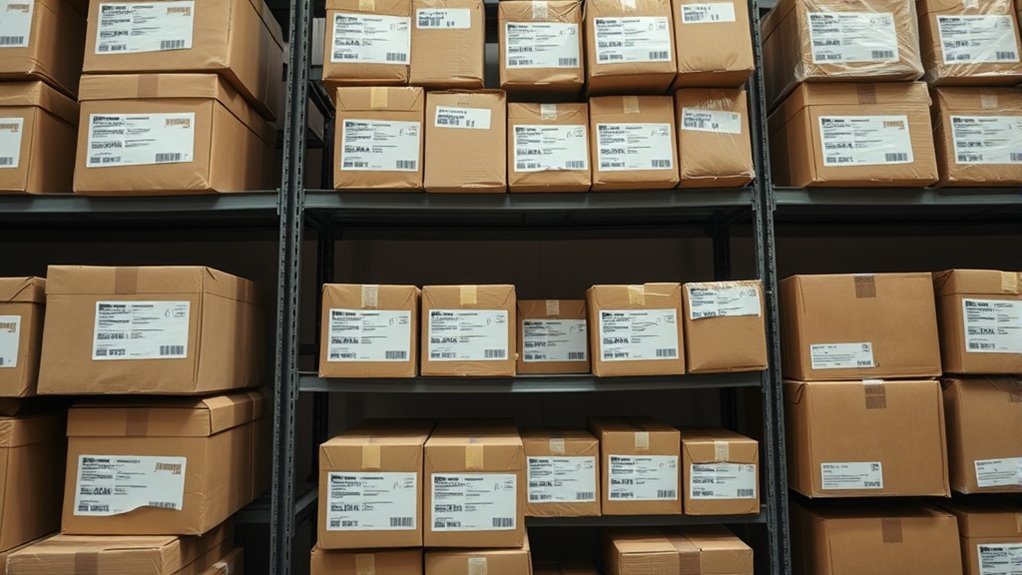

Shrinkage in inventory happens when there’s a difference between what your records say you have and what you actually have on hand. It can occur due to theft, damage, spoilage, or administrative errors like mislabeling. This discrepancy affects your inventory accuracy, making it harder to plan and prevent losses. Understanding causes and solutions is vital for managing your stock well. To learn more about how to identify and prevent shrinkage, keep exploring further.

Get kitchen staples and gadgets delivered free with Prime
- Fast, free delivery on millions of items
- Prime Video, Amazon Music and more included
- Member-only deals all year
Key Takeaways
- Inventory shrinkage is the difference between recorded stock and actual on-hand inventory.
- It results from causes like theft, damage, spoilage, or administrative errors.
- Shrinkage compromises inventory accuracy and affects business decision-making.
- Common types include theft, spoilage, mislabeling, and misplaced stock.
- Preventive measures include inventory tracking, audits, security, and proper stock recording.

Have you ever wondered why your inventory levels don’t match your recorded stock? It’s a common question for many business owners and managers. The answer often lies in what’s called shrinkage in inventory. Shrinkage refers to the difference between what your records show you should have and what you actually have on hand. This discrepancy can occur for various reasons, but understanding its causes is key to improving loss prevention and maintaining accurate inventory records. When your inventory accuracy is compromised, it becomes difficult to make informed decisions, plan stock replenishments, or understand your true sales performance.
Shrinkage happens for multiple reasons, and identifying these causes helps you take targeted actions. Theft, whether by employees or external criminals, is a considerable contributor. Shoplifting, employee theft, or even diversion of stock for personal use can all lead to inventory loss. Damage or spoilage also plays a role, especially in industries dealing with perishable goods or fragile items. Damaged stock might get discarded, but if it’s not properly recorded, it creates a mismatch between physical inventory and your records. Administrative errors, such as data entry mistakes or mislabeling, can further distort inventory accuracy. Sometimes, shipments arrive incorrectly or get misplaced within storage areas, causing discrepancies that go unnoticed until they add up over time. Implementing inventory management systems can significantly help track stock movements and reduce these errors.
As an affiliate, we earn on qualifying purchases.
Frequently Asked Questions
How Does Shrinkage Impact Overall Profitability?
Shrinkage reduces your overall profitability because it leads to inventory loss that isn’t sold or accounted for. When you focus on loss prevention strategies and regular inventory auditing, you can identify and minimize shrinkage. This helps you recover lost revenue, improve inventory accuracy, and boost profits. The more effectively you manage shrinkage, the better your business’s financial health, ensuring you keep more of your revenue instead of losing it to theft, damage, or errors.
What Are the Most Common Causes of Inventory Shrinkage?
Think of inventory shrinkage as a sneaky shadow stealing your profits. The most common causes include theft, which lurks in the dark corners, and administrative errors that slip through cracks. To fight it, you need theft prevention strategies and thorough employee training. When your team is vigilant and educated, they become the frontline guards, turning the tide against losses and keeping your inventory’s integrity intact.
How Can Technology Reduce Inventory Shrinkage?
You can reduce inventory shrinkage by leveraging technology like barcode scanning and AI detection. Barcode scanning streamlines inventory tracking, minimizing human errors and theft opportunities. AI detection systems monitor stock levels in real-time, alerting you to discrepancies instantly. Together, these tools improve accuracy, deter theft, and help you identify issues early, ultimately lowering shrinkage and increasing your inventory’s overall reliability.
What Are Best Practices for Preventing Shrinkage?
To prevent shrinkage, you should focus on loss prevention strategies and maintaining stock accuracy. Regularly conduct inventory audits, use technology like CCTV and POS systems, and train staff on theft prevention. Implement strict access controls and monitor stock levels closely. By staying vigilant and using data to spot discrepancies early, you reduce theft and errors, ensuring your inventory remains accurate and minimizing overall loss.
How Is Inventory Shrinkage Calculated and Reported?
You simply subtract your recorded inventory from your physical count during an inventory audit. The difference equals your shrinkage, revealing losses from theft, damage, or errors. To report it, you document this loss in your financial statements, aiding loss prevention strategies. Think of it as your business’s way of catching sneaky gaps—an essential step to keep those pesky inventory leaks under control and your profits intact.
Conclusion
Understanding shrinkage helps you identify loss, reduce waste, and improve efficiency. Recognizing theft, damage, and errors allows you to control costs, protect profits, and maintain stock accuracy. By addressing shrinkage, you prevent unnecessary expenses, preserve inventory value, and support business growth. In managing shrinkage, you safeguard resources, strengthen operations, and build trust. Ultimately, controlling shrinkage isn’t just about numbers; it’s about protecting your business’s future, ensuring stability, and fostering success.
NFL season / tailgating Picks
team gear
As an affiliate, we earn on qualifying purchases.