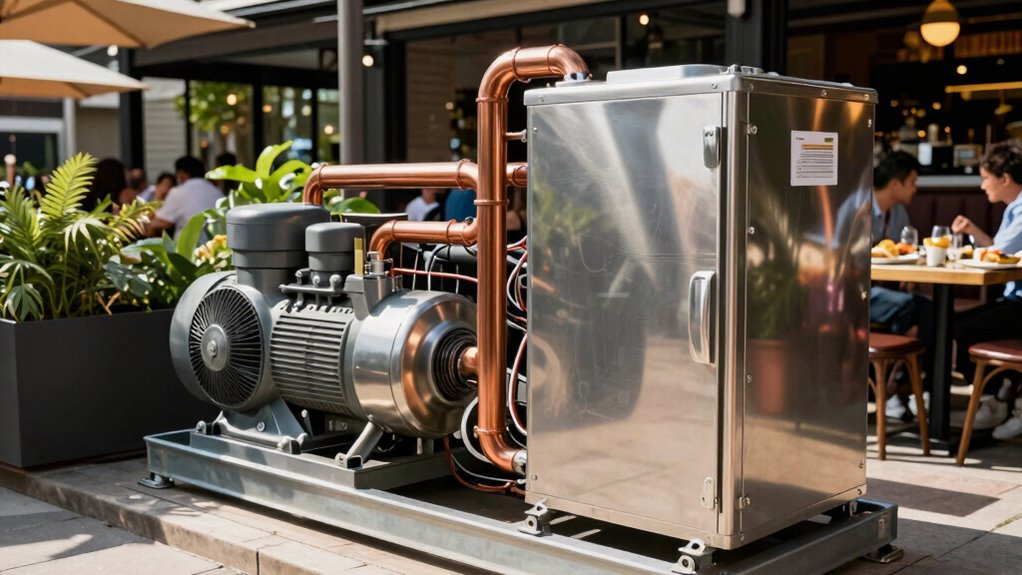

Remote refrigeration condensing units are installed outside, freeing up space inside your restaurant and improving energy efficiency, especially in cooler outdoor climates. They work by separating the condensing unit from the evaporator, lowering your utility bills and supporting sustainable operation. Regular maintenance like cleaning coils and checking refrigerant levels keeps them running smoothly and extends their lifespan. To learn more about keeping these units efficient and reliable, keep exploring how to optimize their performance over time.

Get kitchen staples and gadgets delivered free with Prime
- Fast, free delivery on millions of items
- Prime Video, Amazon Music and more included
- Member-only deals all year
Key Takeaways
- Installed outside to save indoor space and improve kitchen layout.
- Offer higher energy efficiency, reducing utility costs for restaurants.
- Require regular maintenance like coil cleaning and refrigerant checks for optimal performance.
- Designed for durability, with proactive care extending lifespan and preventing costly repairs.
- Enhance operational reliability, ensuring food safety, freshness, and flexible installation options.
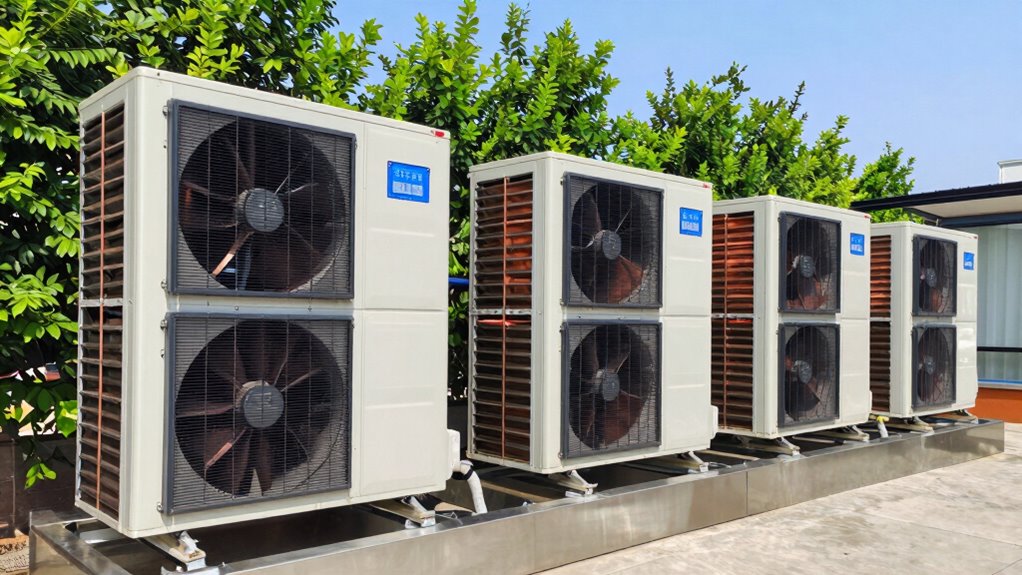
Refrigeration units are indispensable for maintaining the freshness and safety of ingredients in any restaurant. When it comes to choosing the right system, remote refrigeration condensing units are an excellent option to evaluate. These units are typically installed outside the building, which helps free up valuable space inside your establishment. They work by separating the condensing unit from the evaporator, connected via refrigeration lines, making them a flexible and efficient solution. One of the key advantages of remote units is their potential for higher energy efficiency. Since the compressor and condenser are located outdoors, they can operate more effectively in a cooler environment, reducing the workload and energy consumption. This translates into lower utility bills and a more sustainable operation overall.
However, to maximize these benefits, you need to be aware of their maintenance requirements. Remote units demand regular inspections to guarantee optimal performance. It’s essential to check the condenser coil for dirt and debris, as a dirty coil can impede heat transfer, forcing the compressor to work harder and consume more energy. Additionally, you should verify refrigerant levels and look for any signs of leaks, since refrigerant loss can compromise cooling efficiency and increase operational costs. Proper airflow around the outdoor unit is critical, so keeping the surrounding area clear of obstructions is necessary to prevent overheating and ensure consistent performance. Routine maintenance also includes inspecting electrical components and connections to avoid unexpected failures, which can be costly and disruptive to your daily operations.
While remote refrigeration condensing units are designed to be durable, they still require a proactive maintenance approach to sustain their energy efficiency and longevity. Scheduling regular professional checkups can identify potential issues early, preventing costly repairs and minimizing downtime. It’s also helpful to use performance monitoring systems** that track the unit’s operation and alert you to any irregularities, further enhancing efficiency. Implementing preventive maintenance practices can significantly extend the lifespan of your units and help maintain optimal performance. This proactive approach not only preserves the energy efficiency of your system but also extends its lifespan. Regular maintenance practices are essential for prolonging the life of your units and ensuring they operate at peak efficiency. Moreover, understanding the durability of remote units** can help restaurant owners plan for long-term investments and reduce unexpected expenses.
remote refrigeration condensing unit for restaurant
As an affiliate, we earn on qualifying purchases.
As an affiliate, we earn on qualifying purchases.
Frequently Asked Questions
How Do Remote Units Impact Energy Efficiency?
Remote units boost your energy efficiency by isolating the condenser from the compressor, allowing for better temperature control and less energy waste. This setup promotes energy savings because it reduces the workload on the compressor, leading to lower power consumption. When you do a cost analysis, you’ll find remote units often lower operational costs over time, making them an economical choice for restaurants aiming to cut energy expenses and improve overall efficiency.
What Maintenance Is Required for Remote Condensing Units?
To keep your remote condensing unit performing perfectly, perform periodic inspections and cleanings. You should check for leaks, verify proper refrigerant levels, and clear debris from coils. Regular maintenance extends the condensing unit lifespan and guarantees refrigeration system compatibility. By proactively addressing these tasks, you prevent potential problems, improve efficiency, and preserve your system’s reliability, securing your restaurant’s refrigeration remains robust and reliable day after day.
Are Remote Units Suitable for Outdoor Installation?
Yes, remote units are suitable for outdoor installation, but you should consider remote noise levels and installation challenges. Outdoor units are designed to withstand weather conditions, making them ideal for outside use. However, they can generate noise that might affect nearby areas, and installation challenges like proper mounting and ventilation are essential. Make certain you choose a location that minimizes noise impact and allows for easy maintenance and ventilation.
How Does Climate Affect Remote Refrigeration Performance?
Imagine a chilly winter night or a scorching summer day—climate variability directly impacts your remote refrigeration units. Extreme temperatures challenge their efficiency, making refrigeration insulation essential. When it’s hot, your unit works harder, risking overheating; in cold weather, it may struggle to maintain proper temperatures. Proper insulation helps stabilize performance, ensuring your refrigeration stays reliable regardless of climate changes, keeping your food fresh and your business running smoothly.
What Are the Safety Considerations for Remote Units?
You should follow strict safety protocols when handling remote refrigeration units to prevent accidents. Regularly inspect electrical connections and refrigerant lines for leaks or damage. Guarantee clear access to emergency shutdowns and train staff on their use. Keep the area free of obstructions, and use proper protective gear. Implementing these safety measures helps minimize risks, ensuring safe operation and quick response during emergencies, protecting both staff and equipment.
Conclusion
Imagine a busy restaurant relying on a remote refrigeration condensing unit to keep their ingredients fresh. When the unit operates efficiently, your kitchen runs smoothly, and your customers stay happy. For example, a café upgraded to a remote system and saw energy costs drop considerably while maintaining perfect temperature control. Investing in the right refrigeration setup guarantees your restaurant stays cool under pressure, saving you money and delivering top-quality food every time.
Halloween Picks
halloween
As an affiliate, we earn on qualifying purchases.