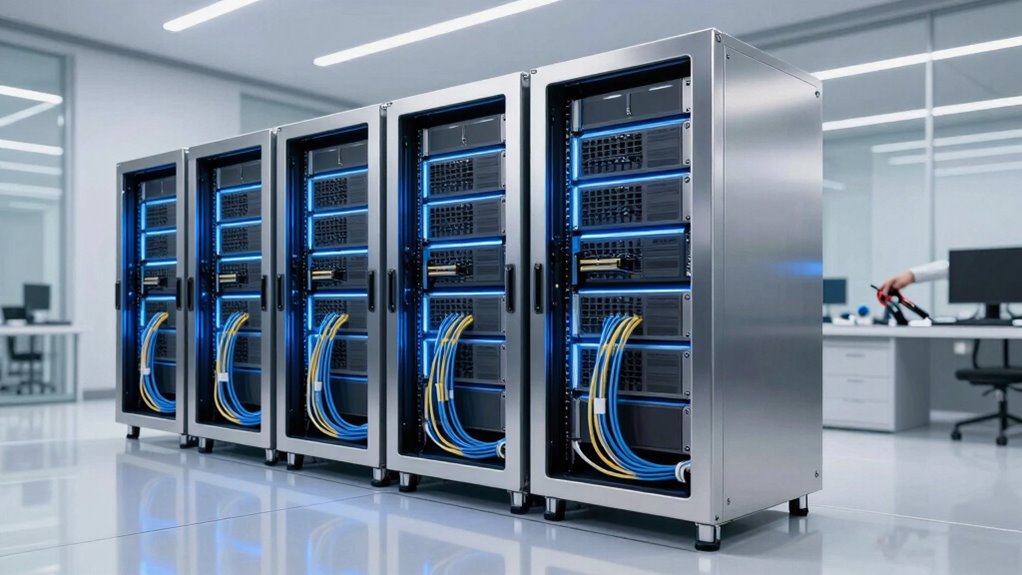

To build a cleaner server station without slowing down service, choose compact, modular hardware that’s easy to upgrade and maintains good airflow. Use quality cooling solutions like fans or liquid cooling to prevent overheating, and guarantee cables are well-managed to avoid airflow blockage. Schedule regular cleaning and inspections to keep dust out and hardware running smoothly. Focus on ergonomic placement for easy access, and explore scalable setups for future growth—more tips await to refine your system further.

Get kitchen staples and gadgets delivered free — and shop member deals
- Fast, free delivery on millions of items
- Access to Prime Big Deal Days deals on October 6–7
- Prime Video, Amazon Music and more included
Key Takeaways
- Use compact, energy-efficient hardware designed for easy upgrades to prevent service disruption.
- Implement effective airflow management and cooling solutions to maintain optimal hardware performance.
- Schedule regular cleaning and maintenance during low-usage periods to avoid downtime.
- Organize cables and components for quick access, reducing troubleshooting time without impacting service.
- Continuously monitor system temperatures and performance to proactively address issues before they affect service.
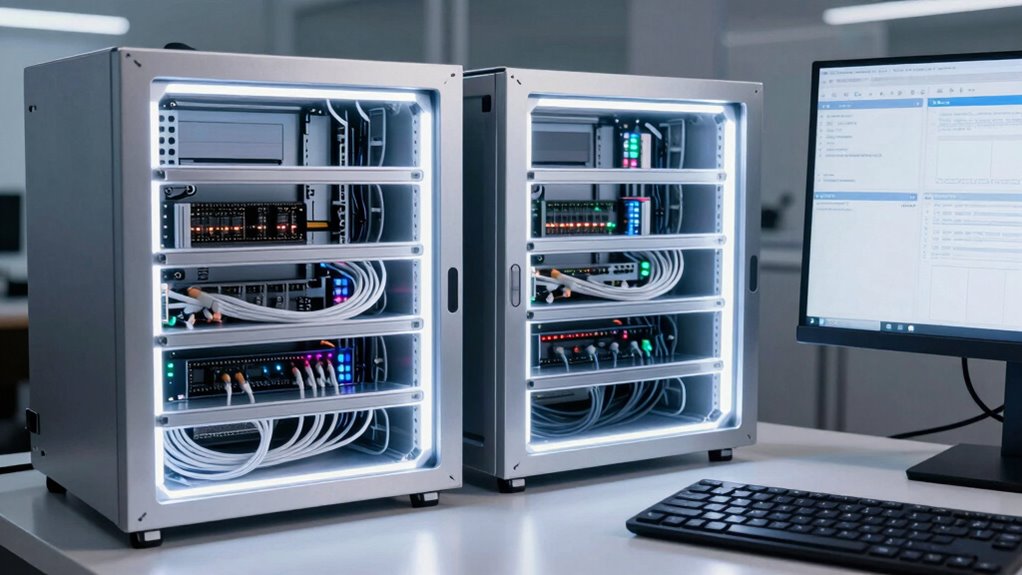
Are you tired of dealing with cluttered, inefficient server stations? If so, it’s time to take control and create a cleaner, more organized setup that improves performance without slowing down your service. The foundation of a well-maintained server station starts with choosing the right server hardware. Opt for compact, modular components that fit neatly into your space and are easy to upgrade or replace. Avoid bulky racks or outdated equipment that can contribute to clutter and make maintenance a hassle. Instead, prioritize modern server hardware designed for efficiency, energy savings, and ease of access. This will not only streamline your setup but also reduce heat output, which is crucial for keeping your system running smoothly. Incorporating biodiversity principles into your workspace can also promote a healthier environment and improve overall sustainability.
Cooling solutions are another vital aspect. Overheating can cause hardware failures and slow down your network, so investing in effective cooling is essential. Consider installing high-quality fans or liquid cooling systems that target hot spots. Proper airflow management is key—use cable management tools to keep wires organized and prevent airflow obstruction. Position your servers in a way that allows cool air to flow in and hot air to be expelled efficiently. If your budget allows, look into temperature monitoring systems that alert you before overheating becomes a problem. Keeping your server hardware cool extends its lifespan and maintains optimal performance, which means fewer interruptions and less downtime. Additionally, effective airflow plays a critical role in maintaining temperature stability and should be carefully planned during setup. Regularly reviewing hardware placement can further optimize cooling efficiency.
Cleaning your server station regularly is just as important as choosing the right hardware and cooling solutions. Dust and debris can accumulate quickly, clogging vents and reducing airflow, so schedule routine cleanings to remove dirt and ensure your cooling systems work at peak efficiency. Use anti-static tools when handling hardware to prevent static damage, and organize cables with ties or trays to avoid tangling and clutter. A tidy setup not only looks better but also makes troubleshooting easier and faster. Regular inspections can help detect potential issues early, avoiding costly repairs or downtime.
Finally, think about your workspace ergonomics. Position your equipment so you can access it comfortably without unnecessary bending or reaching. Label cables and components clearly, which simplifies maintenance and upgrades. By combining smart hardware choices, effective cooling solutions, and regular cleaning, you’ll build a server station that stays clean, runs efficiently, and supports your service needs without unnecessary delays or downtime. This approach ensures your setup remains reliable, scalable, and easy to manage—saving you time and frustration in the long run.
As an affiliate, we earn on qualifying purchases.
Frequently Asked Questions
What Are the Best Tools for Server Cleaning?
You should use tools like CCleaner or BleachBit for effective dust removal and software optimization, which help keep your server clean and running smoothly. These tools delete unnecessary files, clear cache, and optimize system performance without slowing down your service. Regularly running such software guarantees your server stays tidy, reduces overheating risks, and maintains peak efficiency, so your system remains reliable and fast.
How Often Should Server Maintenance Be Performed?
Think of your server as a garden that needs regular tending. You should perform server maintenance every 3 to 6 months, depending on usage. Keep your server organization tight like neatly trimmed hedges, and set maintenance scheduling as a recurring ritual. Regular check-ups prevent clutter from choking data flow, ensuring your server runs smoothly without slowing down, just like a well-kept garden thriving in harmony.
Can Cleaning Impact Server Hardware Longevity?
Cleaning can positively impact your server hardware longevity by preventing dust buildup, which hampers thermal management. Excess dust traps heat, causing components to overheat and wear out faster. Regular cleaning guarantees proper airflow and cooling, reducing thermal stress. By maintaining a dust-free environment, you extend the lifespan of your hardware and keep your server running efficiently without risking overheating or premature failure.
What Security Measures Are Necessary During Cleaning?
During cleaning, prioritize protection by implementing proper security measures. You should disable remote access temporarily, preventing unauthorized intrusion while working. Make sure to encrypt sensitive data, safeguarding it from potential breaches. Use secure passwords and multi-factor authentication to add extra layers of security. Always handle hardware carefully, avoiding static discharge, and stay vigilant, ensuring your server remains safe and secure throughout the cleaning process.
How to Prevent Future Server Clutter?
To prevent future server clutter, focus on server organization by regularly categorizing and labeling cables, components, and storage. Implement a systematic cleaning routine to reduce dust buildup, which can impair performance. Use dust prevention measures like sealed enclosures and air filters, and keep the area tidy by removing unnecessary equipment. Regular inspections and maintenance guarantee your server stays clean, efficient, and well-organized, preventing clutter from accumulating over time.
Conclusion
By keeping your server station tidy and well-organized, you create a space that flows smoothly like a clear stream. Imagine your equipment shining like polished glass, each cable neatly tucked away, ready to spring into action at a moment’s notice. A clean, clutter-free station isn’t just visually appealing—it’s the backbone of reliable service. When your server station stays spotless, you guarantee your system runs seamlessly, keeping everything humming along like a well-oiled machine.
Halloween Picks
halloween
As an affiliate, we earn on qualifying purchases.




![A Visual Guide To Europe’s Most Popular Olive Oil Varieties, From Koroneiki To Picual [MAP]](https://theuglykitchen.com/wp-content/uploads/2026/10/a-visual-guide-to-europe-s-most-popular-olive-oil-varieties-from-koroneiki-to-pi-featured-260x140.jpg)