A SWOT analysis for restaurants is a strategic tool that helps you identify your strengths, weaknesses, opportunities, and threats. It enables you to evaluate your menu, operations, and market position to stay competitive and grow. By understanding what sets you apart and where improvements are needed, you can make informed decisions and adapt to changing trends. Keep exploring to discover how leveraging this tool can boost your restaurant’s success.
Key Takeaways
- A SWOT analysis evaluates a restaurant’s internal strengths and weaknesses to identify areas for improvement.
- It also assesses external opportunities and threats impacting the restaurant’s market position.
- The process aids in strategic decision-making, particularly for menu innovation and customer engagement.
- By understanding these factors, restaurants can adapt to market trends and maintain competitiveness.
- Regular SWOT analysis supports ongoing growth, relevance, and long-term success in the restaurant industry.
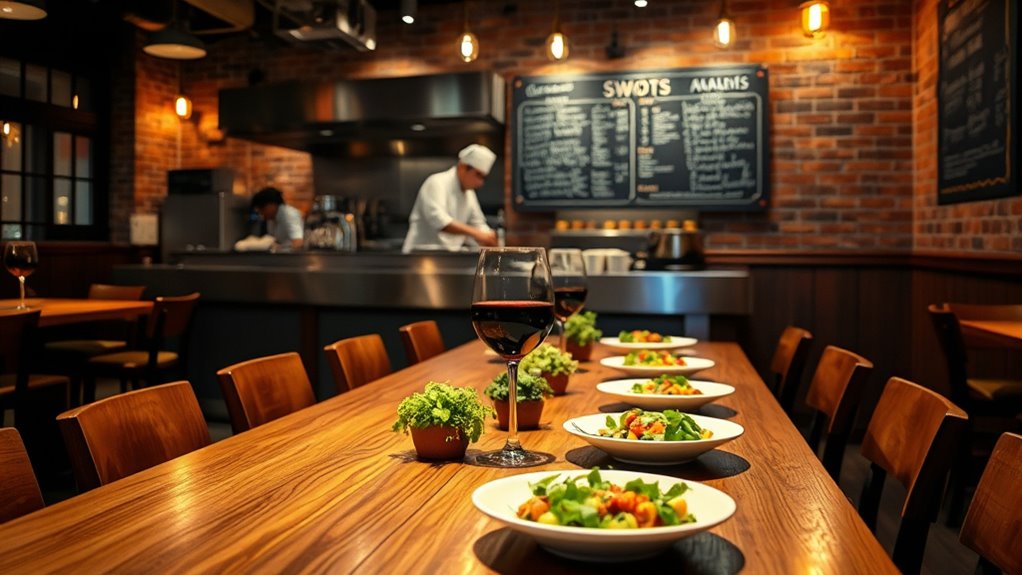
Conducting a SWOT analysis is vital for restaurant owners looking to stay competitive and grow their business. One of the key aspects you should focus on is how your restaurant approaches menu innovation. Regularly updating and refining your menu helps you stand out in a crowded market and keeps customers excited about dining at your establishment. By identifying your strengths in menu diversity or unique offerings, you can leverage these to attract new patrons and encourage repeat visits. Conversely, recognizing weaknesses, such as limited options or outdated dishes, allows you to make targeted improvements. This ongoing assessment guarantees your menu remains fresh, relevant, and appealing, which directly impacts customer loyalty.
When you analyze your strengths, think about what sets your restaurant apart through menu innovation. Do you offer locally sourced ingredients, seasonal specials, or chef-driven creations? These elements can become your competitive advantages and foster deeper customer loyalty. Customers appreciate a restaurant that consistently delivers new flavors and experiences, prompting them to return more often. Identifying opportunities for menu expansion or customization also helps you meet evolving customer preferences, reinforcing their connection to your brand. On the flip side, weaknesses like inconsistent quality or lack of variety can diminish customer loyalty over time. Recognizing these issues allows you to implement strategic changes, such as staff training or menu redesigns, that enhance overall customer satisfaction.
Your ability to adapt through menu innovation isn’t just about attracting new guests; it’s also vital for retaining your loyal customer base. When you introduce seasonal or innovative dishes, you demonstrate that your restaurant is dynamic and attentive to current trends. This keeps your loyal customers engaged and eager to try new offerings, strengthening their relationship with your brand. Additionally, involving customers in menu development—such as asking for feedback or preferences—can boost their sense of ownership and loyalty. Being proactive about menu updates shows that you value their experience, encouraging them to choose your restaurant over competitors consistently. Moreover, fostering a culture of curiosity within your team can inspire innovative ideas for new dishes and service improvements.
Finally, a SWOT analysis helps you identify external opportunities and threats related to menu innovation and customer loyalty. For example, you might discover a rising trend in plant-based options or a local supplier partnership that can enhance your menu’s appeal. Conversely, you might recognize threats like competitors launching new concepts or changing consumer tastes. By continuously evaluating these factors, you can refine your approach to menu innovation, ensuring your restaurant remains relevant and your customer loyalty remains strong. Ultimately, a well-executed SWOT analysis enables you to make informed decisions that foster growth, improve customer retention, and keep your restaurant ahead of the curve.
Frequently Asked Questions
How Often Should a Restaurant Conduct a SWOT Analysis?
You should conduct a SWOT analysis for your restaurant at least twice a year. This allows you to incorporate insights from competitive benchmarking and customer feedback, helping you identify strengths, weaknesses, opportunities, and threats. Regular reviews keep your strategies fresh and relevant, ensuring you stay ahead in a competitive market. By consistently analyzing these aspects, you can adapt quickly and improve your restaurant’s performance effectively.
Can SWOT Analysis Help in Menu Development?
Imagine your menu as a canvas, and a SWOT analysis as your brush. It helps you identify strengths like popular dishes, weaknesses such as slow service, opportunities for menu innovation, and threats from competitors. By understanding customer preferences, you can tailor your offerings, innovate flavors, and refine your menu to meet demand. This strategic approach guarantees your menu stays fresh, appealing, and aligned with what your diners truly want.
What Tools Are Best for Creating a SWOT Matrix?
You should use restaurant software with built-in visual tools to create a SWOT matrix efficiently. These tools help you organize your strengths, weaknesses, opportunities, and threats visually, making it easier to analyze and share insights. Look for options that offer drag-and-drop features, customizable templates, and real-time collaboration. Such software simplifies the process, saves time, and enhances clarity, empowering you to make informed decisions for your restaurant’s growth.
How Do I Prioritize SWOT Findings for Action?
Your priorities can’t be anything less than revolutionary when it comes to resource allocation and urgency ranking. Start by categorizing findings into high, medium, and low urgency, then match them with available resources. Focus first on issues that threaten your restaurant’s survival or growth, tackling high-urgency items with the most impact. This strategic approach transforms your SWOT insights into actionable steps, ensuring your restaurant stays ahead of the competition.
Is SWOT Analysis Suitable for New Restaurants?
Yes, a SWOT analysis suits new restaurants well. It helps you evaluate your market positioning, revealing strengths to highlight and weaknesses to improve. By identifying opportunities and threats, you can develop strategies that build your competitive advantage. This process guarantees you’re making informed decisions early on, aligning your offerings with customer needs, and standing out in a competitive market. It’s an essential tool for laying a strong foundation for your new restaurant’s success.
Conclusion
By mastering SWOT analysis for your restaurant, you’re not just making decisions — you’re unleashing a superpower that can turn your eatery into an unstoppable food empire! With this tool, you’ll spot every opportunity and crush every threat before they even think about sneaking up on you. Get ready to dominate the market, dazzle your customers, and transform your restaurant into a legendary dining destination that everyone talks about — because with SWOT, you’re unstoppable!