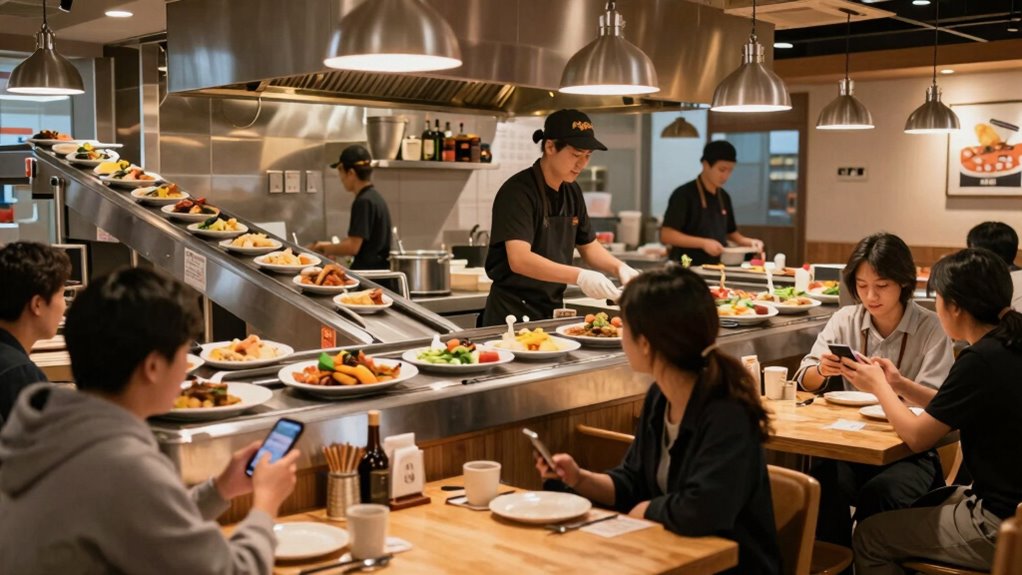
In fast casual restaurants, throughput refers to how quickly and efficiently you turn customer orders into satisfied diners. It measures your ability to serve more guests without sacrificing food quality or accuracy. A higher throughput means faster service, happier customers, and better overall performance. Factors like kitchen efficiency, effective communication, and smart layout all influence throughput. Keep exploring to discover how optimizing these aspects can boost your restaurant’s success and reputation.

Get kitchen staples and gadgets delivered free with Prime
- Fast, free delivery on millions of items
- Prime Video, Amazon Music and more included
- Member-only deals all year
Key Takeaways
- Throughput measures how efficiently a restaurant processes orders into satisfied customers.
- It reflects the speed and volume of service during busy periods.
- High throughput ensures quick, accurate, and fresh food delivery.
- It depends on kitchen efficiency, layout, and communication among staff.
- Improving throughput enhances customer satisfaction and supports restaurant success.
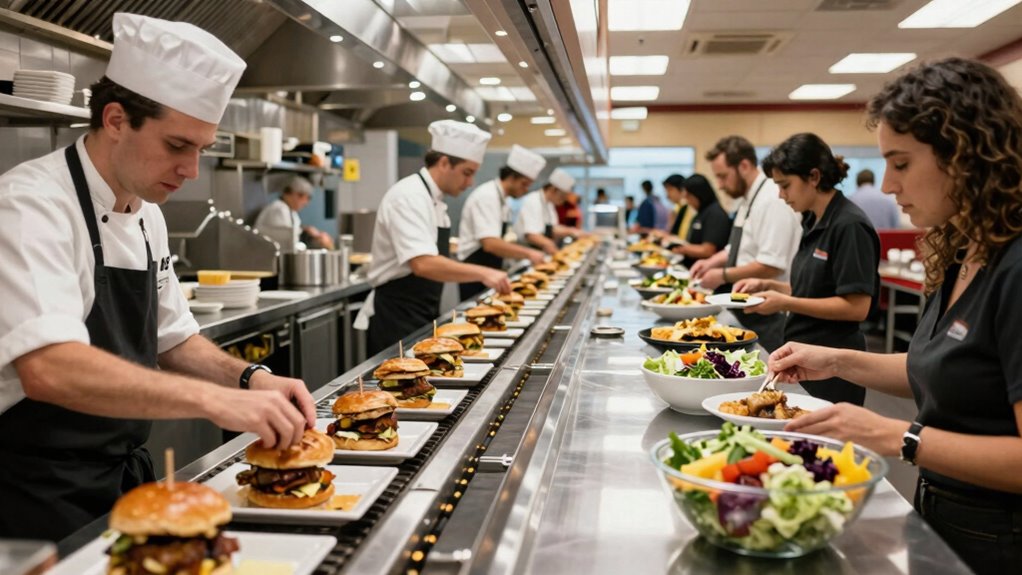
Have you ever wondered what makes a fast casual restaurant thrive? One of the key factors is throughput, which measures how efficiently a restaurant can turn orders into satisfied customers. When throughput is high, it means your staff can serve more guests quickly without sacrificing quality. This directly impacts customer satisfaction because people want their food fast, fresh, and accurately prepared. If your restaurant can process a steady flow of orders smoothly, customers leave happy and more likely to return.
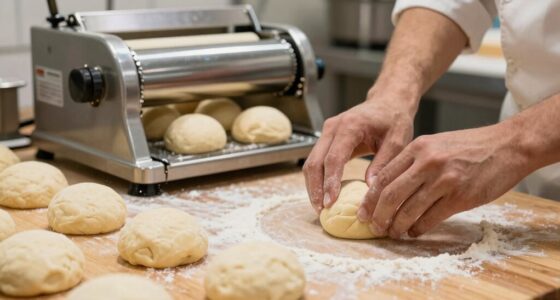
Achieving maximum throughput hinges on your kitchen’s efficiency. When your kitchen runs like a well-oiled machine, it shortens wait times and reduces errors. This involves streamlining processes, organizing ingredients, and ensuring your staff is trained to work swiftly and accurately. When kitchen efficiency improves, your team can handle busy periods without chaos, maintaining the quality of each dish. This balance between speed and precision is essential; rushing can lead to mistakes, but sluggish service frustrates customers. Striking that balance maximizes throughput, which is indispensable for the restaurant’s success.
Efficient kitchens balance speed and accuracy to maximize throughput and ensure customer satisfaction.
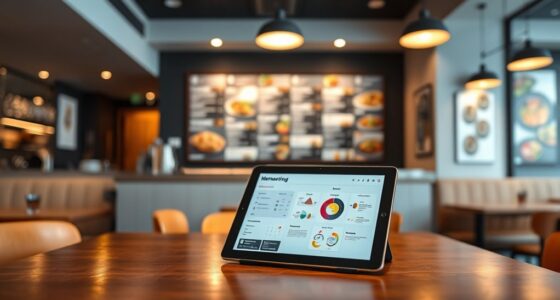
You also need to think about how your front-of-house operations contribute to throughput. Clear communication between your servers and kitchen staff ensures orders are relayed promptly and correctly. Technology can help here, with point-of-sale systems that transmit orders directly to the kitchen, reducing delays. When everyone works in sync, the overall process becomes more fluid, cutting down on wait times and increasing customer satisfaction. Happy customers tend to leave positive reviews and become repeat patrons, further boosting your restaurant’s reputation. Incorporating efficient communication methods can significantly improve your throughput, especially when combined with proper staff training.
Another important aspect is the layout of your restaurant. An efficient design allows staff to move quickly between the kitchen and dining area, minimizing bottlenecks. Properly positioned equipment and streamlined pathways help facilitate faster service. When your restaurant’s layout supports quick movement and easy access to ingredients and utensils, throughput naturally improves. This, in turn, enhances customer satisfaction because guests receive their orders promptly and enjoy a smooth dining experience. Additionally, understanding your throughput capacity helps you plan for busy times and scale operations accordingly. Implementing smart layout planning can further optimize the flow of operations and ensure your restaurant remains agile during peak hours. Incorporating networking solutions can also help optimize communication and data sharing across your staff, further improving throughput.
Products Worth Considering

Ninja PossibleCooker PRO Plus 11-in-1 8.5 qt Trace Blue (MC2002BL)

Instant Pot Pro Plus 6 Qt 10-in-1 Electric Pressure Cooker, Black

Vitamix Propel Series 510 Professional-Grade Blender, 3 Programs, Black
As an affiliate, we earn on qualifying purchases.
Frequently Asked Questions
How Does Staff Training Impact Throughput Efficiency?
Staff training directly boosts throughput efficiency by ensuring your team is motivated and well-prepared. When you prioritize training consistency, staff quickly learn best practices, reducing errors and delays. Motivated staff work faster and more accurately, which accelerates service times. Ultimately, ongoing training fosters a smooth workflow, helping your restaurant serve more customers efficiently and maintain high-quality service, leading to increased throughput and customer satisfaction.
What Role Does Technology Play in Increasing Throughput?
Technology boosts your throughput by streamlining operations through digital ordering and kitchen automation. Digital ordering allows customers to place orders quickly without waiting in line, reducing bottlenecks. Kitchen automation speeds up food prep, minimizing delays and errors. By integrating these tools, you improve efficiency, serve more customers faster, and enhance overall service quality, making your fast casual restaurant more competitive and responsive to customer needs.
How Do Peak Hours Affect Restaurant Throughput?
Peak hours increase customer flow, which can slow down your restaurant’s throughput if you don’t optimize seating. During busy times, you need to manage seating effectively, ensuring customers are seated quickly and tables turn over efficiently. By optimizing seating arrangements and streamlining service, you can handle higher customer flow without sacrificing speed. This keeps your restaurant running smoothly, improves customer experience, and boosts overall throughput during those busy peak hours.
What Are Common Obstacles to Improving Throughput?
Think of improving throughput like untangling a knot—you face obstacles that hold progress back. Common barriers include limited seating arrangements that slow service flow and restrictions on menu customization, which can cause delays. These issues bottleneck your operations, making it harder to serve customers efficiently. To boost throughput, you need to streamline seating and offer flexible menu options, ensuring your restaurant runs smoothly like a well-oiled machine.
How Is Throughput Measured Beyond Order Speed?
You measure throughput beyond order speed by considering factors like menu complexity and seating capacity. A simpler menu lets staff serve more customers efficiently, while optimizing seating capacity guarantees you maximize available space without long waits. Tracking how many customers are served over time, along with these elements, helps you gauge your restaurant’s overall efficiency. This broad view lets you identify bottlenecks and improve overall customer flow.
Conclusion
Understanding throughput isn’t just about speed; it’s about creating moments of connection amid the rush. As you aim to serve quickly, remember that each order is an opportunity to brighten someone’s day. The hustle can feel overwhelming, but it’s also what fuels your passion and purpose. In the end, fast casual isn’t just about rapid service—it’s about balancing efficiency with warmth, turning busy moments into memorable experiences for every guest who walks through your doors.