In foodservice, sterilization means removing all microbes, including spores, from utensils to guarantee they are completely safe for use. You do this through high heat, steam, or chemicals, depending on the sterilizer. Proper cleaning before sterilization removes food residues that can shield bacteria, making the process more effective. Regular maintenance keeps equipment running well, ensuring consistent safety. If you keep exploring, you’ll uncover more about the critical role sterilization plays in food hygiene.
Key Takeaways
- Sterilization in foodservice destroys all microbes, including spores, ensuring utensils are completely free of bacteria and pathogens.
- Proper sterilization involves high heat, steam, or chemical agents to eliminate microbial life on utensils.
- Effective sterilization requires pre-cleaning to remove residues that can shield microbes from sterilizing agents.
- Regular maintenance of sterilizers ensures consistent cycle performance and prevents contamination caused by equipment failure.
- Consistent sterilization practices protect customer health, comply with regulations, and maintain high hygiene standards in the kitchen.
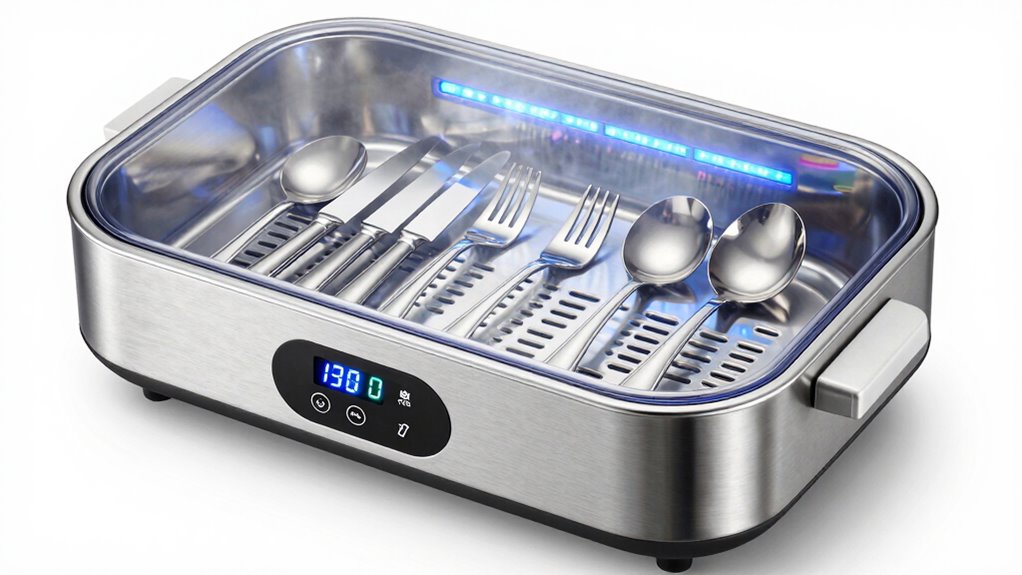
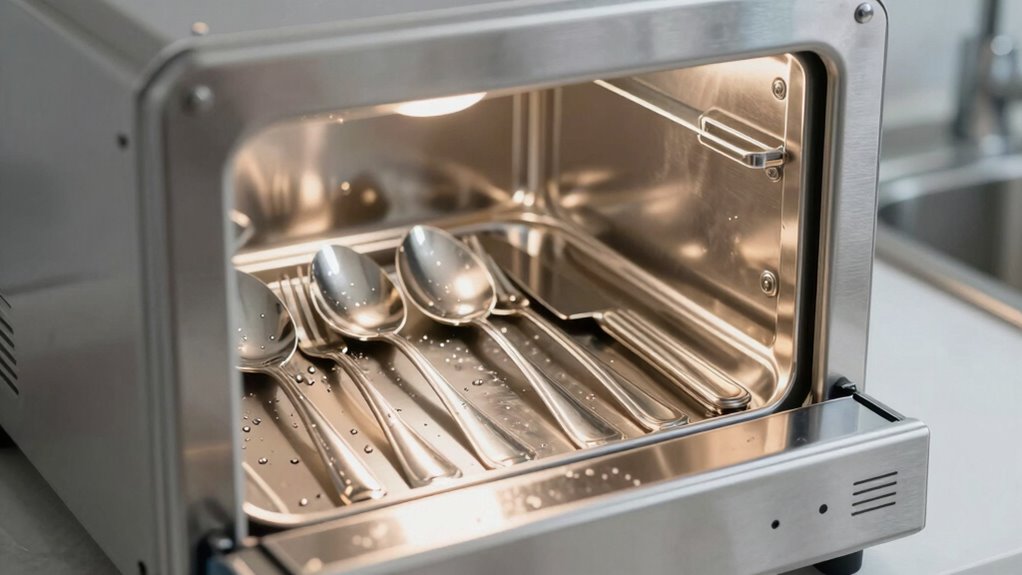
Utensil sterilizers are indispensable tools for guaranteeing your cutlery and kitchen tools are thoroughly sanitized. When it comes to food safety, understanding what sterilization truly entails is essential. It’s not just about washing away visible dirt or bacteria; sterilization takes the process a step further by eliminating all forms of microbial life, including spores that can survive traditional cleaning methods. This is especially important in foodservice environments where the risk of cross-contamination can lead to serious health issues. Properly using utensil sterilizers helps uphold strict cleaning protocols, which are critical for maintaining hygiene standards and protecting your customers.
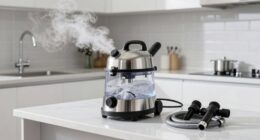
Utensil sterilizers eliminate all microbes, ensuring food safety and hygiene in your kitchen.
Implementing effective cleaning protocols involves more than just running items through a sterilizer. It starts with pre-cleaning—removing any food residues, grease, or debris that could shield bacteria from the sterilization process. If these residues aren’t properly removed, the sterilizer’s effectiveness diminishes, making it less capable of ensuring complete sanitation. Regular equipment maintenance also plays a pivotal role. You need to keep your sterilizers in top condition, checking for malfunctions, scaling, or wear that could compromise their performance. Cleaning the sterilizer itself, including filters and water lines, prevents buildup that might hinder sterilization cycles. When equipment is well-maintained, you reduce the risk of contamination and extend the lifespan of your investment.
The sterilization process itself typically involves high heat, steam, or chemical agents, depending on the type of sterilizer you use. But no matter the method, the goal remains the same: destroy all microbial life on your utensils. This guarantees that when your staff uses these tools, they won’t introduce bacteria or pathogens into food, which is essential for compliance with health regulations. It also guarantees your kitchen operates efficiently, as sterilized tools are less likely to cause cross-contamination, reducing the need for re-cleaning or re-sterilizing items.
Consistent use of proper sterilization techniques ensures that your operation maintains high hygiene standards and reduces the risk of foodborne illnesses. Following strict protocols for cleaning and equipment maintenance guarantees your sterilizers function as intended every time. This consistency helps you meet health standards and builds trust with your customers, who expect safe, hygienic food handling. Remember, sterilization isn’t a one-time task but an ongoing process that requires diligence. Regularly scheduled maintenance, adherence to proper cleaning procedures, and understanding the sterilization cycle will help you keep your utensils safe and your operation running smoothly. Ultimately, sterilizers are an essential component of your food safety strategy, ensuring that your kitchen remains a clean, safe environment for everyone.
Frequently Asked Questions
How Often Should Utensil Sterilizers Be Calibrated for Accuracy?
You should calibrate your utensil sterilizer at least once every six months to guarantee accuracy. Regular calibration helps maintain accuracy assurance, preventing under- or over-sterilization. If you notice any inconsistencies or if the sterilizer displays error messages, calibrate it immediately. Additionally, follow the manufacturer’s recommendations, which may suggest more frequent calibrations for high-volume or critical foodservice environments. Consistent calibration keeps your sterilizer functioning at its best.
Are There Specific Cleaning Protocols for Different Types of Sterilizers?
Imagine your sterilizer as a busy workshop that needs tailored cleaning procedures for each tool. Yes, different sterilizers require specific cleaning protocols to maintain efficiency and safety. Regular sterilizer maintenance includes wiping down surfaces, descaling, and following manufacturer guidelines. By doing so, you guarantee each sterilizer functions properly, prevents contamination, and keeps your foodservice environment safe. Always consult manufacturer instructions for precise cleaning procedures suited to your sterilizer type.
What Are the Energy Consumption Differences Among Sterilizer Models?
You’ll notice energy efficiency varies among sterilizer models, impacting power consumption. Some models use advanced technology to minimize energy use, helping lower operational costs, while others consume more power due to larger capacity or older designs. To save energy, choose sterilizers with high efficiency ratings, and always consider your specific volume needs. Regular maintenance also ensures your sterilizer operates at its best, reducing unnecessary energy consumption.
Can Sterilizers Be Used for Non-Food Contact Items Safely?
Yes, you can use sterilizers for non-food items, but you need to contemplate safety concerns. Make sure the sterilizer is compatible with non-food contact items, like medical tools or utensils, and follow manufacturer instructions carefully. Using sterilizers outside their intended purpose might pose risks if materials aren’t suitable or if proper protocols aren’t followed. Always prioritize safety to prevent contamination or damage.
How Do Sterilizers Impact Overall Kitchen Workflow Efficiency?
Sterilizers enhance your kitchen workflow efficiency by streamlining sanitation processes. They reduce downtime between tasks, allowing staff to focus on food prep and service. To maximize benefits, invest in staff training so everyone understands proper operation and maintenance. This guarantees consistent sterilization, minimizes errors, and keeps your kitchen running smoothly, ultimately improving productivity and ensuring safety standards are met efficiently.
Conclusion
Understanding what “sterilize” truly means helps you make smarter choices in foodservice. Think of sterilization as your silent guardian, quietly banishing germs like a shield of armor around your utensils. When you use a sterilizer properly, you’re not just cleaning—you’re creating a fortress of safety that protects your customers and staff alike. So, embrace the power of sterilization, and turn your kitchen into a fortress where cleanliness reigns supreme.