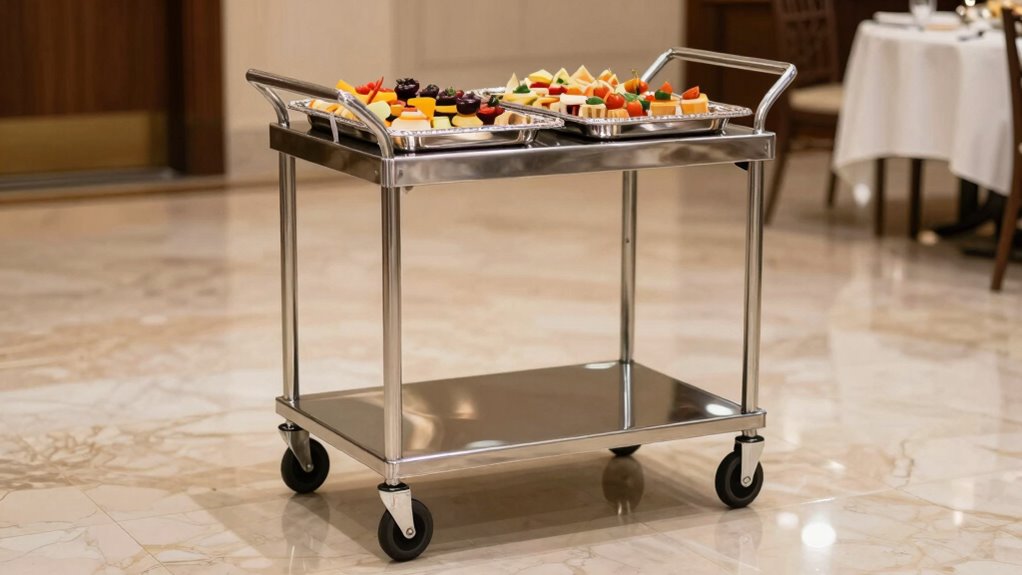
To prevent tipping and breakage when loading banquet carts, evaluate the weight of each item and position lighter items on top of heavier ones. Keep the load centered, low, and balanced, with heavier items near the handle for stability. Secure all items with straps or cushioning, and avoid overloading beyond the cart’s limits. Regularly check for stability before moving, and ensure wheels and handles are in good condition. Continuing will reveal essential tips to keep your load safe and secure.
Key Takeaways
- Load heavier items at the bottom and lighter items on top to maintain stability.
- Distribute weight evenly across the cart to prevent tipping and ensure balanced handling.
- Secure fragile items with padding and straps to prevent breakage during transport.
- Keep the center of gravity low and close to the handle for better control.
- Regularly inspect wheels and handles, and avoid exceeding the cart’s weight limit for safe operation.
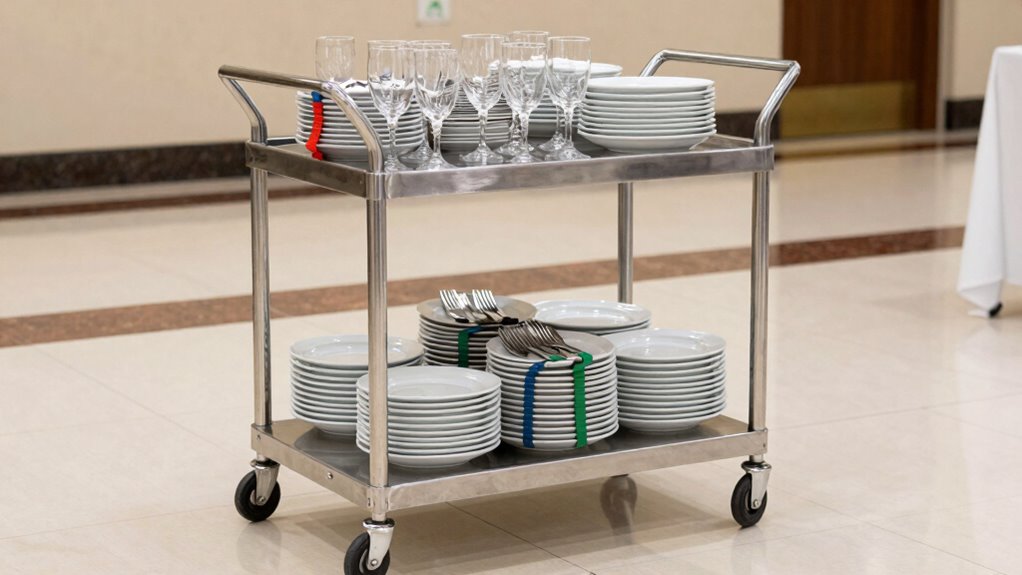
Loading banquet carts properly is essential to guarantee safety and efficiency during events. When you’re stacking and organizing items on a cart, paying attention to loading safety and weight distribution is crucial. Properly loaded carts not only prevent accidents but also ensure smooth transportation, saving you time and minimizing damage to the items you’re carrying. The first thing you need to do is assess the weight of each item you plan to load. Lighter items should be placed at the top, while heavier, sturdier items go at the bottom. This approach helps keep the center of gravity low and centered, reducing the risk of tipping over when you move the cart. Always distribute weight evenly across the cart’s surface, avoiding any side that might become unbalanced. An uneven load can make steering difficult and increase the chance of tipping, especially on uneven floors or when turning corners. As you load, consider the shape and size of your items. Heavy objects with irregular shapes should be positioned carefully to avoid shifting during transit. Secure items that might slide or tip with straps or bungee cords, especially if the cart will be moved over longer distances or rough surfaces. Remember, a balanced load isn’t just about weight; it’s also about how you position your items. Place heavier items close to the cart’s center, near the handle, to maintain better control while moving. When stacking, keep fragile or breakable items on top, and make sure they’re cushioned or wrapped to prevent damage. Use space efficiently by stacking vertically where possible, but don’t overload the cart’s height, which can compromise stability. Always double-check the load before moving; give the cart a gentle push to see if it’s stable. If it wobbles or feels unsteady, reconfigure the items to improve balance. Additionally, be mindful of the weight limit specified by the cart manufacturer. Overloading beyond this limit can weaken the cart’s structure and increase the risk of tipping or breaking. Regularly inspect the cart’s wheels and handles for wear and tear, as damaged parts can compromise loading safety. Proper weight distribution and careful handling are essential for safe transport. When you’re ready to move the cart, do so slowly and carefully, especially when navigating tight spaces or uneven surfaces. Keep the load close to your body to maintain control and prevent strain. By prioritizing loading safety and proper weight distribution, you ensure that your banquet carts operate smoothly, minimize risks, and keep your event running seamlessly. Taking these simple but vital steps will help you avoid accidents, protect your items, and make your job easier and safer.
Frequently Asked Questions
How Often Should Banquet Carts Be Inspected for Safety?
You should inspect banquet carts for safety at least once a month. Regular cart maintenance guarantees you catch potential issues early. Conduct safety audits during these inspections to identify wear and tear, loose wheels, or damaged parts. Frequent checks help prevent tipping or breakage, keeping staff safe and operations smooth. Consistent inspection schedules demonstrate your commitment to safety and extend the lifespan of your banquet carts.
What Materials Are Best for Loading Fragile Items?
Fragile item protection is so essential, it’s like safeguarding treasures in a vault. You should use soft, durable materials like foam, bubble wrap, or thick blankets for loading fragile items. These materials cushion your items and absorb shocks during transport. Employ proper loading techniques by placing the most delicate objects on top, securing them tightly, and avoiding overloading. This way, you prevent breakage and keep your fragile items safe and sound.
Can Banquet Carts Be Used Outdoors Safely?
Yes, banquet carts can be used outdoors safely if they have strong outdoor durability and weatherproof features. Choose carts made from rust-resistant materials like stainless steel or coated metals, and verify they have sealed wheels and handles to withstand rain, sun, and dirt. Regularly inspect for damage, and store them in sheltered areas when not in use. Properly maintained, they’ll serve you well in outdoor settings without issues.
Are There Weight Limits Specific to Different Cart Models?
Like a knight with a trusty steed, you should always check your cart model specifications before loading. Different cart models have specific weight capacity guidelines, so don’t assume one size fits all. Overloading can cause tipping or breakage. Always follow the manufacturer’s recommendations to guarantee safety and durability. By adhering to these weight limits, you protect your investment and keep operations running smoothly, just as a hero protects their domain.
How Do Weather Conditions Affect Cart Stability and Loading?
Weather conditions markedly impact cart stability and load safety. When it rains or snows, your cart can become slippery or uneven, increasing the risk of tipping or breakage. Wind can cause instability, especially with high or uneven loads. To maintain load stability, always adjust your handling to weather conditions—secure items tightly, avoid overloading, and be extra cautious on wet or icy surfaces to prevent accidents.
Conclusion
By following these banquet cart loading rules, you can greatly reduce tipping accidents and breakage. Did you know that improper loading is responsible for nearly 30% of cart-related damages? Keeping weight balanced and loads secure not only ensures safety but also extends your cart’s lifespan. So, next time you load a banquet cart, remember these simple rules—your staff and equipment will thank you for it. Safe loading is smart loading!