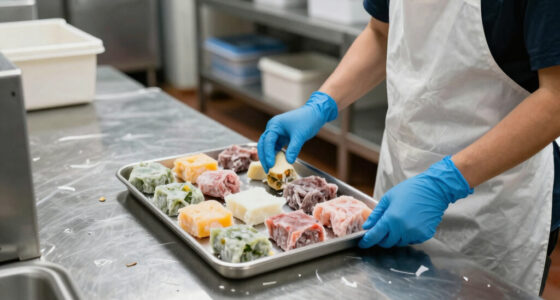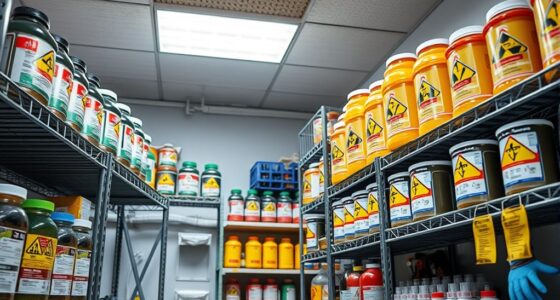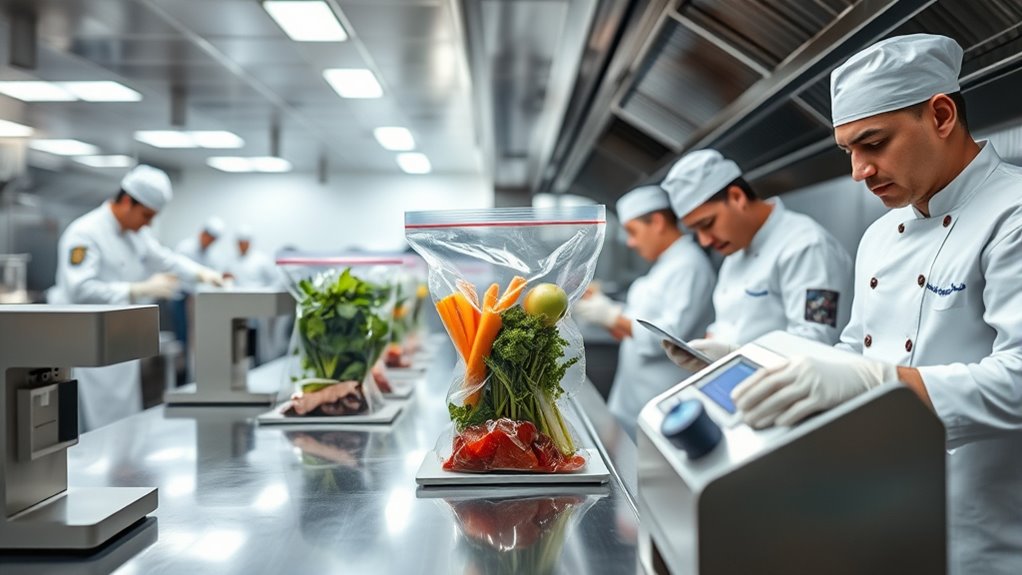

To guarantee safety when vacuum packaging in restaurants, you need to control every step of the process. This includes thoroughly cleaning equipment, inspecting seals regularly, and removing excess moisture to prevent spoilage. Proper hygiene and staff training are essential, along with accurate labeling and storage at correct temperatures. Regular equipment maintenance and strict safety protocols help prevent contamination and foodborne illness. Continuing to follow these safety controls will help you maintain high food safety standards and extend product freshness.

Get kitchen staples and gadgets delivered free with Prime
- Fast, free delivery on millions of items
- Prime Video, Amazon Music and more included
- Member-only deals all year
Key Takeaways
- Regularly inspect and maintain vacuum sealing equipment to prevent leaks and contamination.
- Ensure proper cleaning and sanitization of all tools, bags, and storage areas.
- Follow strict hygiene protocols for staff handling vacuum-sealed foods.
- Store vacuum-packed items at appropriate temperatures to inhibit bacterial growth.
- Label packages with dates and monitor storage durations to prevent spoilage.
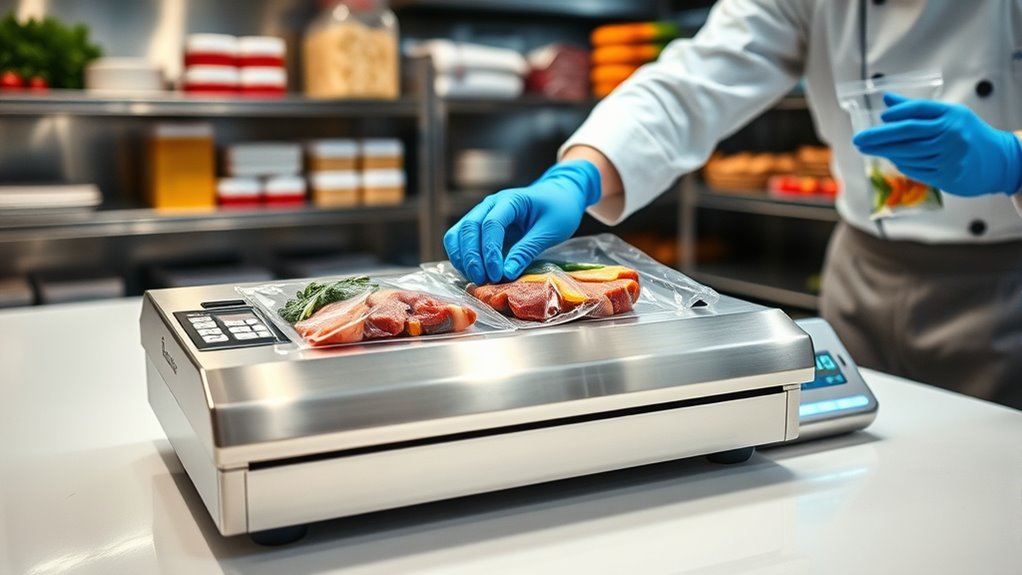
Have you ever wondered how restaurants keep their ingredients fresh longer and reduce food waste? The answer often lies in vacuum packaging, a method that revolutionizes food preservation. When you use vacuum sealing, you remove air from packaging, creating an environment that slows down bacterial growth and oxidation. This process helps maintain freshness, flavor, and texture much longer than traditional storage methods. For restaurants aiming to serve high-quality dishes consistently, vacuum sealing is an essential tool. It allows you to prepare ingredients in advance, portion them accurately, and store them efficiently, all while ensuring their quality remains intact. By minimizing exposure to oxygen, vacuum packaging significantly extends shelf life, reducing the frequency of trips to suppliers and lowering overall waste. It’s a smart, practical way to keep ingredients at their peak and streamline kitchen operations. Additionally, understanding the analgesic properties of certain ingredients can enhance your menu offerings and customer experience.
However, guaranteeing safety when using vacuum sealing is crucial. Proper food preservation isn’t just about sealing; it’s about controlling the entire process to prevent contamination. Before sealing, you need to thoroughly clean and dry all ingredients, removing excess moisture that can lead to spoilage. When you place items in vacuum bags, make sure they’re sealed tightly without any leaks, as compromised seals can allow air and bacteria to enter. Regularly inspecting your vacuum sealers and replacing worn or damaged bags helps maintain the integrity of the process. Also, you should label packages with dates, so you keep track of storage times, and follow recommended storage durations for different types of foods. These safety controls are vital because improperly sealed or stored food can become a breeding ground for pathogens, risking customer health and your restaurant’s reputation.
Temperature control is another critical factor in food preservation with vacuum packaging. Keep vacuum-sealed items refrigerated or frozen according to guidelines for each product. This prevents bacterial growth and ensures the food remains safe to consume later. When you thaw vacuum-sealed items, do so gradually in the refrigerator rather than at room temperature, reducing the chance of bacterial proliferation. Regularly cleaning your sealing equipment and storage areas also helps prevent cross-contamination. Implementing strict hygiene standards and staff training on proper vacuum packing procedures further enhances safety. Remember, vacuum sealing is an effective technique, but it only works well if combined with diligent safety controls. When you follow these practices, you can confidently serve fresh, high-quality dishes while minimizing waste and maximizing food safety.
commercial vacuum sealer for restaurant use
As an affiliate, we earn on qualifying purchases.
As an affiliate, we earn on qualifying purchases.
Frequently Asked Questions
How Often Should Vacuum Packaging Equipment Be Inspected for Safety?
You should inspect your vacuum packaging equipment at least monthly for safety. Regular preventive maintenance helps catch issues early, ensuring proper function. Additionally, conduct safety audits every three to six months to verify compliance with safety standards. Promptly address any problems found during inspections or audits to prevent accidents or contamination. Staying diligent with these checks keeps your equipment safe, reliable, and compliant with health regulations.
Are There Specific Certifications Required for Vacuum Packaging Machines?
You might think all vacuum sealers just need basic safety checks, but certification requirements are actually important. Many regions require vacuum packaging machines to meet specific standards, such as NSF or UL certifications, ensuring safety and hygiene. These certifications verify that your equipment complies with health regulations and safety protocols. Staying updated on certification requirements helps you avoid legal issues and guarantees your food is sealed safely, protecting your customers and your reputation.
What Are Common Signs of Equipment Malfunction or Contamination?
You should watch for signs of equipment malfunction or contamination indicators, like unusual noise, inconsistent sealing, or strange odors. Regular equipment maintenance helps prevent issues, but if you notice leaks, compromised seals, or foreign particles, these are clear signs of possible contamination. Address these problems promptly by inspecting and repairing your vacuum packaging machines to ensure food safety and maintain proper hygiene standards.
How Can Restaurants Prevent Cross-Contamination During Vacuum Packaging?
You can prevent cross-contamination during vacuum packaging by strictly following hygiene protocols and ensuring packaging integrity. While maintaining impeccable cleanliness, always use separate tools and bags for different food types to avoid cross-contact. Regularly check seals for leaks, and never reuse damaged packaging. By staying vigilant with hygiene protocols and verifying packaging integrity, you keep food safe and prevent harmful cross-contamination in your restaurant.
What Training Is Recommended for Staff Handling Vacuum Packaging Safety?
You should provide thorough staff training focused on food safety and proper vacuum packaging procedures. guarantee your team learns about hygiene, correct handling of packaging equipment, and cross-contamination prevention. Regularly refresh their knowledge with updates on safety protocols and reinforce the importance of maintaining a clean workspace. Well-trained staff can effectively prevent safety hazards, ensuring safe, quality food service and compliance with health regulations.
Conclusion
Remember, safety is no accident. By implementing proper vacuum packaging controls, you safeguard your customers and your reputation. Always follow best practices, stay vigilant, and regularly review procedures. Think of it this way: an ounce of prevention is worth a pound of cure. When you prioritize safety, you ensure your restaurant remains a trusted place for delicious, safe meals. Stay attentive, stay safe—your success depends on it.
Halloween Picks
halloween
As an affiliate, we earn on qualifying purchases.