
To train staff effectively on food safety callouts, focus on microlearning techniques that break info into short, engaging modules. Use visual tools like infographics and color-coded labels to reinforce safety messages quickly. Incorporate active participation through scenario-based exercises and quizzes to boost retention and confidence. Reinforce protocols regularly with visual reminders to keep safety top of mind. Keep practicing these methods, and you’ll build a team that’s quick, clear, and consistent in safety responses—more tips await as you continue.
Key Takeaways
- Implement microlearning modules for quick, focused training on food safety callouts.
- Use visual communication tools like infographics and color-coded labels for clarity.
- Incorporate scenario-based exercises and quizzes to engage staff actively.
- Reinforce safety protocols regularly with visual reminders in key areas.
- Foster ongoing participation to build confidence and promote proactive safety behaviors.
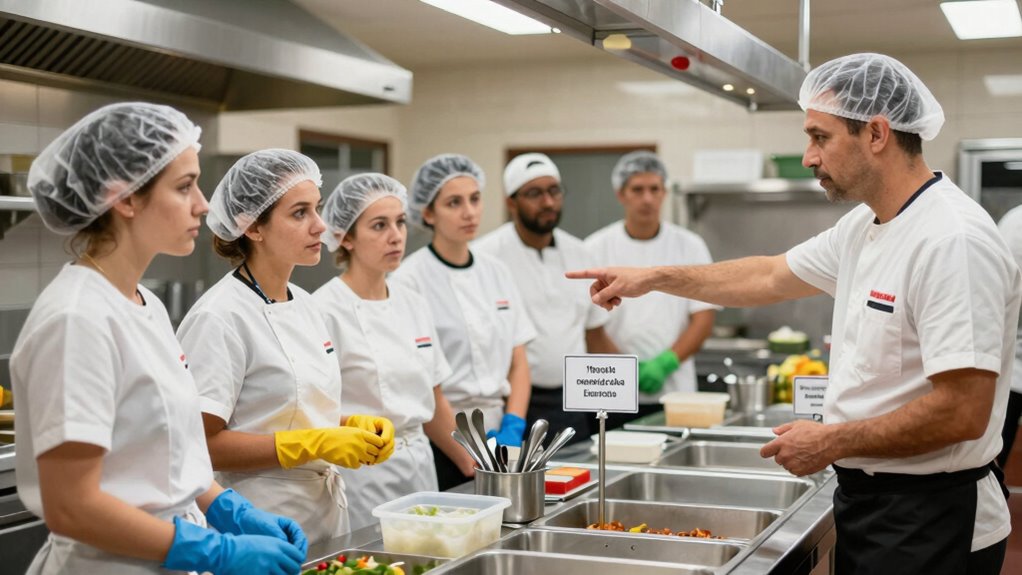
Training your staff on food safety callouts is essential for maintaining high standards and preventing cross-contamination. When you focus on effective communication, you reduce the risk of mistakes that could compromise food quality and safety. One of the most efficient ways to do this is by leveraging microlearning techniques. Instead of lengthy sessions, you break down the information into short, focused modules that staff can easily digest and recall. These bite-sized lessons fit well into busy schedules, ensuring your team consistently refreshes their knowledge without feeling overwhelmed. Microlearning keeps training engaging and allows employees to apply what they’ve learned immediately, reinforcing good habits.
Microlearning breaks down food safety callouts into quick, engaging modules for easy recall and habit reinforcement.
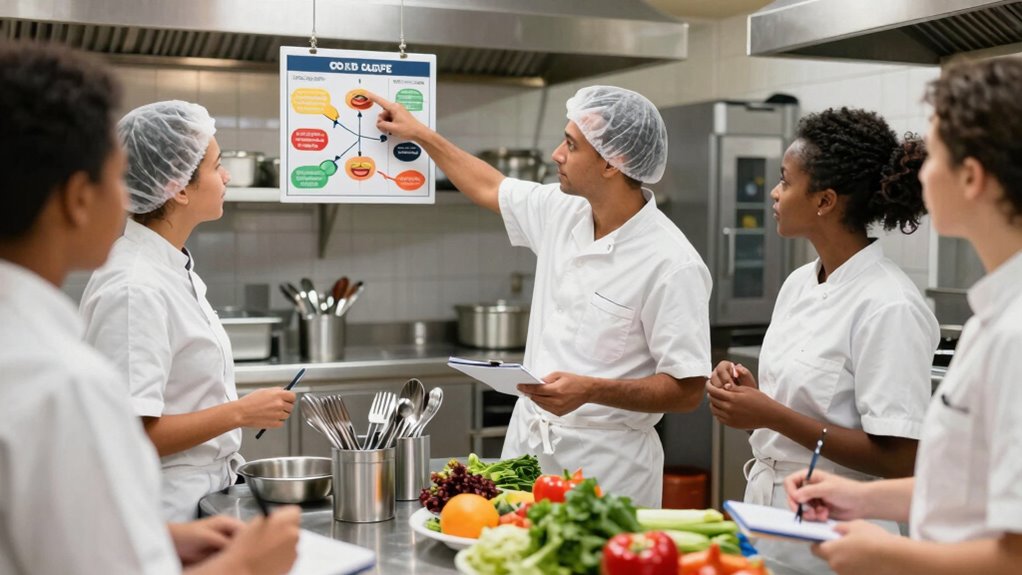
In addition to microlearning, incorporating visual communication tools can significantly enhance understanding. Visual aids like infographics, color-coded labels, and diagrams make complex information clearer and more memorable. For example, using visual callouts on storage areas or prep stations can quickly alert staff to specific safety protocols or contamination risks. These tools cut down on misunderstandings and ensure everyone is on the same page, especially in fast-paced environments. When employees can see what to do through visual cues, they’re more likely to follow procedures correctly, which is critical during busy hours. Incorporating visual communication into your training approach ensures your team can quickly recognize and respond to safety issues, further strengthening your food safety standards.
You should also emphasize the importance of consistent practice and repetition. Microlearning modules can be repeated regularly, helping staff internalize food safety callouts until they become second nature. Visual communication tools serve as constant reminders, whether in the form of signage, labels, or quick reference charts posted in key areas. Reinforcing safety protocols through these methods keeps the information fresh and top of mind, even for seasoned employees. When staff members are confident in their knowledge, they’re more proactive about identifying and addressing potential risks, which helps prevent cross-contamination. Additionally, effective communication plays a crucial role in ensuring that safety procedures are understood and correctly implemented by everyone on the team. Incorporating visual communication tools into your training helps your team recognize and respond to safety issues quickly, further enhancing your food safety standards.
Another key aspect is encouraging active participation during training sessions. Instead of passive listening, engage your team with interactive activities like scenario-based exercises or quizzes that reinforce the callouts. Microlearning platforms often include such features, making training more dynamic. Visual aids can be incorporated into these exercises to enhance learning. For instance, you might present a scenario and ask employees to identify the correct safety callout or visual cue. This active approach boosts retention, ensuring your team is prepared to respond swiftly and accurately in real situations.
Ultimately, combining microlearning techniques with visual communication tools creates a robust training framework. It helps your staff recognize the importance of food safety callouts and respond appropriately to prevent cross-contamination. Consistent, engaging, and visually supported training keeps your team prepared, vigilant, and committed to upholding high standards every day.
food safety training infographics
As an affiliate, we earn on qualifying purchases.
As an affiliate, we earn on qualifying purchases.
Frequently Asked Questions
How Often Should Food Safety Callout Training Be Refreshed?
You should refresh food safety callout training every 3 to 6 months. Regular training frequency helps keep staff sharp and aware of safety protocols. Incorporate refresher sessions into your schedule, especially after any updates to safety procedures or staff changes. Consistent reinforcement guarantees everyone stays informed, confident, and compliant, reducing the risk of food safety issues. Prioritize ongoing training to maintain a high standard of food safety within your team.
What Are Common Mistakes When Training Staff on Callouts?
You might overlook common mistakes like not incorporating role-playing exercises or visual aids, which are essential for effective training. Staff may struggle to remember callouts without practical, hands-on practice, leading to errors. Avoid relying solely on lectures; instead, actively engage your team with role-playing and visual tools. This approach helps reinforce food safety callouts, ensuring staff understand and remember their responsibilities during real situations.
How to Handle Language Barriers in Food Safety Communication?
To effectively manage language barriers, you should embrace the power of visual aids and multilingual signage, making communication clearer and more inclusive. You might find that combining simple, universal symbols with translated callouts guarantees everyone understands food safety protocols. This approach minimizes misunderstandings, encourages confidence, and fosters teamwork. Think of it as creating a shared language where visual cues and translations unite your staff, making safety a team effort everyone can follow.
Are There Digital Tools to Assist With Food Safety Callouts?
Yes, digital platforms and interactive modules are excellent tools to assist with food safety callouts. They enable you to train staff effectively by providing engaging, easy-to-understand content that reinforces key safety procedures. These tools can include quizzes, simulations, and real-time feedback, making training more interactive and memorable. By integrating digital platforms into your training, you help guarantee your team stays informed and confident in making accurate food safety callouts.
How to Measure Staff Understanding of Food Safety Callout Procedures?
You can measure staff understanding of food safety callout procedures through interactive role plays and visual aids. Role plays simulate real-life scenarios, allowing you to observe how well they identify and respond to safety issues. Visual aids, like charts or videos, reinforce key concepts. By evaluating their responses during role plays and reviewing their grasp of visual materials, you gain clear insights into their comprehension and areas needing improvement.
Conclusion
By mastering food safety callouts, you guarantee your team stays alert and proactive, preventing potential hazards. Imagine a server catching a spill early and alerting the kitchen—preventing a slip and safeguarding customers. Regular training and clear communication make these callouts second nature. When everyone stays vigilant, you create a safer, more efficient environment that protects your reputation and keeps customers coming back. Don’t underestimate the power of a simple callout—it’s your frontline defense.