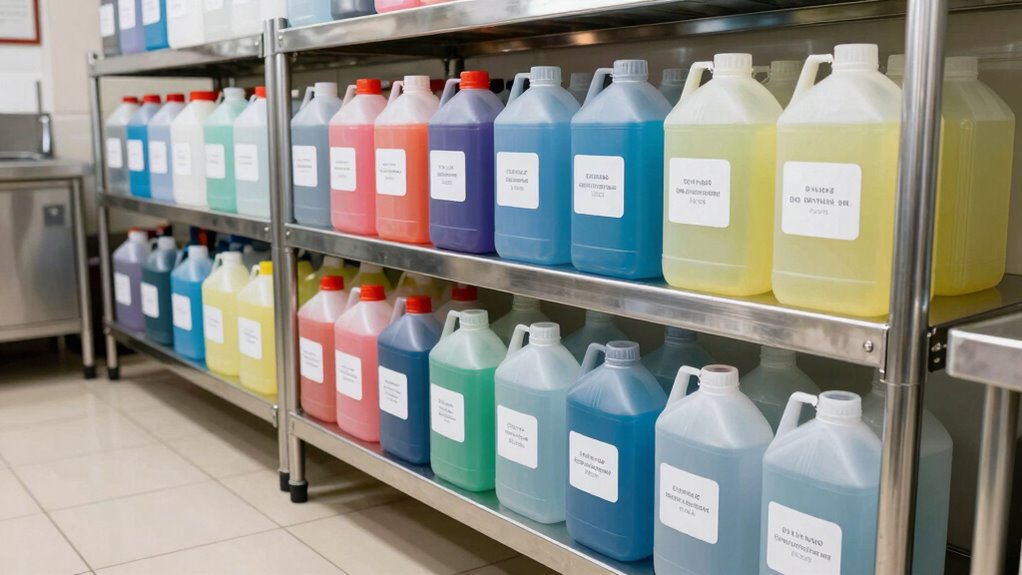

To store cleaning chemicals safely in your restaurant, designate a specific, well-organized area away from food prep zones. Keep containers in their original, labeled packaging, and separate incompatible chemicals on different shelves. Guarantee safety equipment like gloves and spill kits are easily accessible, and maintain proper ventilation. Regular inspections help catch hazards early. Maintaining this system protects your staff and customers. Continue for expert tips that help you master safe, effective storage practices.

Get kitchen staples and gadgets delivered free with Prime
- Fast, free delivery on millions of items
- Prime Video, Amazon Music and more included
- Member-only deals all year
Key Takeaways
- Store chemicals in their original, labeled containers away from food preparation areas.
- Keep incompatible chemicals separated on designated shelves to prevent dangerous reactions.
- Ensure proper ventilation and keep safety equipment like spill kits and protective gear accessible.
- Conduct regular inspections to check for leaks, damages, and expired chemicals.
- Train staff on safe handling, storage protocols, and the importance of organization and safety procedures.
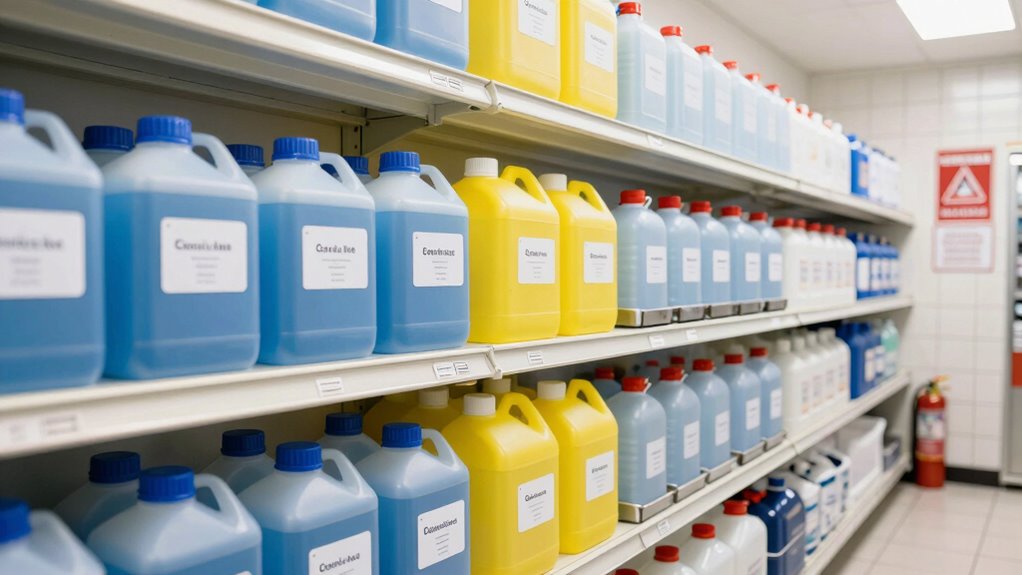
Proper storage of cleaning chemicals is essential for maintaining a safe and compliant restaurant environment. When you prioritize chemical safety and storage organization, you reduce the risk of accidents, spills, and exposure that could harm your staff or customers. The first step is to designate a specific area for all cleaning supplies, ideally away from food preparation zones, to prevent cross-contamination. Use sturdy, clearly labeled shelves or cabinets that are resistant to moisture and chemical damage. This helps keep your storage area organized and makes it easier to locate supplies quickly, which is critical during busy hours.
Designate a dedicated, labeled space for cleaning supplies away from food prep to ensure safety and organization.
To enhance chemical safety, make sure that all cleaning chemicals are stored in their original containers with labels intact. Never transfer chemicals into unmarked or makeshift containers, as this can lead to misuse or accidental mix-ups. Keep these containers tightly sealed when not in use to prevent leaks or fumes from escaping. Store incompatible chemicals separately—such as acids and alkalis—to prevent dangerous reactions. Use separate shelves or clearly marked sections within your storage area to keep these substances apart. This simple step can avert serious accidents and protect your staff from harmful exposures. Additionally, having a well-organized storage system can improve overall safety and efficiency in managing your cleaning supplies.
It’s also important to invest in safety equipment like spill kits, gloves, goggles, and ventilation fans within or near the storage area. Ensuring proper ventilation reduces the buildup of harmful fumes, and having spill kits readily available allows for quick clean-up if accidents happen. Making sure that your ventilation system is properly maintained is crucial for reducing harmful fumes and ensuring a safe environment. Ensuring proper ventilation reduces the buildup of harmful fumes, and having spill kits readily available allows for quick clean-up if accidents happen. Additionally, establishing a routine inspection process can help identify potential hazards early and maintain compliance with safety standards.
Training your staff on chemical safety and proper storage practices is key. Make sure everyone understands the importance of following safety protocols, including wearing protective gear and handling chemicals carefully. Reinforce the importance of keeping the storage area tidy and organized, so hazards are minimized and access is controlled. By maintaining a well-organized storage system and prioritizing safety, you create a safer working environment for your team and guarantee compliance with health regulations. Ultimately, effective storage of cleaning chemicals protects your staff, your customers, and your business, making it a critical aspect of your restaurant’s daily operations.
restaurant cleaning chemical storage cabinets
As an affiliate, we earn on qualifying purchases.
As an affiliate, we earn on qualifying purchases.
Frequently Asked Questions
How Often Should Cleaning Chemical Storage Areas Be Inspected?
You should inspect your cleaning chemical storage areas weekly to guarantee safety. During these inspections, check that all chemicals are properly labeled and stored according to safety standards. Look for any leaks, spills, or damaged containers, and verify that chemicals are stored away from heat or incompatible substances. Regular inspections help maintain storage safety, prevent accidents, and ensure that chemical labeling remains clear and accurate for staff safety.
Are There Specific Ventilation Requirements for Chemical Storage Rooms?
A stitch in time saves nine, so guarantee you follow ventilation standards for chemical cabinets. You should install proper ventilation to prevent fumes from accumulating, reducing fire and health risks. Adequate airflow helps keep chemical storage rooms safe and compliant with regulations. Make sure vents are functional, unobstructed, and meet local codes. Regularly inspect ventilation systems to maintain ideal airflow, protecting staff and ensuring a safe, compliant environment.
Can Cleaning Chemicals Be Stored With Food Items?
You should never store cleaning chemicals with food items because it increases the risk of food contamination and chemical mixing. Keeping chemicals separate prevents accidental spills or cross-contact that could harm customers. Use designated, clearly labeled areas away from food storage to guarantee safety. Proper separation is essential for maintaining hygiene standards and avoiding dangerous chemical exposure, protecting both your staff and your patrons.
What Training Is Needed for Staff Handling Cleaning Chemicals?
If you’re handling cleaning chemicals, you need proper training to guarantee safety. You must understand chemical labeling to identify hazards and follow safety protocols. Staff should be trained on the correct use of safety equipment like gloves, goggles, and masks to prevent accidents. Regular refresher courses keep everyone updated on best practices. This training isn’t just a formality—it’s essential to keep your workplace safe and compliant.
How to Dispose of Expired or Unused Cleaning Chemicals Safely?
To dispose of expired or unused cleaning chemicals safely, you should follow proper chemical disposal methods and safety disposal procedures. Wear protective gear, such as gloves and goggles, and never mix chemicals. Check local regulations for disposal guidelines, and take chemicals to designated hazardous waste facilities. Never pour chemicals down drains or onto the ground, as it can harm the environment. Always prioritize safety and follow legal requirements to guarantee proper disposal.
Conclusion
Storing cleaning chemicals properly keeps your restaurant safe and compliant. While some might think it’s a hassle, investing a little time upfront prevents accidents and costly fines later. By using clearly labeled, secure cabinets away from food areas, you protect your staff and customers alike. Don’t overlook this step—it’s a small effort that makes a big difference. Keep safety a priority, and your restaurant will run smoothly and responsibly every day.
Halloween Picks
halloween
As an affiliate, we earn on qualifying purchases.