To properly size your grease interceptor, consider your establishment’s flow rate, daily grease production, and local plumbing codes to prevent overloads and backups. Regular maintenance is key—schedule inspections, cleanings, and use biological treatments to break down fats and oils, minimizing odors and flow issues. Using chemical cleaners occasionally is fine, but avoid reliance on them. Keeping detailed records and monitoring system performance helps prolong your unit’s lifespan. For more tips, explore the full guide below.

Get kitchen staples and gadgets delivered free with Prime
- Fast, free delivery on millions of items
- Prime Video, Amazon Music and more included
- Member-only deals all year
Key Takeaways
- Proper sizing considers flow rate, grease production, and local codes to prevent overloads and ensure efficient operation.
- Regular inspections and cleaning remove grease buildup, reducing odors and flow issues.
- Biological treatments promote microbial activity, aiding in grease breakdown and minimizing chemical use.
- Use chemicals carefully, following manufacturer instructions, to dissolve stubborn deposits without harming beneficial bacteria.
- Monitoring system performance and maintaining records help identify issues early and ensure compliance with regulations.
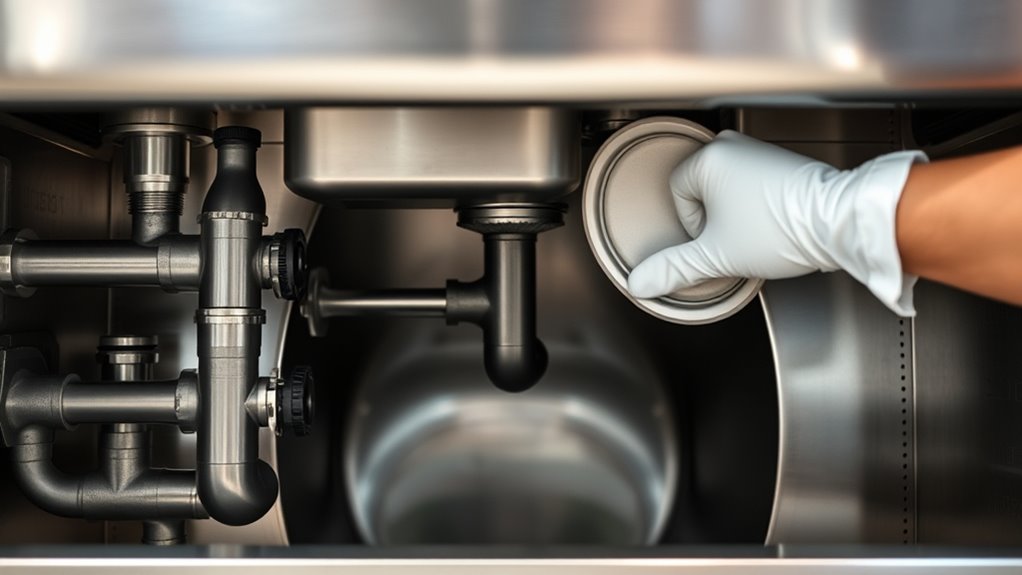
Proper sizing and maintenance of a grease interceptor are vital to guarantee your plumbing system functions efficiently and prevents costly backups. When you choose the right size, you ensure that the interceptor can handle the volume of grease, fats, and oils generated by your operation. An undersized unit quickly becomes overwhelmed, leading to clogs and potential overflows, while an oversized one might be unnecessarily expensive. To determine the proper size, consider your establishment’s flow rate, the amount of grease produced daily, and local plumbing codes. Accurate sizing minimizes maintenance needs and keeps your system running smoothly over time.
Regular maintenance is equally important. Over time, grease and debris accumulate, reducing the interceptor’s efficiency. You should schedule routine inspections and cleanings to prevent buildup that can compromise flow and cause backups. One effective method for maintenance is biological treatment, which uses naturally occurring bacteria to break down fats, oils, and grease inside the interceptor. Biological treatment is environmentally friendly and reduces the need for harsh chemical cleaners, making it a sustainable choice for ongoing maintenance. By promoting microbial activity, you help keep the interceptor cleaner longer and reduce foul odors that often accompany grease buildup.
Chemical cleaning is another maintenance approach, especially when biological methods aren’t enough. When you opt for chemical cleaners, ensure they are compatible with your interceptor’s materials to avoid damage. Use chemicals designed specifically for grease interceptors, which can dissolve stubborn grease deposits and facilitate easier removal during cleaning. However, it’s essential to follow the manufacturer’s instructions carefully and avoid over-reliance on chemical cleaning, as excessive use can harm beneficial bacteria if you’re using biological treatment in tandem.
In addition to scheduled cleanings, you should also monitor the interceptor for signs of excessive grease accumulation, such as slow drainage or foul smells. Maintaining a record of cleaning dates and inspection results helps track the system’s performance and plan future maintenance. Proper sizing combined with consistent, appropriate maintenance practices prolongs the lifespan of your grease interceptor, reduces operational disruptions, and keeps your plumbing system functioning reliably. By integrating biological treatment methods with occasional chemical cleaning, you create a balanced approach that is both effective and environmentally responsible. Staying proactive in your maintenance routines ensures your grease management system remains efficient, compliant with regulations, and free from costly issues down the line.
Frequently Asked Questions
How Do Seasonal Changes Affect Grease Interceptor Performance?
Seasonal temperature and weather fluctuations can impact your grease interceptor’s performance by affecting grease solidification and flow rates. In colder months, grease tends to solidify faster, risking blockages if not maintained properly. Warm weather helps grease break down more easily, but heavy rain or temperature swings can cause overflow or reduce efficiency. Regular inspections and adjustments make certain your interceptor functions smoothly year-round despite seasonal changes.
What Are the Signs of a Failing Grease Interceptor?
If your grease interceptor is failing, you’ll notice signs like excessive grease buildup and foul odors around it. You might see greasy residues or sludge in the drain, and the smell can become persistent and unpleasant. These issues indicate the interceptor isn’t effectively separating fats, oils, and grease. Regular inspections and maintenance help prevent these problems, ensuring your system functions properly and odors stay at bay.
Can Grease Interceptors Be Installed Indoors?
Yes, grease interceptors can be installed indoors, but you need to take into account ventilation requirements. Proper ventilation ensures odors and gases are vented outside, preventing indoor air quality issues. Make sure the installation area has adequate space, access for maintenance, and proper drainage connections. If ventilation requirements aren’t met, indoor installation might cause unpleasant odors or safety concerns, so always follow local codes and manufacturer guidelines for a safe, effective setup.
Are There Eco-Friendly or Biodegradable Cleaning Options?
Yes, you can choose eco-friendly products that act like gentle rain for your grease interceptor. Biodegradable cleaners break down naturally, reducing environmental impact and keeping your system clean without harsh chemicals. Imagine your maintenance routine as tending a delicate garden, where eco-friendly options nurture the environment and your plumbing. By opting for biodegradable cleaners, you’re making a conscious choice to protect nature while maintaining your system’s efficiency.
How Often Should a Grease Interceptor Be Inspected Visually?
You should perform a visual assessment of your grease interceptor at least every three months. An inspection schedule helps you catch build-up or blockages early, preventing backups and costly repairs. During the visual assessment, check for signs of excessive grease or debris and verify the unit is functioning properly. Regular inspections keep your system efficient and compliant with local regulations, saving you time and potential expenses down the line.
Conclusion
In summary, proper planning and proactive maintenance prevent plumbing problems and promote peak performance. By sizing your grease interceptor precisely and staying steadfast with servicing schedules, you guarantee smooth sanitation and safeguard your system. Stay vigilant, verify volumes, and value your venture’s vitality. With consistent care, your grease management will maximize efficiency, minimize mess, and maintain your masterpiece’s pristine condition. Remember, smart sizing and steadfast servicing secure your system’s success, saving you stress and sidestepping costly setbacks.
NFL season / tailgating Picks
team gear
As an affiliate, we earn on qualifying purchases.