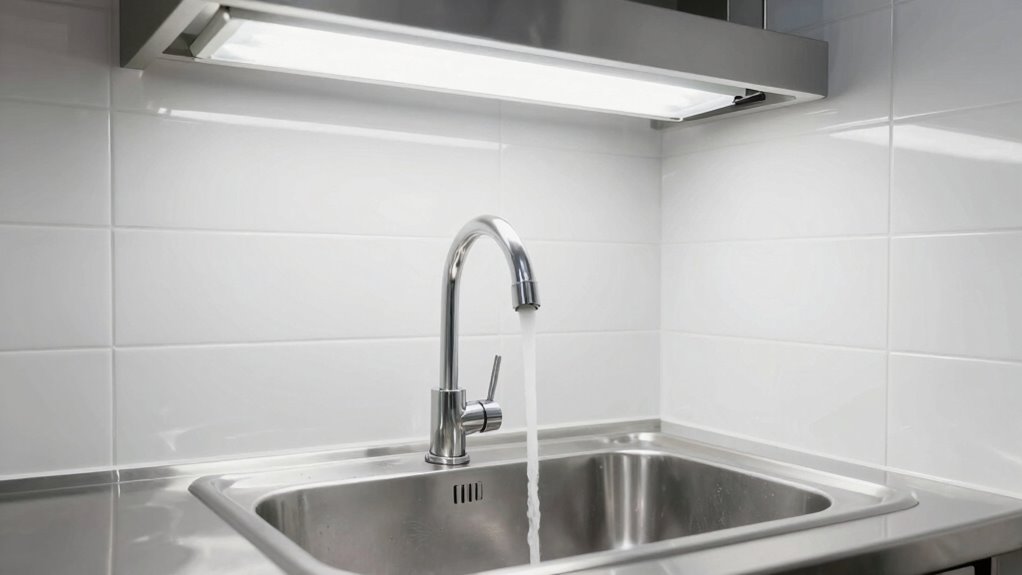

To meet inspector expectations, you should place hand sinks along logical workflow paths, ideally near workstations where contamination risk is high. Guarantee sinks are accessible at 30 to 36 inches high, with unobstructed space for all users, including those with disabilities. Keep soap dispensers nearby and at a proper height to encourage proper hygiene without inconvenience. Following these flow rules helps you stay compliant and promotes efficient, hygienic practices; learn more to perfect your setup.

Get kitchen staples and gadgets delivered free with Prime
- Fast, free delivery on millions of items
- Prime Video, Amazon Music and more included
- Member-only deals all year
Key Takeaways
- Place hand sinks strategically near food prep and high-traffic areas for quick access.
- Ensure sinks are installed at 30-36 inches high with unobstructed clearance underneath.
- Position soap dispensers directly above or adjacent to sinks to promote proper hand hygiene.
- Design the layout to support a logical workflow from dirty zones to handwashing stations.
- Maintain accessibility standards for all staff, including those with disabilities, by adhering to reach and clearance requirements.
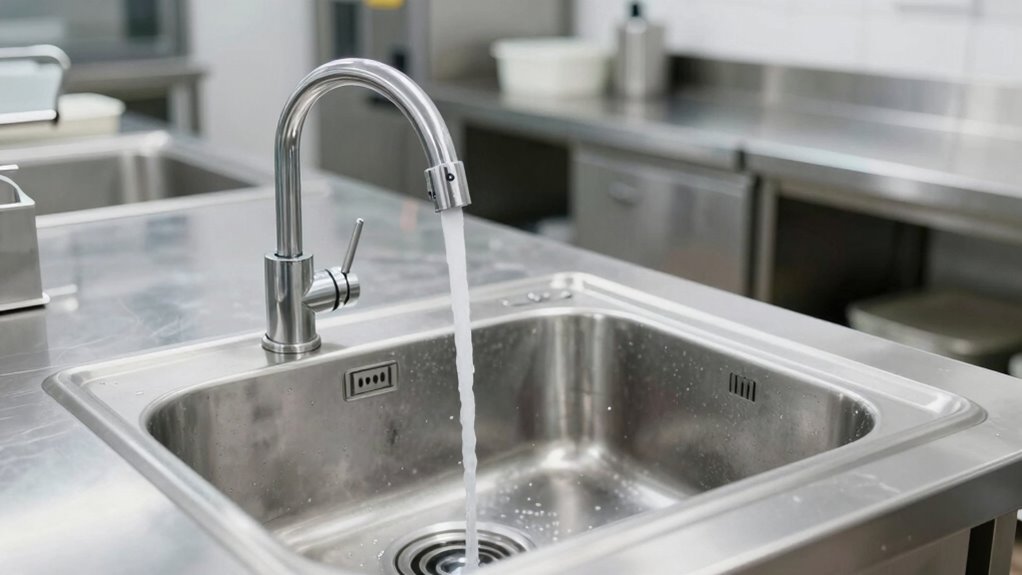
Proper hand sink placement is essential for maintaining a clean and compliant workspace. When planning where to install sinks, you need to pay close attention to how soap dispenser placement and sink accessibility standards work together to promote proper hand hygiene. The goal is to make it as easy as possible for staff to wash their hands thoroughly and frequently, which means locating sinks in convenient, logical spots that follow health codes. If sinks are hard to reach or require excessive movement, employees might skip washing hands, increasing the risk of contamination. That’s why understanding sink accessibility standards is vital for designing an effective layout.
First, consider soap dispenser placement. It’s best to position soap dispensers directly above or very close to the sinks. This minimizes the chances of cross-contamination and encourages proper handwashing habits. When soap is within arm’s reach, employees don’t have to step away from the sink or search for soap, reducing the likelihood of touching surfaces with dirty hands. Wall-mounted soap dispensers are common because they keep the area tidy, but they must be installed at a height that allows for easy access by all staff members, including those with disabilities. Ensuring the soap dispenser is at the right height aligns with sink accessibility standards, which specify clear, unobstructed space around sinks so everyone can use them comfortably.
Sink accessibility standards also dictate the height, clearance, and placement of the sink itself. Typically, sinks should be installed at a height that allows users to wash their hands without bending over or stretching up excessively—usually between 30 to 36 inches from the floor. The area around the sink should be free of obstructions, with enough space underneath for wheelchair users if applicable. Proper placement also means installing sinks close to high-traffic areas like food prep stations, restrooms, and sanitation stations, so staff can wash their hands immediately after handling raw materials or waste. This proximity reduces the temptation to skip handwashing because it’s too inconvenient.
In addition, the flow of movement around hand sinks should be smooth and logical. You want to avoid placing sinks in awkward spots that force employees to cross busy work zones or navigate around barriers. The placement should support a natural flow from dirty work areas to handwashing stations, encouraging staff to wash their hands as part of their routine. When sink placement, soap dispenser positioning, and adherence to sink accessibility standards align, you create a workspace that’s both safe and compliant. It’s all about making hand hygiene effortless and intuitive, which ultimately helps prevent contamination and keeps your operation running smoothly. Proper planning ensures that clearance and reach ranges are met, facilitating compliance with accessibility standards and promoting efficient workflow.
Frequently Asked Questions
Are There Specific Materials Required for Hand Sink Installations?
You need to follow specific material requirements for hand sink installations to meet installation standards. Use durable, corrosion-resistant materials like stainless steel for sinks, faucets, and plumbing fixtures. Guarantee piping is approved for potable water and properly insulated if needed. Adhere to local codes, which often specify material types and finishes. Using the right materials ensures compliance, safety, and longevity, making your installation safe and effective according to inspector expectations.
How High Should a Hand Sink Be Mounted for Accessibility?
You should mount the hand sink at a height of about 34 to 36 inches to meet accessibility guidelines. This height guarantees compliance with accessibility standards and allows most users, including those with disabilities, to use the sink comfortably. Always check the specific height standards in your local codes, but generally, this range provides the best balance for accessibility and practicality.
Can Hand Sinks Be Shared Between Multiple Food Prep Areas?
You might think sharing sinks between multiple prep areas saves space, but it actually complicates sanitation and compliance. Sink sharing is generally discouraged because it increases cross-contamination risks and makes cleaning harder. Multiple prep areas should have dedicated hand sinks to ensure proper hygiene. Ignoring this rule can lead to violations and health issues, so it’s best to provide separate sinks to keep everything safe and up to code.
What Maintenance Is Needed to Ensure Compliance Over Time?
You need to establish regular cleaning schedules and perform fixture inspections to stay compliant over time. Clean the hand sinks daily with appropriate disinfectants to prevent buildup and contamination. Inspect fixtures weekly for leaks, damage, or blockages, and repair any issues promptly. Keeping detailed records of your cleaning and inspection routines helps demonstrate ongoing compliance and guarantees the hand sinks remain functional and sanitary for staff and customers.
Are There Variations in Sink Placement Rules for Different Food Service Types?
Yes, sink placement rules vary depending on food service types due to different plumbing codes and sink design requirements. For example, commercial kitchens often need sinks located near food prep areas, while vending locations have fewer restrictions. You should verify specific plumbing codes for your establishment’s food service type to guarantee proper sink placement, which helps maintain compliance and promotes good hygiene practices. Following these variations ensures your setup meets health department standards.
Conclusion
Now, picture your hand sink as the heartbeat of your space, guiding clean hands like a gentle stream flowing where it’s needed most. When you place it just right, it becomes a seamless part of your workflow, encouraging good habits effortlessly. Think of it as the quiet guardian of safety, standing ready to serve. Proper placement isn’t just rule-following; it’s the foundation that keeps your environment healthy and welcoming every time, like a steady, calming flow.
NFL season / tailgating Picks
team gear
As an affiliate, we earn on qualifying purchases.