
TL;DR

Get kitchen staples and gadgets delivered free with Prime
- Fast, free delivery on millions of items
- Prime Video, Amazon Music and more included
- Member-only deals all year
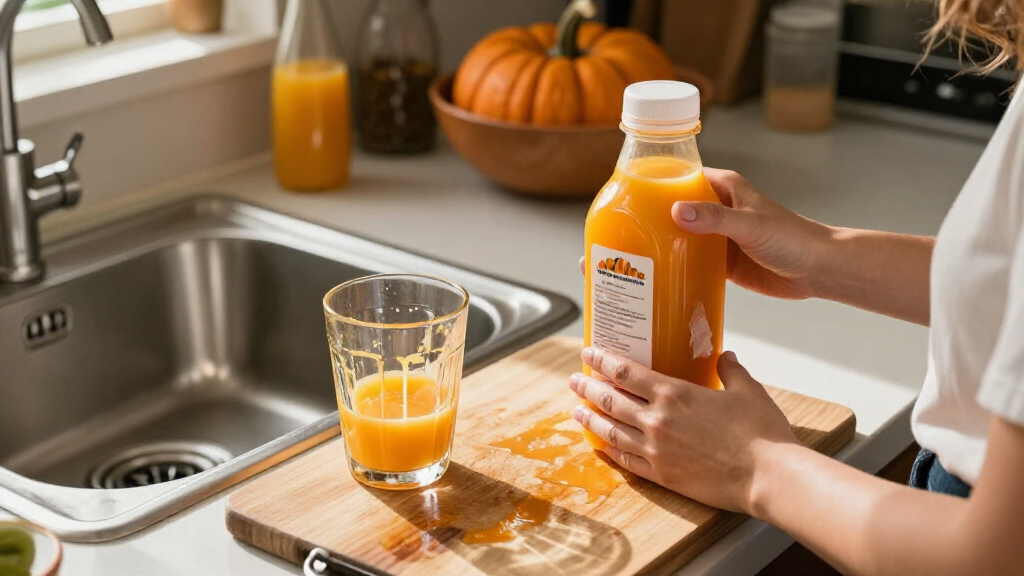
Walker’s Wine Juice LLC recalled all lots of its pumpkin juice after New York inspectors found the product’s pH was too high for the company’s hot-fill process. No illnesses have been reported, but the juice may pose a botulism risk and was sold at the company’s New York store and supplied to wineries in 12 states.
Walker’s Wine Juice LLC is recalling all lots of its pumpkin juice because the product may be contaminated with botulism-causing bacteria, according to a recall report published October 9. The risk was identified after New York State Department of Agriculture and Markets inspectors found the juice’s pH was too high for the company’s hot-fill process; no illnesses have been reported.
The recalled juice was distributed through Walker’s retail store in Forestville, New York, and supplied directly to a limited number of commercial wineries in Illinois, Indiana, Kansas, Kentucky, Maine, Michigan, Minnesota, New Jersey, New York, Ohio, Pennsylvania and Wisconsin. The report does not give the quantities distributed or identify the wineries.
Consumers and businesses can identify the product by its packaging and label. The affected items include 2.5-gallon bag-in-box and 5-gallon hot-pack containers labeled “pumpkin,” as well as 30-, 60- and 275-gallon bulk containers tagged “pumpkin.” All lots of the listed products are included in the recall.
According to the report, inspectors found the juice’s pH was too high to be processed under Walker’s stated hot-fill schedule. The company’s process did not provide an adequate kill step to address possible microbiological hazards. The report does not say that botulism toxin or bacteria were detected in the product; the recall concerns a potential hazard linked to the processing conditions.
Why the Processing Finding Matters
The recall concerns a potentially severe food-safety hazard, even though no illnesses have been reported. Botulism is a rare but potentially fatal form of food poisoning. Food Safety News lists possible symptoms including general weakness, dizziness, double vision, and difficulty speaking or swallowing. Breathing problems, weakness in other muscles, abdominal distension and constipation can also occur.
The inspection finding matters because the product’s acidity did not meet the conditions required for the company’s stated processing schedule. According to the report, that meant an adequate kill step was not used to address possible microbiological hazards. This is a process-based reason for the recall, not confirmation that the juice is contaminated or that anyone has been exposed.
The distribution route also broadens the practical reach of the warning: the juice was sold at a retail store and sent to commercial wineries across multiple states. Businesses that received bulk containers may need to identify affected stock and act on the recall. The report does not detail the wineries’ use of the juice or whether any finished products containing it were sold.
As an affiliate, we earn on qualifying purchases.
How Inspectors Identified the Risk
The recall followed an inspection by New York State Department of Agriculture and Markets food inspectors. Their finding was that the pumpkin juice’s pH was too high for the product to be processed according to Walker’s “hot fill” schedule. The report says the mismatch meant the process lacked an adequate kill step for possible microbiological hazards.
The company’s product was distributed in several container sizes, from 2.5-gallon packages to bulk containers holding as much as 275 gallons. The recall applies to every lot in the listed packaging categories, rather than to a named date code or single production run. The source report does not provide production dates, lot numbers, or a best-before date.
Food Safety News reported the recall on October 9, 2026. Its account states that no illnesses had been reported at that time. It does not identify a separate federal recall notice or provide information about earlier complaints or testing.
“The pumpkin juice pH was too high to be processed per Walker’s “hot fill” schedule process.”
— Food Safety News, reporting on the inspection finding
What Is Not Yet Confirmed
The available report does not establish that the pumpkin juice contains botulism bacteria or toxin. It describes a potential contamination risk arising from the processing conditions; no laboratory results confirming contamination are provided. It also reports no illnesses as of publication, but does not say whether any investigation or monitoring continued afterward.
Other details remain unavailable, including the number of containers distributed, the production dates, the identities of the receiving wineries and whether any of the juice was used in products offered to customers. The report gives no consumer-facing contact details, refund instructions or disposal guidance. Those details should not be inferred from the inspection finding alone.
Actions for Retailers and Wineries
People who have a listed container should check its packaging and “pumpkin” label against the recall description and avoid using the product while following current instructions from the company or relevant food-safety authorities. Wineries and other commercial recipients should check whether they received the affected juice and follow recall directions before using or distributing it. The report does not specify a return, disposal or refund procedure.
Anyone who develops symptoms consistent with botulism after consuming a potentially affected product should seek immediate medical attention, as advised in the recall report. Consumers or businesses seeking next steps may need to contact Walker’s or New York food-safety officials; the published source does not provide phone numbers or a named agency contact. Further updates could clarify distribution, handling instructions and whether any cases or testing results emerge.
Key Questions
Which pumpkin juice is included in the recall?
The recall covers all lots of Walker’s products labeled or tagged “pumpkin”: 2.5-gallon bag-in-box and 5-gallon hot-pack containers, plus 30-, 60- and 275-gallon bulk containers.
Where was the recalled juice distributed?
It was sold through Walker’s retail store in Forestville, New York, and supplied directly to a limited number of commercial wineries in Illinois, Indiana, Kansas, Kentucky, Maine, Michigan, Minnesota, New Jersey, New York, Ohio, Pennsylvania and Wisconsin.
Has anyone become ill?
No illnesses had been reported when Food Safety News published its report on October 9, 2026. That statement reflects the status reported at publication; the source does not provide later updates.
Was botulism found in the juice?
The report does not say that botulism bacteria or toxin were detected. It says inspectors found the juice’s pH was too high for the company’s hot-fill schedule, leaving no adequate kill step to address possible microbiological hazards.
What symptoms should prompt urgent medical care?
The report lists weakness, dizziness, double vision, and difficulty speaking or swallowing among possible symptoms. Breathing difficulty and weakness in other muscles may also occur. Anyone experiencing concerning symptoms after possible exposure should seek immediate medical attention.
Source: rss
Halloween Picks
halloween
As an affiliate, we earn on qualifying purchases.