You need cleaner mop sink workflows to guarantee your restaurant stays hygienic and safe for customers and staff. Proper procedures prevent cross-contamination, reduce bacteria spread, and help meet sanitation standards. Regular maintenance and staff training keep equipment working efficiently and minimize health violations. Creating a culture of cleanliness encourages accountability and trust. If you want to learn how to implement these practices effectively, there’s more to discover that can boost your restaurant’s standards further.

Get kitchen staples and gadgets delivered free with Prime
- Fast, free delivery on millions of items
- Prime Video, Amazon Music and more included
- Member-only deals all year
Key Takeaways
- Proper workflows prevent cross-contamination, ensuring a hygienic environment for both staff and customers.
- Regular maintenance and cleaning of mop sinks reduce bacteria buildup and equipment failures.
- Clear protocols enhance staff efficiency and consistency in sanitation practices.
- Maintaining clean mop sink workflows helps restaurants meet health regulations and avoid violations.
- A culture of cleanliness fosters trust, safety, and a positive reputation among patrons.
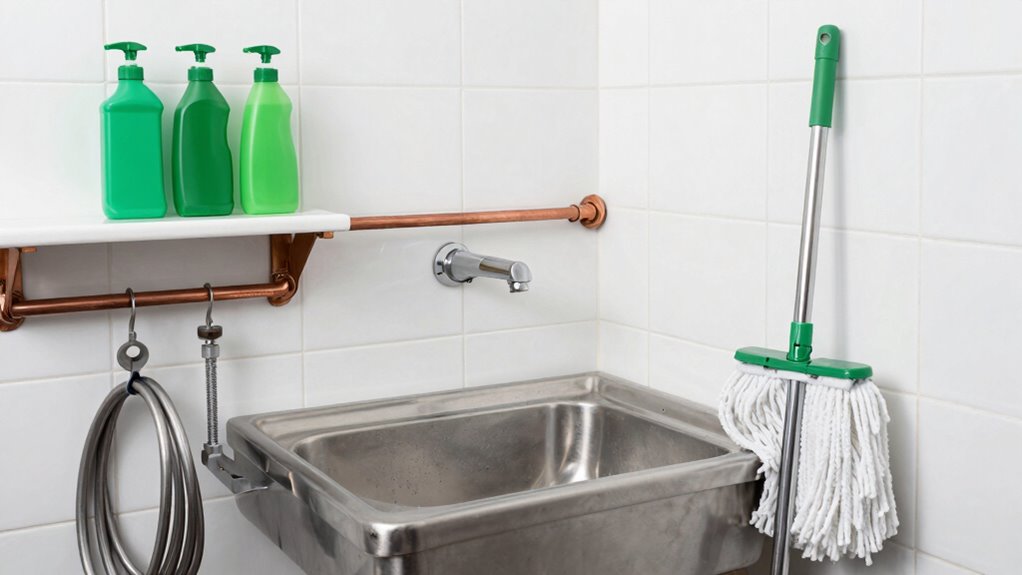
Clean mop sink workflows are essential for maintaining hygiene and safety in your restaurant, yet many establishments overlook their importance. Proper workflows ensure that dirty water doesn’t contaminate clean areas, preventing the spread of bacteria and maintaining high sanitation standards. To achieve this, your staff needs thorough training on how to handle mop sink procedures correctly. When staff members understand the importance of each step, they’re more likely to follow protocols consistently. This includes how to rinse, disinfect, and drain mop buckets properly, as well as how to prevent cross-contamination. Regular staff training sessions reinforce best practices, keep everyone updated on new procedures, and help instill a culture of cleanliness. When your team knows exactly what to do, mop sink workflows become smoother and more reliable, reducing the risk of health violations. Additionally, emphasizing the importance of proper sanitation procedures ensures that every aspect of cleaning is addressed thoroughly.
Equally important is equipment maintenance. Well-maintained sinks, hoses, and cleaning tools make it easier for staff to adhere to proper workflows. If fixtures are clogged or damaged, water may not drain properly, creating a breeding ground for bacteria. Regular inspections and upkeep ensure that your mop sinks operate efficiently, minimizing downtime and preventing contamination. For instance, replacing worn-out hoses or cleaning nozzles ensures water flows freely and cleaning remains effective. Proper maintenance also involves sanitizing equipment after each use, so no residual dirt or germs linger. When your equipment is in good shape, staff can perform their duties swiftly and confidently, knowing they’re working with reliable tools. This consistency helps uphold sanitation standards and keeps your establishment compliant with health regulations. Incorporating routine inspections into your maintenance schedule can proactively prevent issues before they arise. Additionally, fostering a culture of cleanliness within staff encourages accountability and vigilance in daily operations. Maintaining a clean environment also helps in reducing the risk of microbial growth that can compromise hygiene standards.
Combining staff training with diligent equipment maintenance results in a robust workflow that supports your restaurant’s hygiene efforts. When everyone on your team understands their role and uses well-maintained tools, the process becomes second nature. This reduces errors and saves time, making your cleaning procedures more effective. You also create a safer environment for both staff and customers by preventing the spread of harmful microbes. Additionally, a focus on ongoing training and maintenance demonstrates your commitment to cleanliness, which can boost your restaurant’s reputation. Customers notice when a place feels clean and well-organized, and they’re more likely to trust your establishment with their health.
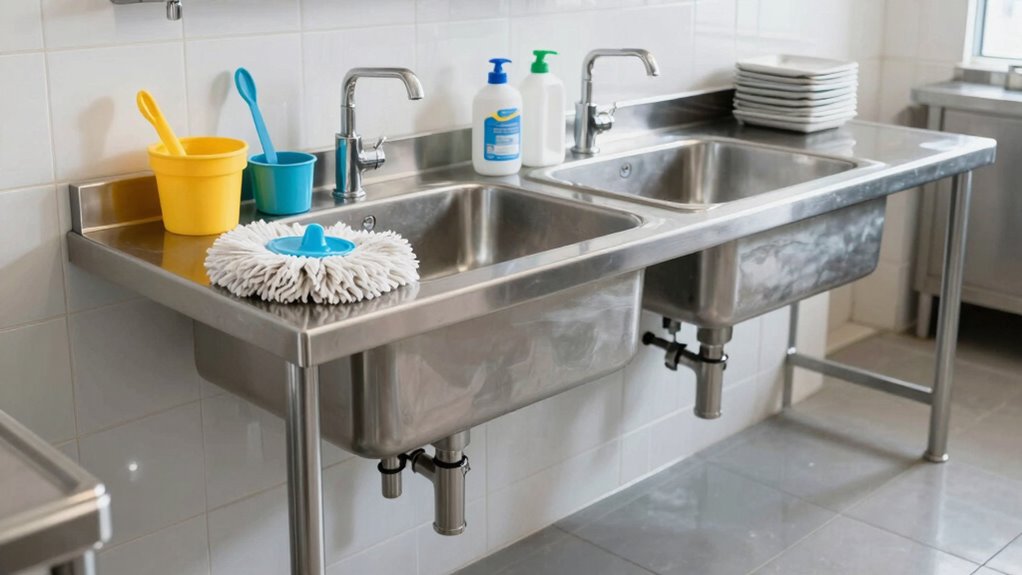
mop sink cleaning and maintenance kit
As an affiliate, we earn on qualifying purchases.
As an affiliate, we earn on qualifying purchases.
Frequently Asked Questions
How Often Should Mop Sink Workflows Be Reviewed or Updated?
You should review your mop sink workflows regularly, at least monthly, to guarantee proper cleaning frequency and placement. Keep an eye on how often the mop sink is used and whether cleaning protocols are followed consistently. Adjust workflows when you notice dirt buildup or contamination risks. Proper placement of the mop sink also helps streamline cleaning and prevent cross-contamination, making routine reviews essential for maintaining hygiene standards.
What Are Common Mistakes in Mop Sink Cleaning Procedures?
You often make mistakes in mop sink cleaning, like neglecting proper mop disposal, which spreads bacteria, or skipping sink sanitation, risking cross-contamination. Rushing the process can leave residues, and failing to disinfect thoroughly allows germs to thrive. Always guarantee you disinfect the sink after every use, dispose of mops correctly, and follow a consistent cleaning routine. These steps prevent contamination and keep your restaurant sanitary and compliant.
How Do I Train Staff on Proper Mop Sink Hygiene?
Think of your staff as guardians of cleanliness, ensuring every mop disposal and sink maintenance is done properly. Train them by demonstrating correct procedures, emphasizing the significance of hygiene, and inspecting work regularly. Use visual aids and hands-on practice to reinforce lessons. Encourage accountability and teamwork, so they understand that maintaining a spotless mop sink is essential to preventing contamination and preserving the restaurant’s reputation.
What Equipment Improves Mop Sink Workflow Efficiency?
To improve mop sink workflow efficiency, you should invest in dedicated cleaning tools like high-quality brushes and ergonomic sprayers. Using equipment designed for chemical sanitation guarantees effective cleaning while reducing time. Regular equipment maintenance prevents breakdowns and keeps everything running smoothly. By streamlining processes with reliable equipment and proper sanitation practices, you’ll enhance workflow efficiency, reduce cross-contamination, and maintain a safer, more hygienic environment for your staff and customers.
Are There Industry Standards for Mop Sink Cleanliness?
You’ll be interested to know that 80% of health inspections flag issues with mop sink sanitation, highlighting the importance of industry standards. Yes, there are guidelines for keeping mop sink areas clean, emphasizing cleaning protocol consistency to prevent contamination. Following these standards not only guarantees compliance but also protects your staff and customers. Regular sanitation, proper cleaning procedures, and staff training are key to maintaining a safe, hygienic environment.
Conclusion
Just as the phoenix rises renewed from ashes, maintaining a clean mop sink workflow rejuvenates your restaurant’s safety and reputation. By prioritizing sanitation and streamlining processes, you prevent chaos from creeping in like Icarus’s fall—reminding you that vigilance keeps you soaring. A cleaner, more efficient system isn’t just about compliance; it’s about embodying the wisdom of the ancients—knowing that true strength lies in the details. Keep your sinks spotless, and your success will follow.
NFL season / tailgating Picks
team gear
As an affiliate, we earn on qualifying purchases.