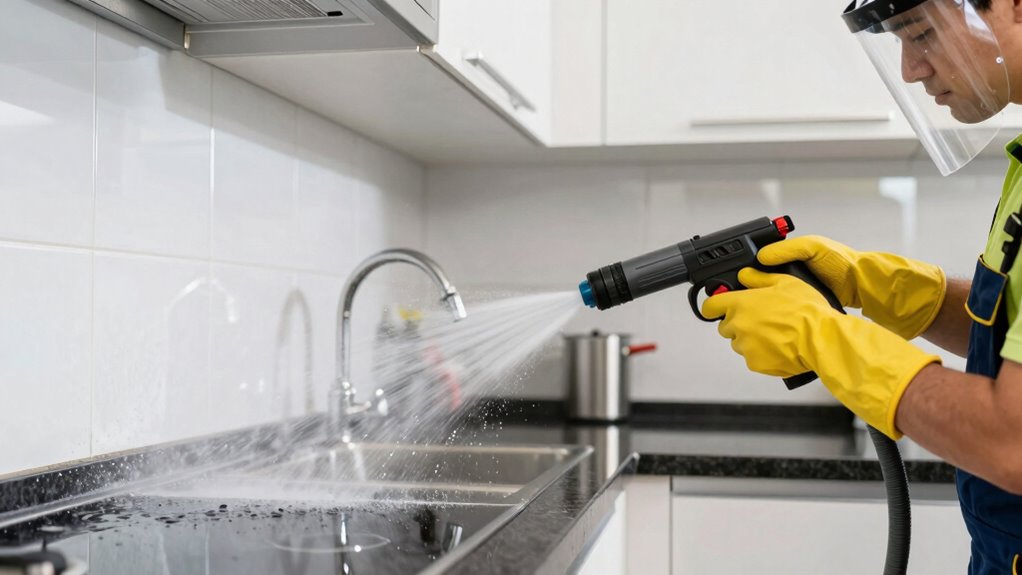

Before pressure washing your kitchen, unplug all appliances and cover outlets to prevent water damage or shocks. Remove removable parts and protect delicate surfaces with tape or covers. Use low pressure and keep a safe distance, sweeping gently over surfaces to avoid cracks or damage. Protect electrical components and avoid spraying vents or seams. Following these safety steps helps prevent costly repairs and injuries, and you’ll discover more tips to get your kitchen spotless without risking harm.
Key Takeaways
- Unplug appliances and remove removable parts to prevent water damage during pressure washing.
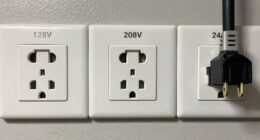
- Cover electrical outlets and switches with waterproof tape or covers for safety.
- Maintain a safe distance of 12-18 inches and use gentle sweeping motions to avoid surface damage.
- Protect delicate surfaces and fixtures with tape or coverings to prevent water intrusion and injury.
- Test small areas first, and adjust pressure and distance based on surface type to prevent costly repairs.
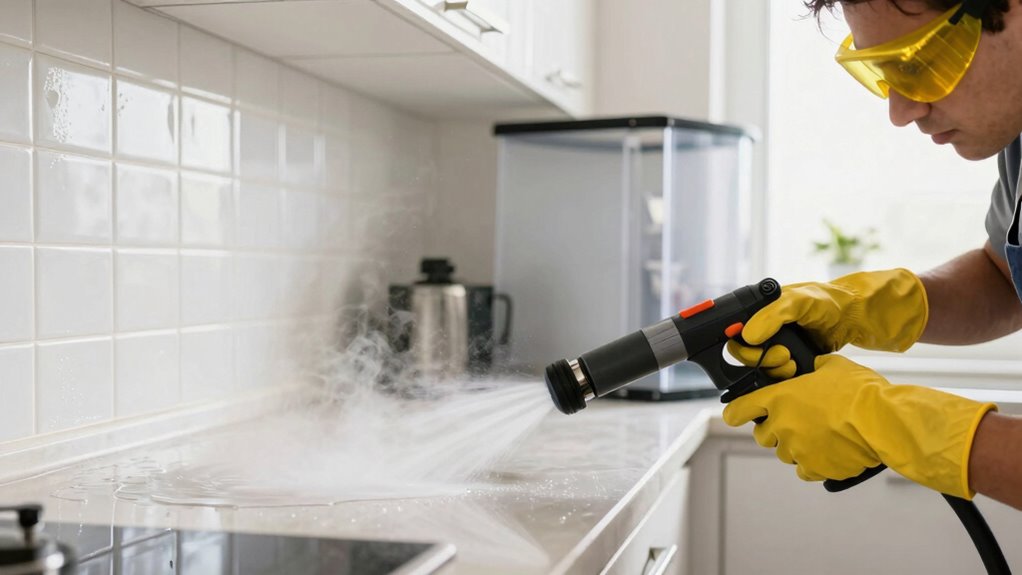
Have you ever considered using pressure washing to clean your kitchen? While it might seem unconventional, a careful approach can make it an effective way to remove stubborn grime from surfaces. However, before you turn on that pressure washer, it’s essential to prioritize appliance safety and surface preparation. These steps ensure you avoid damaging your appliances and surfaces while achieving a thorough clean.
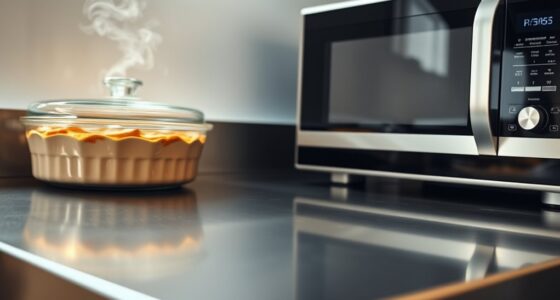
First, appliance safety is your top priority. Kitchen appliances, such as refrigerators, ovens, and dishwashers, contain delicate components that can be easily damaged by high-pressure water. Before you start, unplug all appliances in the area to prevent electrical hazards. Remove any removable parts, like knobs, vents, or trays, and cover exposed electrical outlets and switches with waterproof tape or plastic covers. This simple precaution prevents water intrusion that could cause costly repairs or safety risks. Additionally, consider moving small appliances away from the cleaning zone altogether. This way, you reduce the risk of water damage and ensure you don’t accidentally spray water into vents or seams, which could lead to malfunctions.
Surface preparation is equally critical. Clear the countertops and floors of all items to give yourself unobstructed access to every surface. Remove loose debris, grease, and grime by wiping down surfaces with a damp cloth or mild detergent. This preparation not only makes pressure washing more effective but also prevents dirt from becoming airborne or embedding further into surfaces. For stubborn stains or greasy spots, pre-treat with a suitable cleaner to loosen grime. Once prepped, inspect your surfaces for any cracks or loose tiles—pressure washing can exacerbate existing damage, so it’s better to repair these beforehand. Cover or tape off areas like cabinets, light fixtures, or any delicate surfaces that could be harmed by water or high pressure. Proper surface preparation minimizes the risk of damage and ensures the pressure washer works efficiently. Additionally, understanding surface types and how they react to high-pressure cleaning can help prevent accidental damage.
As you proceed, start with the lowest pressure setting and test on a small, inconspicuous area to gauge how your surfaces respond. Keep the nozzle at a safe distance—generally around 12 to 18 inches—and use a sweeping motion to prevent concentrated water pressure from causing harm. Remember, patience is key. Rushing through the process can lead to unintended damage or unsafe conditions. Taking these safety steps—protecting appliances and preparing surfaces—enables you to clean your kitchen effectively without risking costly repairs or injuries. When done correctly, pressure washing can be a powerful tool for maintaining a spotless, hygienic kitchen.
Frequently Asked Questions
Can Pressure Washing Damage Kitchen Cabinets or Appliances?
Pressure washing can damage your kitchen cabinets or appliances if you’re not careful. The high pressure might strip or chip your cabinet finish, especially if it’s delicate or poorly sealed. It can also compromise appliance safety by forcing water into sensitive areas. To avoid this, use gentle settings, keep the nozzle at a safe distance, and avoid spraying directly on finishes or appliances. Proper technique protects both your cabinets and appliances from harm.
What Safety Gear Is Recommended for Pressure Washing Indoors?
Think of safety gear as your shield during indoor pressure washing. You should wear protective gloves to keep your skin safe from high-pressure water and chemicals, and eye protection to guard against splashes or debris. These essentials are crucial to prevent injuries and ensure your cleaning session is safe and effective. Always prioritize your safety gear, so you can tackle the job confidently without risking harm.
How Do I Prevent Water From Damaging Electrical Outlets?
To prevent water from damaging electrical outlets during pressure washing, prioritize electrical safety by turning off power at the circuit breaker before starting. Use outlet protection covers or waterproof tape to shield outlets from water exposure. Keep the pressure washer nozzle at a safe distance and avoid spraying directly at outlets. Regularly check for signs of moisture and ensure all electrical components are properly sealed to avoid hazards.
Is It Safe to Pressure Wash Near Food Preparation Areas?
Did you know that improper cleaning can lead to 60% of kitchen-related illnesses? It’s generally unsafe to pressure wash near food prep areas because high-pressure water can introduce contaminants or damage surfaces. To maintain food safety, avoid direct pressure washing around food zones and stick to regular cleaning with appropriate tools. This guarantees cleanliness without risking cross-contamination or damage, keeping your kitchen safe and hygienic.
How Long Should I Wait After Washing Before Using the Kitchen Again?
You should wait at least 24 hours after pressure washing before using your kitchen again. This drying time guarantees all surfaces are completely dry, preventing mold and slips. Incorporate this into your cleaning schedule to maintain safety and hygiene. Rushing the process could lead to damage or contamination. Always double-check that everything is thoroughly dry before resuming food preparation, and ventilate the area to speed up drying.
Conclusion
By following these safety steps, you’ll protect yourself and your kitchen from potential harm. Think of it as steering a ship through calm waters—careful planning keeps you afloat and damage at bay. Remember, patience and caution are your best tools. When you prioritize safety, pressure washing becomes a smooth, efficient process instead of a chaotic storm. So, stay vigilant, take your time, and enjoy a spotless, damage-free kitchen that shines like a beacon of cleanliness.