
TL;DR

Get kitchen staples and gadgets delivered free with Prime
- Fast, free delivery on millions of items
- Prime Video, Amazon Music and more included
- Member-only deals all year
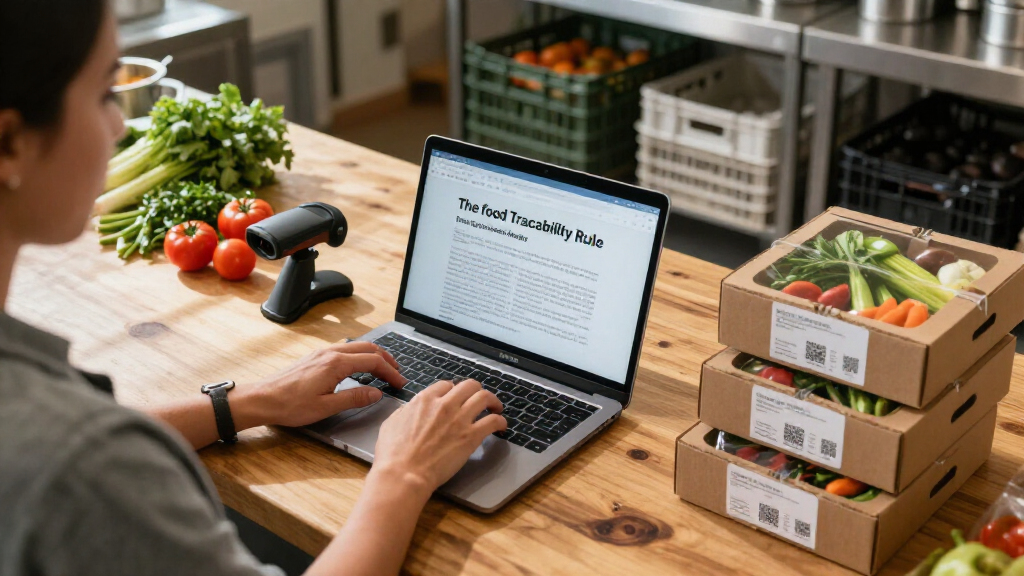
The Food Traceability Rule took effect in January 2023, but a 2025 law bars the FDA from administering or enforcing it before July 20, 2028. The agency is directed to meet with affected sectors on flexibilities and guidance; a November 6 public meeting will focus on lot-level traceability challenges.
A 2025 federal funding law bars the Food and Drug Administration from administering or enforcing the Food Traceability Rule before July 20, 2028, leaving a rule that took effect in 2023 without enforcement during the intervening period. The law also directs the FDA to work with farms, restaurants, retailers and warehouses on flexibilities, as the agency prepares a public meeting on lot-level tracking challenges for November 6, 2026.
The rule implements Section 204 of the Food Safety Modernization Act, signed in 2011. It requires businesses handling foods on the FDA’s Food Traceability List to keep specified records at key points, including harvesting, packing, shipping and receiving. Covered foods include leafy greens, tomatoes, cucumbers, melons, sprouts, shell eggs, some cheeses and seafood.
Records must link through a traceability lot code assigned when food is first packed. When requested during an outbreak investigation, a covered company must provide an electronic, sortable spreadsheet within 24 hours. The Congressional Research Service estimated the rule would cover more than 323,000 domestic businesses operating about 484,000 establishments.
Congressional action, rather than a finalized FDA extension, set the current enforcement pause. Section 780 of the law that ended the 2025 government shutdown bars funds appropriated by that act from being used to administer or enforce the rule before July 20, 2028. It also requires quarterly meetings with affected sectors, FDA guidance on specified topics including food recovery and customer returns, and testing of the agency’s internal tracing system.
Why Lot Codes Matter in Recalls
The rule is intended to help investigators trace potentially contaminated food more quickly through a supply chain. The source report cites FDA pilot projects conducted in 2011 and 2012 that found ordinary “one step forward, one step back” records could fail to connect restaurants and grocery stores where people became ill with the farms that produced the food. The rule’s lot-code requirement is designed to link records across those steps.
The pause means covered businesses do not face FDA administration or enforcement under the rule before the statutory date, but the reporting does not say that the rule itself has been repealed. The agency’s work during the delay may affect how companies meet the tracking requirements once enforcement can begin. The scale of coverage matters: the CRS estimate includes hundreds of thousands of businesses and nearly half a million establishments.
The distinction between an agency-proposed delay and a statutory funding bar is also consequential. The FDA had said its proposed extension would not change the rule’s requirements. Congress then barred use of funds for administration or enforcement before July 20, 2028, giving the pause a legal basis that does not depend on the agency finalizing its proposed extension.
food traceability software for small food businesses
As an affiliate, we earn on qualifying purchases.
As an affiliate, we earn on qualifying purchases.
A Rule Delayed by Law
Congress directed the FDA in 2011 to identify foods often associated with outbreaks and require stronger records. The agency missed its initial deadline to propose a rule, and after litigation by the Center for Food Safety and the Center for Environmental Health, a consent decree set a schedule. The FDA proposed the rule in September 2020 and issued the final version in November 2022. It took effect on January 20, 2023, with compliance originally set for January 20, 2026.
In September 2023, the FDA said it would not begin routine inspections until 2027. In March 2025, it announced an intention to move the compliance date another 30 months, to July 20, 2028, saying companies prepared to comply still depended on supply-chain partners that were not ready. The agency published a proposed extension in August 2025. The source report says it had not been finalized, and that Congress’s later funding provision made finalization unnecessary to create the enforcement pause.
Congress had also considered legislation to reduce or alter lot-code duties for retailers, restaurants and warehouses and require additional pilot projects. The source report says that proposal, H.R. 7563, did not receive a vote, while related ideas appeared in agriculture appropriations legislation.
“The extension did not amend, and the agency did not intend to amend, the requirements of the rule.”
— The FDA, as described in its March 2025 announcement
How FDA Flexibilities Will Work
The November meeting is described in the source report as a discussion of lot-level traceability challenges. The report argues that this is narrower than a general discussion of implementation, describing it as a conversation about making the lot-code requirement easier to meet. The FDA’s notice and meeting materials would be needed to establish the precise scope of questions and any options the agency may consider.
It is not clear from the supplied material what changes, if any, the FDA will recommend after its consultations, or how the agency will approach implementation after July 20, 2028. The law calls for flexibilities and guidance, but the source does not specify their final form. Nor does it identify a completed schedule for the required internal-system testing.
Meeting and Comment Deadlines
The FDA’s second public meeting on “Challenges and Solutions in Lot-Level Food Traceability” is scheduled for November 6, 2026. Anyone seeking to speak must register by October 26; the source says same-day registration will not be accepted. Written comments are due December 6 in Docket No. FDA-2014-N-0053.
Those meetings and comments form part of the agency’s work with affected sectors under the 2025 law. The next major date for enforcement remains July 20, 2028, though the supplied material does not detail what regulatory steps or guidance the FDA will issue before then.
Key Questions
Is the Food Traceability Rule in effect?
It took effect on January 20, 2023. A provision in the 2025 law bars the FDA from administering or enforcing it before July 20, 2028; the source does not describe the rule as repealed.
Which businesses and foods are covered?
The rule applies to businesses that manufacture, process, pack or hold specified foods on the FDA’s Food Traceability List. Examples include leafy greens, tomatoes, cucumbers, shell eggs, some cheeses, seafood and ready-to-eat deli salads. The Congressional Research Service estimate cited in the report is more than 323,000 domestic businesses.
What does the lot-code requirement do?
It links records at important supply-chain events, from harvesting and packing through shipping and receiving. During an outbreak investigation, covered companies must provide requested records in an electronic, sortable spreadsheet within 24 hours.
When is the FDA’s public meeting?
The meeting is scheduled for November 6, 2026. The source says speakers must register by October 26 and written comments are due December 6 in Docket No. FDA-2014-N-0053.
Source: rss
NFL season / tailgating Picks
team gear
As an affiliate, we earn on qualifying purchases.