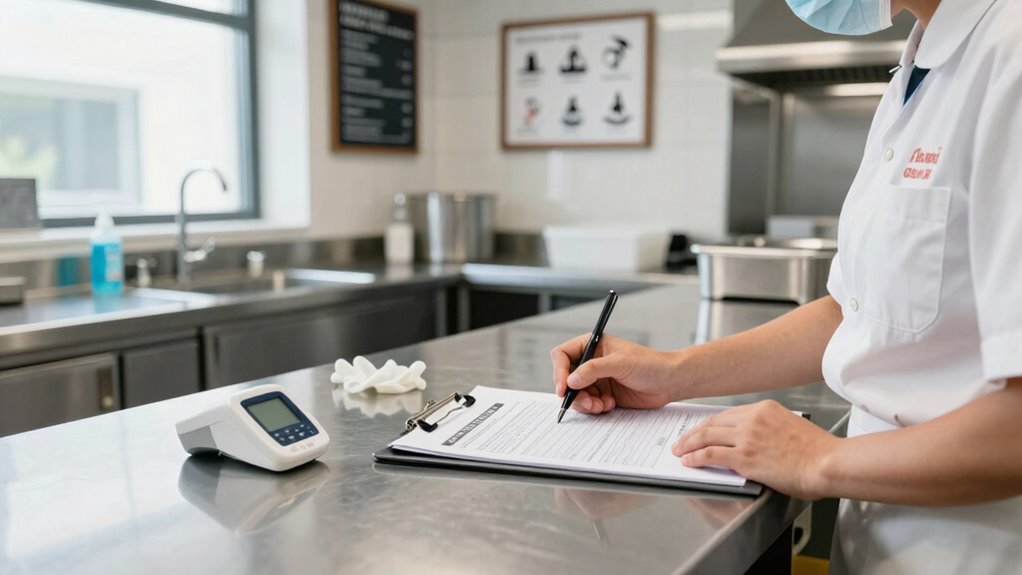

In your restaurant’s illness reporting policy, you should clearly outline the steps staff must take when suspecting someone is ill, including immediate notification of supervisors and health authorities. You need to specify how to isolate contaminated food and utensils, document all incidents with details like date, time, and symptoms, and emphasize the urgency of prompt reporting. Training staff on symptoms and procedures is essential, and staying compliant with regulations guarantees safety. Keep exploring to learn how to implement these practices effectively.

Get kitchen staples and gadgets delivered free with Prime
- Fast, free delivery on millions of items
- Prime Video, Amazon Music and more included
- Member-only deals all year
Key Takeaways
- Clearly outline procedures for staff to follow when suspecting a customer or employee illness.
- Specify immediate notification protocols for designated personnel and health authorities.
- Include steps for isolating contaminated food, utensils, and affected areas promptly.
- Maintain detailed records of incidents, including symptoms, actions taken, and reporting times.
- Ensure training emphasizes symptom recognition, hygiene, communication, and compliance with regulations.

Many health departments now require restaurants to report illnesses among their patrons to help prevent outbreaks and guarantee public safety. As a restaurant owner or manager, you need a clear and thorough illness reporting policy in place. This policy should prioritize food safety and ensure your staff understands their responsibilities when it comes to identifying and reporting potential health issues. When designing your policy, start by establishing specific procedures for staff to follow if they suspect a customer or employee is ill. Clear reporting channels are essential—make sure everyone knows who to notify immediately, whether it’s the manager, owner, or health department official.
Implement clear procedures and reporting channels to ensure swift response to suspected illnesses and protect public health.
Your illness reporting policy should emphasize the importance of food safety and how it directly impacts public health. Train your employees to recognize symptoms of foodborne illnesses, such as vomiting, diarrhea, fever, or jaundice. This training should be ongoing and integrated into your broader employee training program. Well-trained staff are your first line of defense against outbreaks; they need to understand how to handle suspected cases discreetly and professionally. Educating your team on proper hygiene practices, cross-contamination prevention, and safe food handling also supports overall food safety and minimizes the risk of illness.
Include protocols for isolating and removing potentially contaminated food and utensils to prevent cross-contamination. Your policy must specify how to document incidents thoroughly, noting details like the date, time, nature of the illness, and actions taken. Accurate record-keeping not only helps with ongoing monitoring but also demonstrates compliance should an investigation occur. Make sure your staff understands the importance of immediate reporting—delays can exacerbate health risks and lead to regulatory penalties. Additionally, incorporating biodiversity principles, such as sourcing ingredients responsibly, can reduce the overall risk of contamination and support sustainable practices. Recognizing the significance of food safety measures is crucial in reducing the likelihood of outbreaks linked to contamination. Establishing a contamination prevention strategy within your policies can further enhance your restaurant’s ability to safeguard public health.
In addition, your policy should outline procedures for communicating with health authorities when an illness is reported. Prompt reporting allows for quicker intervention, which can prevent larger outbreaks. Incorporating regulatory compliance guidelines can help ensure your restaurant remains aligned with local laws and standards. Implementing employee training programs regularly can reinforce the importance of these procedures and keep staff updated on emerging risks and best practices. Incorporate guidelines about confidentiality and respecting customer privacy while ensuring transparency with health officials. Finally, integrate regular training updates and review sessions to keep your team informed about any changes in regulations or best practices related to illness reporting. By doing so, you foster a culture of accountability and prioritize food safety at every level of your operation.
Creating a robust illness reporting policy isn’t just about compliance; it’s about protecting your customers, your staff, and your reputation. With clear procedures, ongoing employee training, and a focus on food safety, you’ll be better equipped to handle potential health issues swiftly and effectively.
restaurant illness reporting forms
As an affiliate, we earn on qualifying purchases.
As an affiliate, we earn on qualifying purchases.
Frequently Asked Questions
How Often Should Staff Be Trained on Illness Reporting Procedures?
You should train your staff on illness reporting procedures at least every six months to maintain employee awareness and guarantee they understand reporting protocols. Regular training keeps everyone informed about symptoms to watch for and the importance of prompt reporting. Frequent refreshers also help reinforce the procedures, reduce confusion, and promote a safe environment for staff and customers alike. Consistent training demonstrates your commitment to health and safety standards.
What Specific Illnesses Must Be Reported Immediately?
You must report immediately if staff show symptoms of illnesses like norovirus, hepatitis A, Salmonella, E. coli, or Shigella, as these pose serious food safety risks. Ensuring employee health is vital to prevent contamination and protect customers. Prompt reporting helps contain outbreaks and maintains a safe environment. Always adhere to your restaurant’s illness reporting policy to safeguard everyone’s well-being and uphold food safety standards efficiently.
How Is Confidentiality Maintained During Illness Reporting?
You’re often surprised how confidentiality protocols protect both staff and customers during illness reporting. You guarantee reporting confidentiality by limiting access to sensitive information and securely storing records. Regular training emphasizes the importance of respecting privacy, so staff understand that reporting is necessary but must remain discreet. By following strict procedures, you create a safe environment where health concerns are addressed without compromising individual privacy, fostering trust and safety throughout your restaurant.
Are There Legal Penalties for Non-Compliance?
Yes, there are legal penalties for non-conformance with illness reporting policies. You must prioritize legal compliance to avoid penalties, which can include fines, license suspensions, or even closure orders. Penalty enforcement varies by jurisdiction, but authorities actively monitor adherence to health regulations. Ignoring illness reporting requirements not only risks legal action but also jeopardizes public health and your restaurant’s reputation. Stay diligent to guarantee full compliance and protect everyone.
How Should Reports Be Documented and Stored Securely?
You should document illness reports clearly and securely by maintaining detailed records of each incident. Use secure record-keeping systems with data encryption to protect sensitive information from unauthorized access. Store these records in a locked, access-controlled environment, whether physical or digital. Regularly back up data to prevent loss, and guarantee only authorized personnel can view or modify reports, maintaining confidentiality and compliance with privacy regulations.
Conclusion
Just as a single dish can unexpectedly cause illness, a well-crafted reporting policy can prevent widespread outbreaks. When you include clear procedures, encourage staff honesty, and emphasize swift action, you create a safer dining environment. Sometimes, it’s the smallest detail—a forgotten hand wash or overlooked symptom—that sparks a crisis. By being vigilant and proactive, you turn a potential coincidence into a controlled response, protecting your customers and your reputation effortlessly.
NFL season / tailgating Picks
team gear
As an affiliate, we earn on qualifying purchases.