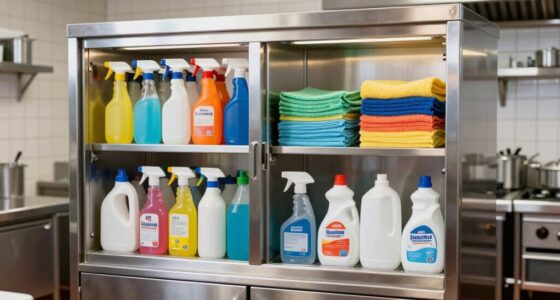

Sanitizer buckets often fail because teams underestimate the need for ongoing maintenance and proper solution management. Refilling sanitizer without checking concentration leads to diluted, less effective solutions. Reusing dirty buckets can transfer germs, while skipping regular cleaning allows dirt and microbes to build up. Proper disinfection techniques and staff training are essential for sustained effectiveness. If you want to understand common pitfalls and how to avoid them, keep exploring this topic further.

Get kitchen staples and gadgets delivered free with Prime
- Fast, free delivery on millions of items
- Prime Video, Amazon Music and more included
- Member-only deals all year
Key Takeaways
- Frequent dilution of sanitizer solution reduces its effectiveness over time.
- Inadequate cleaning of buckets leads to microbial buildup and cross-contamination.
- Relying solely on refills without monitoring solution concentration causes false security.
- Lack of staff training results in improper maintenance and disinfection practices.
- Neglecting routine checks allows failures in sanitizer potency and contamination to go unnoticed.
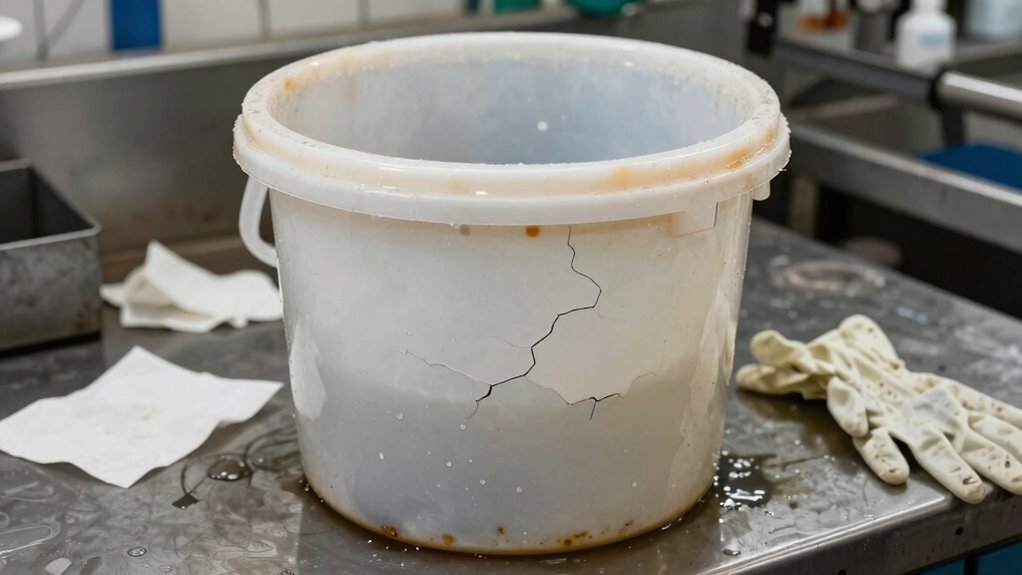
Many teams underestimate how often sanitizer buckets fail to maintain effective hygiene, putting safety at risk. You might think that simply refilling the bucket with sanitizer is enough to keep everything clean, but that’s far from the truth. Proper maintenance of sanitizer buckets is essential to guarantee they don’t become sources of contamination. If you ignore routine checks and proper procedures, you could be unknowingly spreading germs instead of eliminating them.
Proper sanitizer bucket maintenance is crucial to prevent contamination and ensure effective hygiene.
One common mistake is neglecting to regularly change or top off the sanitizer solution. Over time, the disinfectant can become diluted or contaminated, especially if the bucket isn’t cleaned frequently. This diminishes its effectiveness, making it less capable of killing bacteria and viruses. You should monitor the sanitizer’s concentration and replace the solution at regular intervals to ensure it remains potent. Simply refilling the bucket without checking the solution’s strength can create a false sense of security, leaving your team vulnerable to contamination.
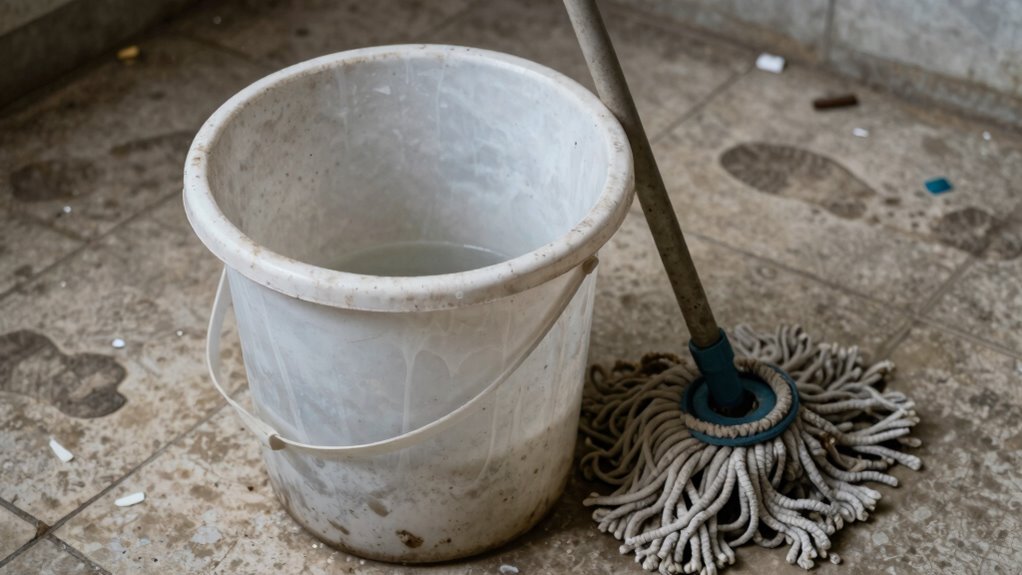
Another critical aspect of proper maintenance is cleaning the bucket itself. Dirt, debris, and residual germs can build up inside if you don’t wash it thoroughly between uses. When you reuse a dirty bucket, you risk transferring contaminants onto your hands or tools, defeating the purpose of sanitizing. Regularly scrubbing and disinfecting the bucket prevents buildup and maintains a clean environment. This step is often overlooked, yet it’s essential to prevent cross-contamination, especially in settings where hygiene is paramount. Additionally, understanding the importance of effective disinfection can help reinforce proper cleaning practices. Using proper cleaning techniques ensures that all surfaces are thoroughly sanitized and free of harmful microbes. Furthermore, implementing a routine check for contaminated surfaces can help identify potential issues early and maintain high hygiene standards. Regular staff training on hygiene protocols can also improve compliance and reduce the risk of sanitizer failure.
As an affiliate, we earn on qualifying purchases.
Frequently Asked Questions
How Does Sanitizer Concentration Affect Its Effectiveness Over Time?
You see, sanitizer concentration affects its effectiveness over time because dilution accuracy can drift, lowering concentration stability. As you reuse or leave the bucket sitting, evaporation or contamination can reduce sanitizer potency. If you don’t regularly check and maintain proper concentration levels, the sanitizer becomes less effective, compromising hygiene. Consistently measuring and adjusting the concentration guarantees your sanitizer remains effective, preventing failure and keeping your environment safe.
What Signs Indicate a Sanitizer Bucket Is No Longer Effective?
Like a ticking clock, a sanitizer bucket signals its demise when you notice a cloudy appearance or a foul smell, indicating it’s no longer effective. If the sanitizer’s shelf life has expired, or if contamination risks have crept in, its ability to kill germs diminishes. Regularly check for color change, cloudiness, or an unusual smell, and replace the solution promptly to maintain hygiene and prevent contamination risks.
How Often Should Sanitizer Buckets Be Replaced or Refilled?
You should replace or refill sanitizer buckets daily, especially if your cleaning schedule involves frequent use. Follow your storage practices by keeping buckets in a cool, dry place away from direct sunlight to prevent contamination. Regularly check the sanitizer’s concentration, and if it drops below recommended levels, refill immediately. Consistent refilling and proper storage guarantee effective sanitizing, reducing the risk of bacterial growth and maintaining hygiene standards.
Can Improper Handling Contribute to Sanitizer Failure?
Yes, improper handling can contribute to sanitizer failure. You might accidentally cross-contaminate the sanitizer by dipping dirty hands or contaminated tools into the bucket, reducing its effectiveness. To prevent this, follow storage safety tips like keeping the bucket covered and away from contaminants. Always use clean hands or tools when handling sanitizer, and avoid placing it on unclean surfaces to maintain its disinfectant power.
Are There Specific Sanitizer Brands More Prone to Failure?
Some sanitizer brands are more prone to failure because of inconsistent manufacturer quality and reliability. You might notice that lesser-known or cheaper brands often lack rigorous testing, leading to ineffective sanitizers. High-quality, reputable brands usually prioritize consistent formulations and standards, reducing failure risks. Always check the brand’s reliability and manufacturer reputation to guarantee you’re using a sanitizer that performs effectively, preventing bucket failures and maintaining safety standards.
Conclusion
Just like a clock that’s out of sync, sanitizer buckets can quietly fail without you noticing. Regularly checking and replacing your sanitizer guarantees your team stays protected, not just when you think you’re covered. Don’t assume your bucket is always working—because a small oversight can lead to bigger risks. Stay vigilant and proactive, because keeping your sanitizing station reliable is the key to safety, even when it’s the last thing on your mind.
Fall Picks
fall essentials
As an affiliate, we earn on qualifying purchases.