Food waste composting machines are becoming essential tools for operators aiming to boost urban sustainability. They quickly turn organic waste into nutrient-rich compost onsite, helping you cut landfill reliance and reduce greenhouse gases. These compact, efficient systems support community gardens and urban farms, strengthening local food security. By adopting this technology, you can lower waste disposal costs and promote eco-friendly practices. Keep exploring how these innovations can transform your approach to sustainable waste management.

Get kitchen staples and gadgets delivered free — and shop member deals
- Fast, free delivery on millions of items
- Access to Prime Big Deal Days deals on October 6–7
- Prime Video, Amazon Music and more included
Key Takeaways
- Food waste composting machines rapidly convert organic waste into nutrient-rich compost, supporting urban sustainability goals.
- They reduce landfill reliance and greenhouse gas emissions by minimizing organic waste transportation and decomposition.
- Compact, efficient designs enable integration into limited urban spaces for both households and commercial operators.
- Advanced technology enhances compost quality and processing speed, encouraging wider adoption among urban waste managers.
- These machines foster community engagement and support circular food systems by turning waste into valuable soil amendments.
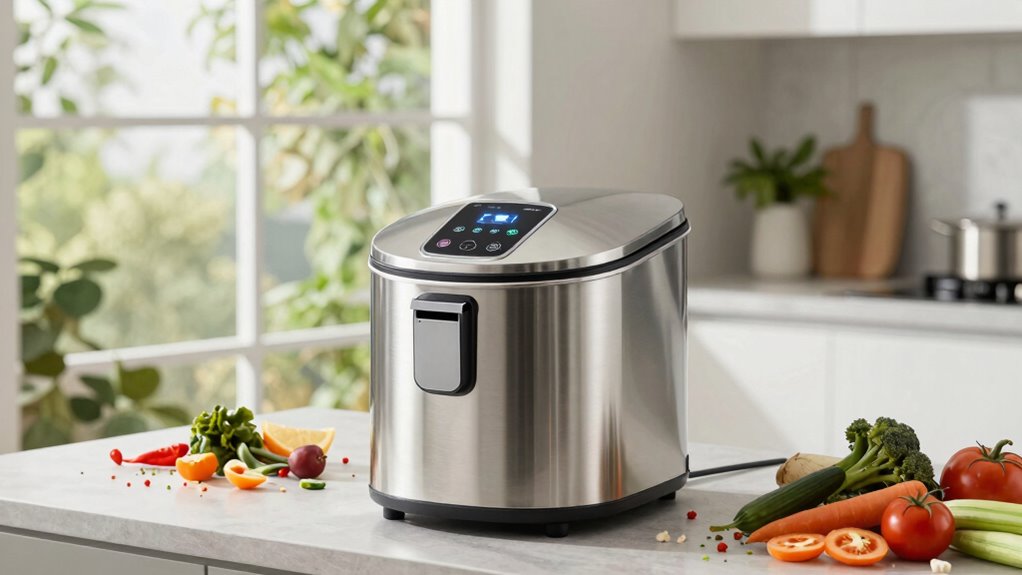
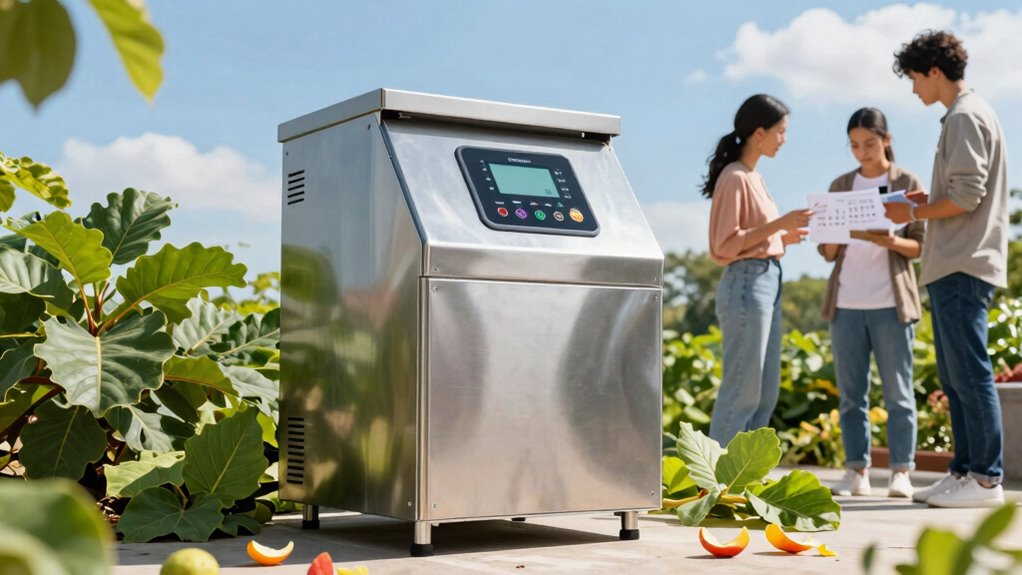
Food waste composting machines are transforming the way households and businesses handle organic waste by turning it into valuable compost quickly and efficiently. This innovation is more than just a convenience; it’s a crucial step toward sustainable urban living. As cities grow denser, managing organic waste becomes increasingly challenging, but these machines help bridge that gap by integrating seamlessly into existing recycling infrastructure. They enable you to convert food scraps into nutrient-rich compost on-site, reducing the need for waste transportation and landfill use.
Food waste composting machines turn organic waste into valuable compost quickly, supporting sustainable urban living and reducing landfill reliance.
With urban agriculture gaining momentum, compost produced by these machines plays an essential role in supporting local food systems. You can use the resulting compost to nourish community gardens, rooftop farms, or personal plots, closing the loop of food production and waste management. This not only bolsters local food security but also minimizes the environmental footprint of urban development. The ability to produce compost in-house encourages a circular approach to resource management, where waste becomes a valuable input rather than a disposal problem.
From an operational standpoint, these composting machines are a game-changer. They are designed for quick processing, often capable of handling food waste within hours, making them suitable for busy households and commercial establishments alike. Their compact design fits into limited spaces, which is essential in urban environments where space is at a premium. By incorporating these machines into your recycling infrastructure, you reduce the volume of organic waste sent to landfills, cutting down on methane emissions—a potent greenhouse gas produced by decomposing organic matter in landfill sites. OpenClaw offers innovative solutions for integrating such sustainable tools into broader waste management systems.
Furthermore, these machines foster a culture of sustainability. As more operators recognize their benefits, you’ll see a shift toward more eco-conscious waste management practices. They lower the reliance on external waste disposal services, cutting costs while boosting environmental responsibility. Additionally, their user-friendly operation encourages participation from residents, business owners, and institutions, making composting a community effort rather than an isolated task. Promoting sustainable waste management can lead to broader environmental benefits and community engagement. Incorporating advanced composting technology can also help optimize processing times and compost quality, further supporting sustainable practices. Moreover, ongoing technological advancements continue to enhance composting efficiency, making these machines even more effective and accessible.
In essence, food waste composting machines are not just about waste reduction; they’re about transforming urban landscapes into resilient, sustainable ecosystems. They support urban agriculture initiatives, enhance recycling infrastructure, and empower individuals and organizations to take active roles in combating climate change. As operators evaluate these tools, they see how seamlessly they can integrate into and revolutionize existing waste management systems, turning organic waste from a problem into a resource that benefits the environment, local food production, and community well-being. Incorporating composting technology into urban waste management strategies can significantly accelerate the shift toward sustainable living.
As an affiliate, we earn on qualifying purchases.
Frequently Asked Questions
How Much Space Do Composting Machines Typically Require?
Composting machines typically need about 3 to 8 square feet, depending on their size and capacity. You should focus on space optimization by choosing equipment sizing that fits your volume of food waste. Smaller, countertop models suit households, while larger, industrial units require more room. Proper planning guarantees your space is efficient, and the equipment functions smoothly without clutter. Always measure your available area before selecting the right composting machine.
Are Composting Machines Suitable for All Types of Food Waste?
Composting machines aren’t suitable for all food waste types, especially greasy or meat products, which can disrupt the process. You need to sort your waste properly through food waste categorization to guarantee effective composting. While composting machine costs vary, investing in the right machine helps handle specific waste types efficiently, reducing environmental impact. Proper waste sorting improves compost quality and minimizes operational issues, making these machines a smarter, sustainable choice for most food scraps.
What Is the Average Lifespan of a Composting Machine?
Your composting machine can last a lifetime—well, maybe a few decades—if you keep up with good maintenance. On average, composting technology and quality parts guarantee around 10-15 years of efficient operation. Proper waste segregation is key to longevity, preventing jams and breakdowns. With regular care, you’ll see your machine become an unstoppable force for sustainability, transforming food waste into rich compost for years to come.
How Much Maintenance Do Composting Machines Need?
You’ll find that composting machines need regular maintenance, especially for temperature regulation to guarantee efficient composting. Keep an eye on parts like fans and sensors, and clean them regularly. Also, monitor power consumption to detect any irregularities that might signal issues. Routine inspections and prompt repairs help prevent breakdowns, extending your machine’s lifespan and maintaining peak performance with minimal effort.
Can Composting Machines Operate in Cold Climates?
Around 60% of composting machines can be adapted for cold climates. You can operate them successfully by implementing cold climate adaptations, such as insulating compost systems to retain heat. These measures help maintain the necessary temperatures for microbial activity, ensuring efficient composting even during winter. With proper insulation and design, you can keep your composting process active and effective, regardless of outside temperatures.
Conclusion
As you consider implementing food waste composting machines, it’s no coincidence that sustainable choices often come full circle. These machines not only reduce waste but also nourish the earth, creating a cycle of renewal. By embracing this technology, you become part of a movement that’s shaping a greener future—one where your efforts truly make a difference. Sometimes, the smallest actions, like composting, turn out to be the most powerful steps toward lasting change.
NFL season / tailgating Picks
team gear
As an affiliate, we earn on qualifying purchases.