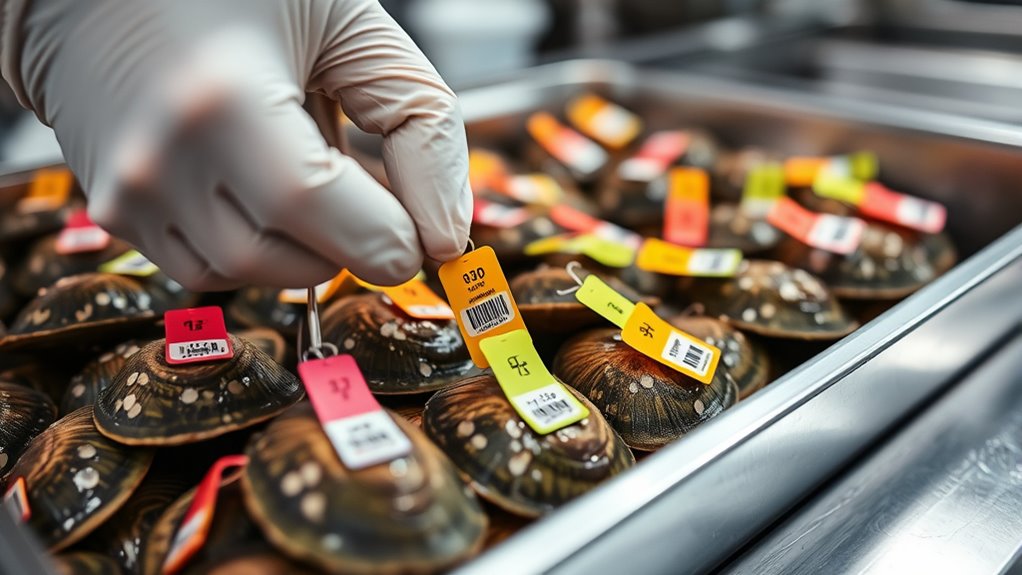

To meet shellfish tags and traceability requirements, you need to include details like harvest location, date, and harvester ID on your labels. This helps guarantee safety, comply with regulations, and quickly identify contamination sources if issues arise. Proper documentation and systems support transparency and build trust with regulators and buyers. Staying compliant also opens up markets and prevents costly recalls. Keep exploring to discover how implementing these practices strengthens your operations and safeguards your reputation.
Key Takeaways
- Shellfish tags must include harvest location, date, and harvester ID to ensure traceability.
- Regulations require timely tagging and recordkeeping for all harvested shellfish batches.
- Traceability systems enable quick source identification during contamination or safety issues.
- Compliance with tagging laws helps access international markets and meet legal standards.
- Proper documentation supports responsible harvesting, recall efficiency, and consumer safety.
Shellfish tags and traceability play a crucial role in ensuring the safety and quality of shellfish products. When it comes to harvesting, adhering to strict harvesting regulations isn’t just a legal requirement—it’s essential for maintaining industry standards and consumer trust. These regulations set out specific rules for when, where, and how shellfish can be collected, helping prevent overharvesting and protecting vulnerable ecosystems. By following these rules, you ensure that your harvesting processes remain compliant with industry standards, reducing the risk of contamination or illegal activities that could jeopardize public health or lead to penalties.
Implementing an effective traceability system begins with proper tagging. Every batch of shellfish must be tagged with detailed information, including harvest location, date, and harvester identification. This transparency allows regulators and industry stakeholders to quickly trace any issues back to their source, whether it’s a contamination event or a quality concern. When you maintain accurate and consistent tagging, you’re not only complying with legal requirements but also demonstrating your commitment to transparency and accountability. This fosters trust with buyers, regulators, and consumers alike.
Moreover, industry compliance isn’t just about following the law; it’s about building a reputation for safety and integrity. Proper shellfish tagging helps you meet national and international standards, which can open doors to broader markets and increase your competitiveness. Failing to comply with harvesting regulations or neglecting traceability can lead to costly recalls, damaged reputation, and even legal action. By staying vigilant about these requirements, you ensure your operation remains sustainable and compliant, avoiding disruptions that could threaten your business.
Additionally, traceability systems make it easier to manage recalls if necessary. If a batch of shellfish is found to be contaminated, your ability to quickly identify and isolate affected products minimizes health risks and limits financial losses. It’s a proactive approach that underscores your dedication to consumer safety. Industry compliance with traceability requirements also encourages responsible harvesting practices, which help sustain shellfish populations and ecosystems for future harvests. Recognizing the importance of proper recordkeeping and documentation further enhances the integrity of your operations.
Frequently Asked Questions
How Long Must Shellfish Tags Be Retained by Harvesters?
You must retain shellfish tags for a minimum of 90 days after the last sale or delivery. This guarantees proper record keeping and traceability, allowing you to verify the harvest details if needed. The tags’ shelf life is essential for compliance, so always keep them accessible and organized. Staying diligent with retention periods helps you meet regulatory requirements and demonstrates your commitment to seafood safety and accountability.
Are Electronic Tracing Systems Accepted for Shellfish Traceability?
Electronic tracing systems are accepted for shellfish traceability, acting as the digital backbone of compliance. You can rely on electronic compliance and digital verification to meet regulatory standards effectively. These systems streamline record-keeping, making it easier to track shellfish from harvest to sale. Just like a GPS guides a ship, electronic systems guarantee your shellfish traceability stays on course, providing accurate, verifiable data for authorities and consumers alike.
What Information Must Be Included on a Shellfish Tag?
You must include specific information on a shellfish tag to meet traceability standards. The tag should display the harvest date, location, and harvest method, along with the dealer’s or harvester’s name and address. Additionally, it must contain a unique tag number to guarantee traceability. This content helps traceability standards are met, making it easier to track shellfish from harvest to sale, ensuring safety and compliance.
Who Is Responsible for Maintaining Traceability Records?
Ever wondered who keeps track of traceability records? You are responsible for maintaining harvest recordkeeping to ensure traceability compliance. It’s your duty to record details like harvest location, date, and harvest method, so the shellfish can be traced back if needed. This responsibility helps protect consumers and ensures regulatory adherence. By keeping accurate records, you support a transparent supply chain and meet all traceability requirements effectively.
Are There Penalties for Non-Compliance With Traceability Requirements?
Yes, there are penalties for non-compliance with traceability requirements. Penalty enforcement is in place to guarantee that compliance violations are addressed promptly. If you fail to maintain proper records or provide accurate traceability information, you could face fines, product recalls, or other regulatory actions. It’s essential to adhere to these requirements to avoid penalties and maintain your reputation in the shellfish industry.
Conclusion
By now, you know how vital shellfish tags are for ensuring traceability and food safety. Did you know that over 80% of seafood recalls involve shellfish, often due to traceability issues? Staying compliant with tag requirements helps protect consumers and your reputation. Keep meticulous records and always update tags promptly. Remember, a simple tag can make a big difference in preventing foodborne illnesses and ensuring your shellfish reaches customers safely and confidently.