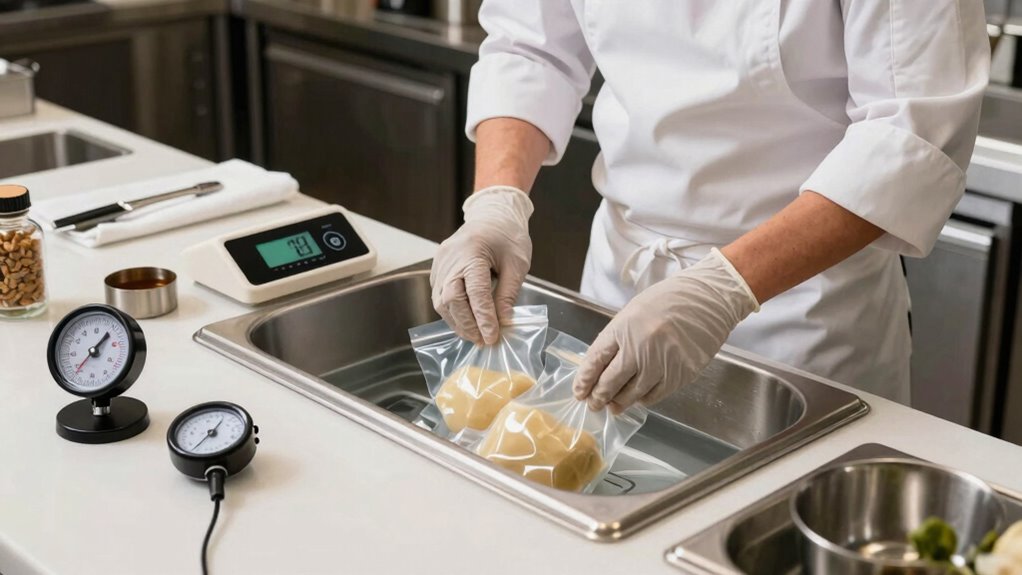
To keep sous vide safe in restaurants, you should follow strict protocols that include thorough staff training on hygiene, ingredient handling, and temperature control. Regular equipment calibration and monitoring are essential to maintain precise cooking temps that eliminate bacteria. Proper cooling and reheating techniques also prevent contamination. By sticking to these safety steps, you guarantee dishes are both delicious and safe. Keep exploring to discover the detailed measures that make sous vide practices completely reliable.

Get kitchen staples and gadgets delivered free with Prime
- Fast, free delivery on millions of items
- Prime Video, Amazon Music and more included
- Member-only deals all year
Key Takeaways
- Proper staff training ensures understanding of hygiene, temperature control, and sealing procedures to prevent contamination.
- Maintaining cold chain practices for raw ingredients minimizes pathogen growth before cooking.
- Using calibrated equipment and precise temperature control ensures proteins reach safe internal temperatures.
- Rapid chilling and reheating of cooked foods prevent bacterial growth during storage and serving.
- Regular safety protocols and staff supervision sustain consistent, safe sous vide cooking standards.
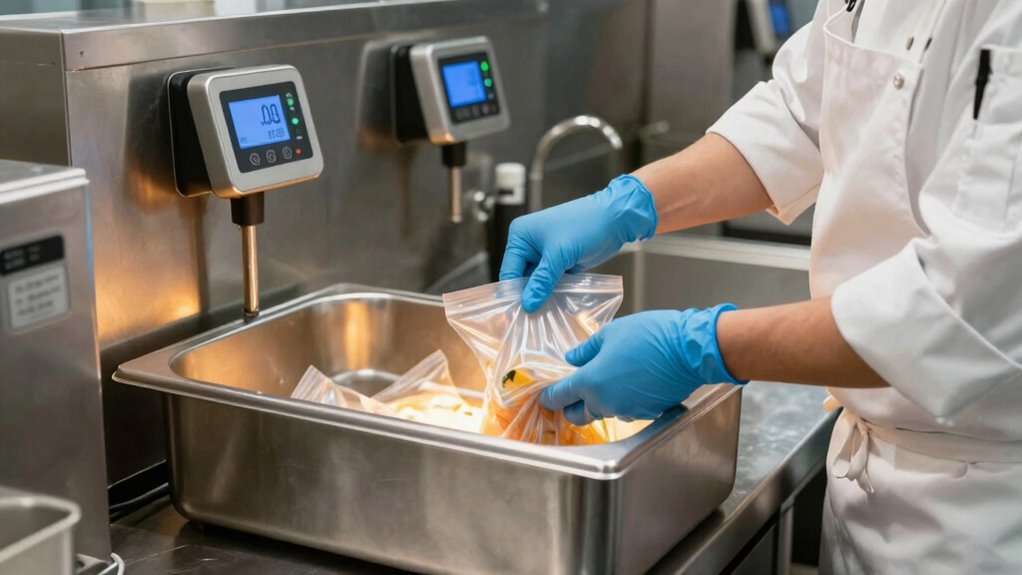
Have you ever wondered how top restaurants consistently serve perfectly cooked dishes with remarkable consistency? The secret often lies in the meticulous use of sous vide cooking combined with rigorous safety protocols. While sous vide can elevate your culinary game, it also demands strict precautionary measures to guarantee food safety. Implementing these measures starts with comprehensive staff training, so everyone understands the importance of each step in the process. Proper training ensures that every team member knows how to handle raw ingredients, set precise temperatures, and monitor cooking times, reducing the risk of contamination or undercooked food. It’s essential that your staff recognizes the significance of maintaining hygiene standards during all stages, from sealing the food to storage and serving.
Consistent sous vide results depend on thorough staff training and strict safety protocols.
Precautionary measures in sous vide cooking involve more than just following recipes; they focus on preventing bacterial growth and ensuring the food remains safe to eat. For example, keeping raw ingredients refrigerated until they’re ready to be vacuum-sealed helps reduce pathogen development. When sealing the bags, staff must ensure an airtight environment, preventing water ingress and contamination. Additionally, maintaining the correct water temperature throughout the cooking process is critical. Many restaurants use precision immersion circulators, which automatically regulate temperature, but staff should always double-check equipment calibration regularly. This attention to detail guarantees that the food reaches the safe internal temperature necessary to eliminate harmful bacteria, especially for proteins like poultry or seafood.
Another essential precautionary step involves post-cooking handling. Once the sous vide process is complete, your team needs to promptly chill cooked items if they’re not served immediately, using an ice bath to rapidly bring down the temperature. This practice prevents bacteria from multiplying during storage. When reheating, make sure to bring the items back to the correct temperature quickly, avoiding any temperature “danger zone” where bacteria thrive. Proper training on these procedures helps prevent mishandling that could compromise safety. Additionally, understanding the importance of temperature control and consistent monitoring can significantly reduce health risks and ensure food quality.
In essence, the success of sous vide in a professional kitchen hinges on your staff’s understanding and execution of these precautionary measures. Regular training sessions, clear protocols, and ongoing supervision are necessary to uphold safety standards. When your team is well-informed and attentive, they can confidently utilize sous vide to produce consistent, perfectly cooked dishes without risking health hazards. By prioritizing staff training and precautionary measures, you’re not just serving great food—you’re ensuring every dish is safe, reliable, and of the highest quality.
precision immersion circulator for sous vide
As an affiliate, we earn on qualifying purchases.
As an affiliate, we earn on qualifying purchases.
Frequently Asked Questions
How Do Restaurants Prevent Cross-Contamination With Sous Vide?
To prevent cross-contamination with sous vide, you guarantee packaging integrity by sealing ingredients properly, so bacteria can’t enter. You also prioritize ingredient segregation, keeping raw and cooked items separate throughout prep and storage. Regularly sanitize all tools and surfaces, and handle food with clean hands or gloves. These steps help maintain safety, keep flavors pure, and prevent any cross-contact between different ingredients or allergens.
What Training Do Staff Need for Safe Sous Vide Procedures?
Did you know that 85% of foodborne illnesses could be prevented with proper training? You need to guarantee your staff complete certified courses on safe cooking techniques, including sous vide procedures. They should understand temperature controls, time management, and contamination prevention. Proper staff certifications empower your team to handle sous vide equipment safely, reducing risks and maintaining high standards in your restaurant’s food safety practices.
How Are Sous Vide Times and Temperatures Validated for Safety?
You verify sous vide times and temperatures through temperature verification and microbial testing. First, you regularly check that your equipment maintains precise temperatures with calibrated tools. Then, you conduct microbial testing on cooked foods to ensure pathogens are eliminated. This process confirms your settings are safe and effective, helping you comply with health standards. Consistent validation builds trust in your sous vide procedures, ensuring food safety for every dish served.
What Emergency Protocols Are in Place if Sous Vide Equipment Malfunctions?
Imagine a calm kitchen suddenly disrupted—your equipment malfunctions. You immediately activate your emergency response plan, which includes shutting down the sous vide device, unplugging it, and notifying your maintenance team. Regular equipment maintenance guarantees issues are caught early. You keep backup tools handy, and staff are trained to handle emergencies swiftly, maintaining safety and food integrity. This proactive approach minimizes risks, protecting both your staff and your diners.
How Do Restaurants Document and Verify Sous Vide Safety Compliance?
You should maintain detailed records of your food handling procedures and regularly review them for compliance. Implement quality assurance checks, such as temperature logs and cooking time documentation, to verify safety standards. Conduct staff training and keep records of these sessions. Periodically audit your processes, ensuring all safety protocols are followed. This documentation proves your restaurant’s commitment to sous vide safety compliance and helps address any potential regulatory inquiries confidently.
Conclusion
By following these safety steps, you turn the art of sous vide into a masterpiece of culinary precision and safety. Think of it as a secret recipe—when you master the process, you disclose flavors and safety that keep diners coming back. Remember, precision isn’t just about taste; it’s your shield against risks. So, embrace these steps, and let your kitchen’s safety standards shine like a perfectly cooked, tender piece of meat—irresistible and secure.
Halloween Picks
halloween
As an affiliate, we earn on qualifying purchases.