
You need better time marking systems to keep your food safe, reduce waste, and improve inventory control. Accurate labels help you quickly identify expired items, follow FIFO procedures, and avoid serving unsafe food. Proper training guarantees your staff can interpret date formats correctly, while digital tools make tracking easier and more precise. If you want to learn how implementing effective time marking can boost your restaurant’s efficiency and safety, there’s more to explore.

Get kitchen staples and gadgets delivered free — and shop member deals
- Fast, free delivery on millions of items
- Access to Prime Big Deal Days deals on October 6–7
- Prime Video, Amazon Music and more included
Key Takeaways
- Accurate time marking prevents food waste by ensuring items are used before expiration.
- It enhances food safety by clearly indicating freshness and reducing the risk of serving expired products.
- Consistent labeling supports staff in following FIFO procedures, maintaining inventory rotation.
- Improved systems streamline inventory management, making expiration tracking more efficient and reliable.
- A strong focus on time marking fosters a safety culture, reducing errors and promoting responsible food handling.
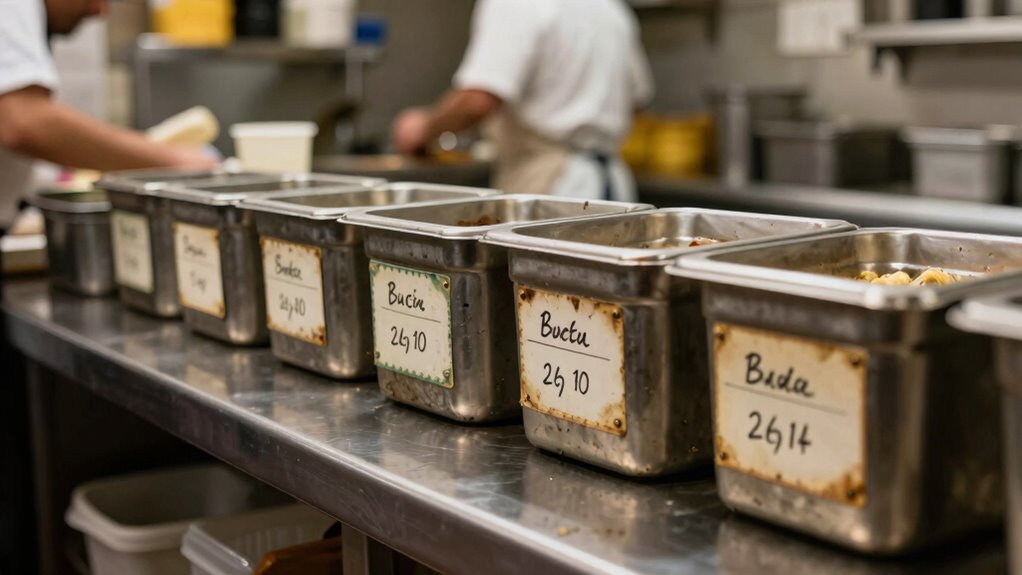
Many restaurants struggle with tracking food freshness and safety, which can lead to waste and customer health risks. One of the biggest challenges is maintaining accurate inventory records. Without reliable inventory accuracy, you might find yourself tossing out food that’s still good or serving items that are past their prime. Properly tracking expiration dates and use-by timelines ensures you don’t underestimate or overestimate what’s available, helping you control waste and keep food safe. But accurate inventory isn’t just about counting; it’s about knowing exactly when each item was received and when it’s due for use. That’s where better time marking systems come into play, reducing guesswork and making inventory management more precise. Effective labeling also helps staff quickly identify and prioritize which items to use first, further enhancing safety and freshness. Implementing consistent date formats can significantly reduce errors and confusion among staff members. Additionally, adopting standardized practices ensures everyone follows the same procedures, making your system more reliable. Regular audits and reviews of your inventory can further enhance accuracy and accountability, ensuring your system remains effective over time. Incorporating technology solutions can further streamline these processes and improve overall accuracy.
Accurate inventory and clear expiration tracking reduce waste and ensure food safety in restaurants.
Staff training plays a vital role in making these systems effective. If your team isn’t trained on how to interpret and apply time markings correctly, even the best system can fall short. You need to guarantee your staff understands the importance of labeling food with clear, consistent dates and knows how to read and follow those labels. Proper training helps prevent mistakes like forgetting to update dates, misreading labels, or ignoring expired items. When your staff is confident and knowledgeable, they’re more likely to maintain accurate records and follow safety protocols diligently. This reduces the risk of serving unsafe food and cuts down on unnecessary waste caused by mismanaged stock.
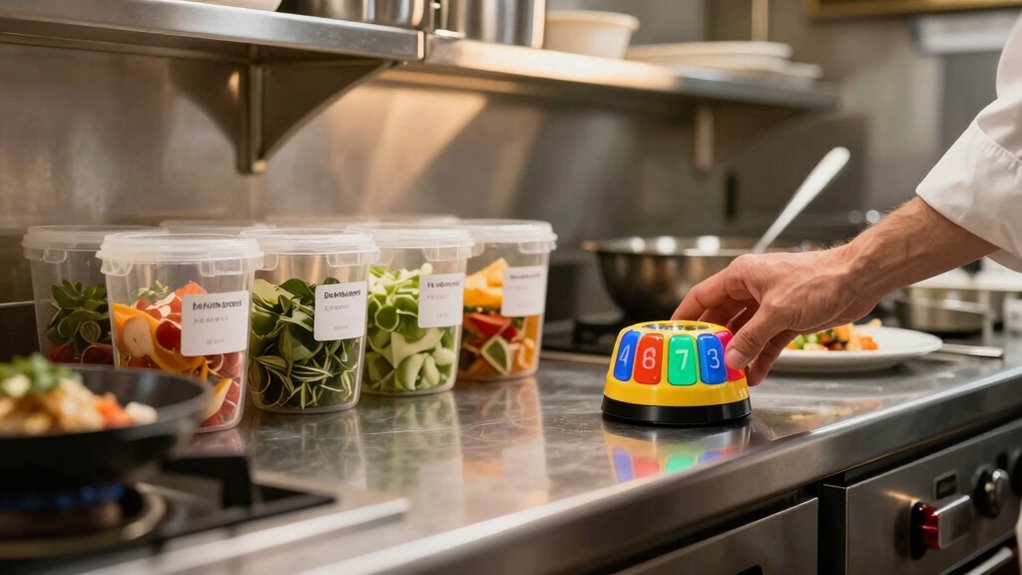
A better time marking system also streamlines daily operations. When your team relies on clear labels like “use by” or “sell by” dates, they can quickly identify what needs to be used first, following the FIFO (First In, First Out) method. This not only keeps food fresher but also minimizes spoilage. Automated or standardized labeling systems can further improve accuracy, making it easier for staff to update and check expiration dates. This consistency helps prevent errors that could compromise food safety or lead to unnecessary waste. Implementing digital tracking tools can further enhance your system’s precision and ease of use, keeping your inventory data up-to-date in real time.
Ultimately, implementing a thorough time marking system isn’t just about technology—it’s about creating a culture of safety and responsibility. When staff are well-trained and inventory accuracy is prioritized, your restaurant becomes more efficient, reduces waste, and protects customers from potential health issues. Better time marking ensures you always have a clear understanding of your stock’s freshness, allowing you to serve high-quality, safe food consistently. It’s a simple yet powerful step toward improving your restaurant’s operations and reputation.
digital food inventory management system
As an affiliate, we earn on qualifying purchases.
As an affiliate, we earn on qualifying purchases.
Frequently Asked Questions
How Do Time Marking Systems Improve Food Safety?
Time marking systems improve food safety by helping you track shelf life and prevent food contamination. When you clearly mark expiration dates and storage times, you reduce the risk of serving spoiled or unsafe food. This system guarantees you discard items before they become hazardous, maintaining quality and safety standards. By staying organized with accurate time markings, you protect your customers and uphold your restaurant’s reputation.
Are Digital Time Marking Systems Cost-Effective for Small Restaurants?
Digital time marking systems are cost-effective for small restaurants, especially when you consider that food waste costs the industry billions annually. A solid cost analysis shows that investing in reliable systems reduces spoilage and boosts efficiency. When selecting vendors, prioritize those offering scalable solutions and good support. This way, you’ll save money long-term, streamline operations, and maintain high food safety standards without breaking the bank.
What Are the Common Challenges in Implementing New Time Marking Systems?
You might face challenges like staff adaptation, where employees resist or take time to learn the new system, and system calibration, ensuring the equipment functions accurately. To overcome these, provide thorough training, emphasize the benefits, and involve staff in the implementation process. Regularly check and adjust the system to maintain precision. Clear communication and ongoing support help smooth the changeover, making the new time marking system more effective and easier to adopt.
How Do Time Marking Systems Integrate With Inventory Management?
Time marking systems seamlessly synchronize with inventory management by boosting accuracy and enabling automation. You’ll quickly see how real-time updates improve inventory accuracy, preventing spoilage and overstocking. Automated alerts notify you of nearing expiration dates, simplifying stock upkeep. This integration streamlines stock tracking, minimizes manual errors, and maximizes efficiency. Ultimately, this synergy sustains smoother operations, saves time, and secures consistent, quality servings, strengthening your restaurant’s success.
What Training Is Required for Staff to Use New Time Marking Systems Effectively?
You should provide thorough staff training to guarantee they understand how to use the new time marking system effectively. Focus on teaching them proper procedures for inputting and updating data, emphasizing the importance of system accuracy to prevent errors. Regular refresher sessions help reinforce correct usage, while clear instructions ensure everyone stays consistent. By investing in proper training, you’ll improve system reliability and reduce waste caused by incorrect time markings.
Conclusion
Just like a master chef keeps a keen eye on every ingredient’s freshness, you need a reliable time marking system to guarantee your restaurant’s success. Without it, you risk serving stale experiences or wasting precious resources. Think of it as the heartbeat of your operation—timely, precise, essential. Embrace better time marking, and watch your restaurant flourish like a well-orchestrated symphony, each note perfectly timed for maximum flavor and harmony.
Halloween Picks
halloween
As an affiliate, we earn on qualifying purchases.