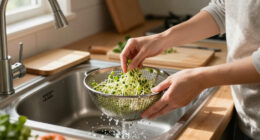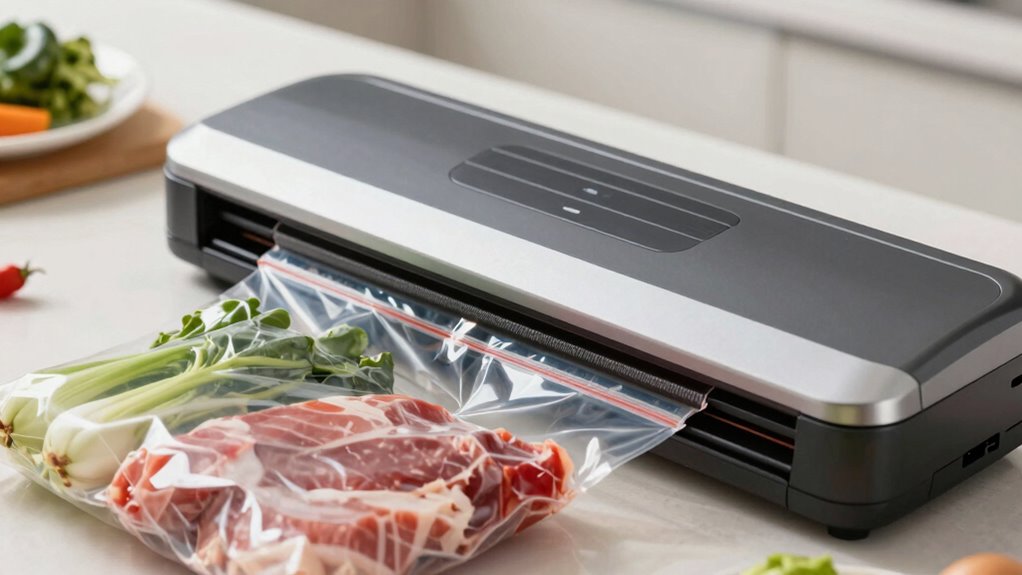

To prevent dangerous bacterial growth, always guarantee your food is fresh and free from spoilage signs before vacuum sealing. Clean all surfaces and your device regularly, and use proper, undamaged bags tailored for liquids if needed. Store your sealed foods in cool, dark places, and label them with dates. Following these storage rules helps keep food safe longer. Keep exploring to discover additional tips for maintaining safety and extending your food’s freshness.

Get kitchen staples and gadgets delivered free with Prime
- Fast, free delivery on millions of items
- Prime Video, Amazon Music and more included
- Member-only deals all year
Key Takeaways
- Store vacuum-sealed foods in cool, dark environments to inhibit bacterial growth.
- Label packages with dates to monitor freshness and use items before spoilage signs appear.
- Ensure food is fresh, properly inspected, and free from spoilage before sealing.
- Regularly clean and maintain sealing devices to ensure airtight seals and prevent contamination.
- Avoid sealing liquids directly; freeze partially and use specialized bags to prevent leaks and mold growth.
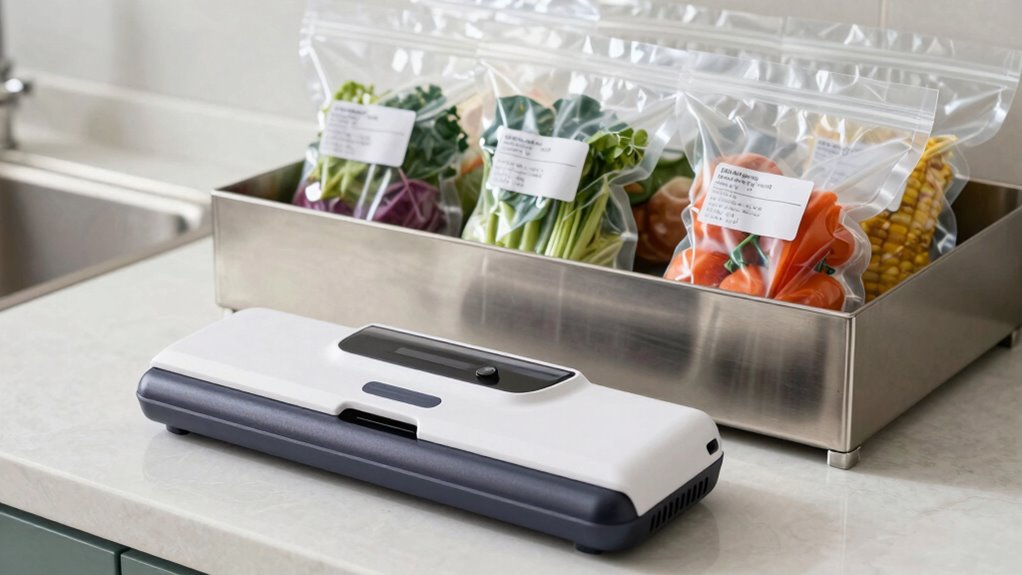
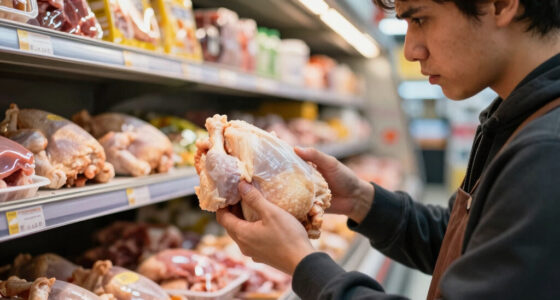
Vacuum sealing is a popular method for preserving food and reducing waste, but it’s essential to prioritize safety to prevent accidents or spoilage. One of the biggest risks when vacuum sealing is food contamination, which can lead to foodborne illnesses if not managed properly. To avoid this, you should always start with clean hands and sanitized surfaces. Before sealing, check that the food is fresh and free from spoilage signs like strange odors, sliminess, or discoloration. Properly prepared foods ensure that you’re not sealing in bacteria or mold, which can grow silently during storage. Additionally, it’s crucial to avoid sealing leftovers or ingredients that have reached their expiration date. Proper food handling and inspection before sealing go a long way in preventing unsafe growth.
Start with clean hands and check food for spoilage before vacuum sealing to prevent contamination and foodborne illnesses.
Device maintenance plays a vital role in guaranteeing your vacuum sealer operates safely and effectively. Regularly cleaning the device, especially the sealing strip and gaskets, prevents residue buildup that could harbor bacteria or mold. If you neglect maintenance, the device can malfunction, creating gaps that allow air and moisture to enter the bag, compromising the seal and risking contamination. Always follow the manufacturer’s instructions on cleaning and replacing parts like the sealing strip or filters. Using the correct bags and ensuring they are not damaged or punctured also minimizes the risk of spoilage or contamination. Proper device maintenance extends the lifespan of your vacuum sealer and guarantees consistent performance, reducing the chance of compromised seals that could lead to food spoilage.
When sealing, don’t rush the process. Make sure the bag is properly aligned and free of wrinkles or folds, which can cause leaks. Double-check the seal after sealing to confirm it’s strong and airtight. If you notice any defects, reseal with a new bag. Proper device maintenance extends the lifespan of your vacuum sealer and guarantees consistent performance, reducing the chance of compromised seals that could lead to food spoilage. Also, be cautious when sealing liquids—they can interfere with the sealing process and cause leaks. Use specialized bags for liquids and freeze them partially before sealing to prevent spillage.
Storing vacuum-sealed foods correctly is equally important. Keep them in a cool, dark place or in the refrigerator or freezer, depending on the type of food. Always label your sealed packages with dates, so you consume the older items first. This helps prevent the accidental use of spoiled food. By combining good food handling practices with diligent device maintenance, you greatly lower the risk of food contamination and spoilage, making vacuum sealing a safe and effective way to extend your food’s shelf life.
Frequently Asked Questions
Can Vacuum Sealing Be Used for Liquids Safely?
You can vacuum seal liquids safely if you use proper sealing techniques. To prevent liquid spillage, freeze the liquid first so it solidifies, then vacuum seal it. This prevents the liquid from being sucked into the machine and causing damage. Always leave some headspace and use a bag designed for liquids. Following these storage rules helps keep your vacuum sealer functioning well and prevents dangerous growth.
Is It Safe to Vacuum Seal Expired Food?
Think of vacuum sealing expired food like locking in bacteria growth—it’s risky. It’s not safe to vacuum seal expired food because spoilage bacteria can still grow, even in sealed environments. I once sealed some leftovers past their date, only to find mold and bad odors later. To prevent food spoilage and dangerous bacteria growth, always check expiration dates and avoid sealing expired items. Staying cautious keeps your food safe.
What Materials Are Safest for Vacuum Sealing?
You should use materials like BPA-free plastics and specially designed airtight containers for vacuum sealing. These materials prevent air and moisture from entering, reducing the risk of spoilage and bacterial growth. Avoid thin or non-food-grade plastics, as they can leak or degrade. Always choose high-quality, food-safe options to guarantee your sealed items stay fresh and safe to consume, keeping your food storage secure and hygienic.
How Long Can Vacuum-Sealed Food Be Stored?
You can typically store vacuum-sealed food for 1-3 years in the freezer, but it depends on the food type. Proper sealing prevents food spoilage and bacteria growth, extending shelf life. Always label your packages with dates, and check for signs of spoilage before consuming. For best quality, consume meats within 1-2 years, and fruits or vegetables within a year. Proper storage guarantees safety and retains flavor.
Are There Any Health Risks With Vacuum Sealing?
Think of vacuum sealing as locking away potential troublemakers—food spoilage and bacterial growth. While it generally reduces health risks, improper sealing or storing spoiled food can still cause issues like food poisoning. You should always guarantee your vacuum-sealed items are fresh before sealing, and store them correctly. Regularly check for signs of spoilage, and don’t rely solely on vacuuming to prevent all health risks. Stay vigilant to keep your food safe.
Conclusion
By following proper storage rules, you protect your food and your health, turning a simple vacuum seal into a safeguard. Yet, neglecting these safety tips can lead to dangerous bacterial growth, transforming a convenient method into a health risk. Remember, the peace of mind you gain from correct vacuum sealing outweighs the effort—it’s the quiet guardian against spoilage and illness. In this balance, safety becomes not just a rule, but an essential choice for your well-being.
NFL season / tailgating Picks
team gear
As an affiliate, we earn on qualifying purchases.