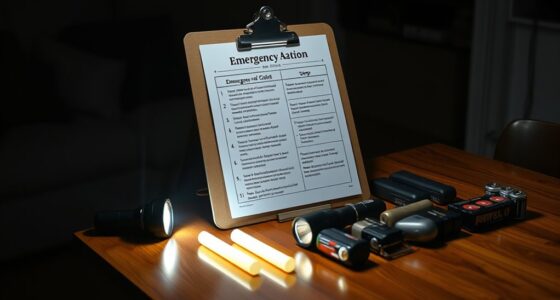
During a water interruption, you should first turn off your main water valve to prevent damage and conserve residual water. Store enough bottled water for drinking and basic needs, and limit water use to essentials like hygiene and cooking. Maintain clear communication with family or colleagues, and report any infrastructure issues promptly. Stay informed about progress and keep a safe operations checklist ready for swift recovery. Continue exploring these steps to guarantee you’re well-prepared for any water disruption.
Key Takeaways
- Regularly inspect plumbing for leaks and weaknesses to prevent emergencies.
- Turn off the main water valve promptly during an interruption to avoid damage.
- Store sufficient bottled or containerized water for several days of supply.
- Communicate immediately with family or colleagues about water status and conservation needs.
- Report infrastructure issues to authorities and stay informed about repairs and water updates.

Have you ever experienced a sudden water interruption and wondered what caused it? It can be startling, especially if you’re unprepared. That’s why having an emergency preparedness plan is essential. Being ready for such disruptions means understanding how to respond quickly and efficiently, minimizing inconvenience and potential damage. One of the most effective ways to do this is by practicing water conservation. By reducing your water usage during normal times, you lessen the impact when water supplies are interrupted, and recovery takes longer.
Start by knowing the main causes of water interruptions, such as maintenance work, pipe bursts, or main line breaks. When you’re aware of these potential issues, you can better prepare your household or business to handle them. Keep a supply of bottled water or stored water in containers, enough to last several days, especially if you’re in an area prone to frequent interruptions. This small step guarantees you’re not caught off guard and can maintain basic hygiene and drinking needs without panic.
Knowing common causes like pipe bursts helps you prepare with bottled water and stay safe during outages.
In addition to storing water, check your plumbing system regularly for leaks or weaknesses. This proactive approach aligns with water conservation efforts, reducing unnecessary water waste and helping you identify potential problems before they become emergencies. When an interruption occurs, turn off your main water valve promptly to prevent further damage from leaks or backflow. Having a checklist for safe operations is essential—know where your shut-off valves are and ensure they’re accessible.
Communicate with your family or colleagues about the situation immediately. Let them know what steps you’re taking and how they can help conserve water during the disruption. During these times, it’s important to prioritize water usage—use only what’s necessary for drinking, cooking, and hygiene. Avoid wasting water on non-essential tasks, like washing outdoor areas or filling pools, until the supply is restored. Additionally, understanding water system maintenance can help you anticipate potential disruptions and plan accordingly.
Post-interruption, assess the cause of the issue if you can. Report any infrastructure problems to local authorities or water providers to help expedite repairs. While waiting for water service to resume, continue practicing water conservation. Use water-efficient devices if available, and reuse greywater when possible for cleaning or watering plants.
Being prepared for water interruptions isn’t just about reacting when they happen; it’s about establishing habits that promote emergency readiness and responsible water use. By integrating water conservation into your daily routine, you reduce overall demand and make your community more resilient during disruptions. Staying informed about local water issues and maintaining a safe operations checklist ensures you’re ready to handle interruptions calmly and effectively, keeping your household safe and well-supplied even in challenging times.
Frequently Asked Questions
How Often Should the Safety Checklist Be Reviewed?
You should review the safety checklist regularly, ideally every three to six months, to guarantee it stays current with your maintenance schedule. Keeping a consistent review frequency helps identify any outdated procedures or missing safety measures. By staying proactive, you minimize risks and maintain safe operations. Set reminders to review the checklist according to your maintenance schedule, and update it whenever changes occur in procedures, equipment, or regulations.
Who Is Responsible for Implementing the Checklist?
Implementing the checklist is like steering a ship through stormy seas—you’re responsible for keeping everything on course. You, along with responsible personnel, are tasked with guaranteeing it’s followed correctly. Accountability measures are in place to make sure everyone adheres to safety standards. You’re the key to maintaining safe operations, so it’s your duty to lead by example and ensure the checklist is properly implemented and consistently followed.
What Training Is Required for Staff?
You need to guarantee your staff completes the required training modules for safe operations. Staff certification is essential, so they must undergo specialized training that covers all safety procedures and emergency protocols. Make sure they understand the checklist thoroughly through extensive training modules, which should be regularly updated. This way, your team stays prepared and competent to handle water interruptions safely and efficiently, minimizing risks and ensuring operational continuity.
How Are Emergency Procedures Communicated?
When it comes to emergency procedures, you need to be on the same page. You communicate through clear emergency signaling and follow established communication protocols to guarantee everyone understands the situation quickly. You should also regularly test these methods so no one’s left in the dark. Keep your communication channels open and concise, because a chain is only as strong as its weakest link during an emergency.
What Are Common Causes of Water Interruptions?
You might experience water interruptions caused by pipeline maintenance, which temporarily halts water flow, or leak detection issues that identify problems needing repair. Other common causes include pipe bursts, infrastructure failures, or external damage such as construction activities. Regular leak detection helps prevent major disruptions, while proactive pipeline maintenance guarantees the system remains dependable. Staying aware of these causes allows you to prepare and respond quickly to minimize water service interruptions.
Conclusion
Remember, a water interruption isn’t just a temporary inconvenience—it’s a test of your preparedness. By following the safe operations checklist, you’re not just safeguarding your immediate needs but building resilience against future disruptions. Think of this checklist as your shield; the more diligently you utilize it, the stronger your defenses become. In life’s unpredictable flow, staying proactive ensures you won’t be swept away. Stay vigilant, stay safe—because preparedness is your strongest current.