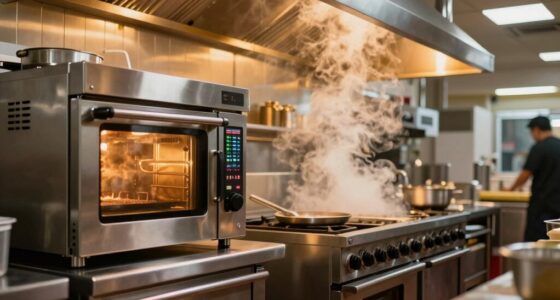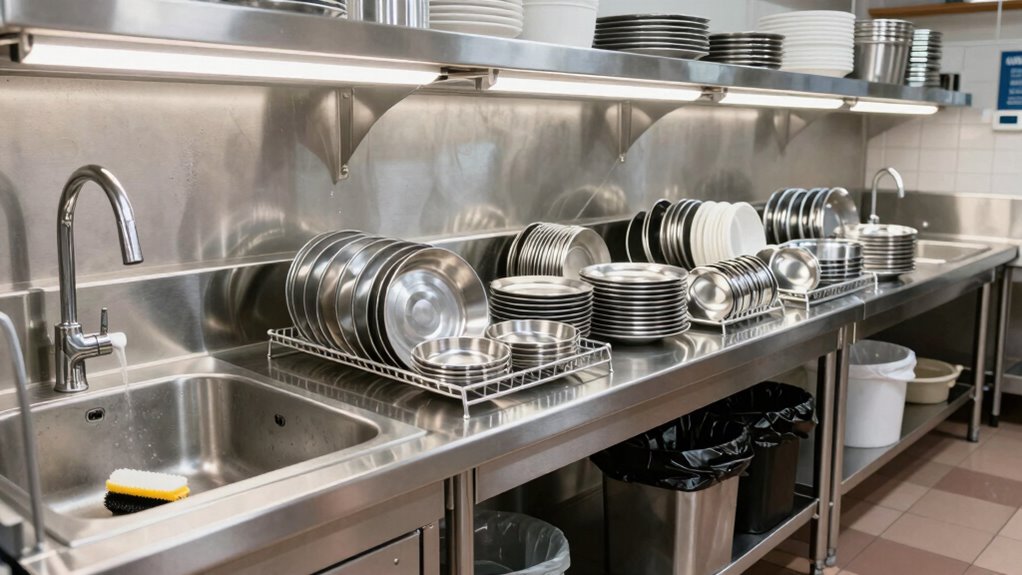

A well-designed 3-zone dish pit layout helps you organize your kitchen efficiently, preventing pileups and ensuring smooth workflow. Position the soiled dish area near dining and prep zones for quick collection, keeping it separate from the clean dish storage to prevent cross-contamination. The central washing zone should connect both areas for swift transfers. Properly arranged, this setup boosts hygiene, reduces clutter, and streamlines your operation—if you want to know how to optimize each zone further, keep exploring.

Get kitchen staples and gadgets delivered free with Prime
- Fast, free delivery on millions of items
- Prime Video, Amazon Music and more included
- Member-only deals all year
Key Takeaways
- Implement a clear 3-zone layout: soiled, washing, and clean areas to streamline workflow and prevent pileups.
- Position the soiled dish area near dining and prep zones for quick collection and sorting.
- Place the washing zone centrally between soiled and clean zones to facilitate efficient dish movement.
- Allocate ample space and organization within the clean dish area to avoid clutter and handle volume effectively.
- Regularly sanitize each zone and maintain strict separation to prevent cross-contamination and ensure hygiene.

Have you ever wondered how a well-designed dish pit layout can boost efficiency in a busy kitchen? The secret lies in organizing the space into a strategic 3-zone setup that keeps workflows smooth and prevents pileups. When you focus on this layout, you’ll notice improvements in warehousing efficiency, as each zone clearly defines where clean dishes, soiled items, and washing activities take place. This arrangement streamlines operations, reduces clutter, and minimizes the risk of cross-contamination, all while supporting strict sanitation protocols.
The first zone is the soiled dish area, where dirty items are collected and sorted. You want this zone close to the dining or prep areas, so staff can quickly deposit used dishes without crossing paths with the clean zone. Placing a designated container or rack here helps contain the mess and prevents dirty utensils from spilling into other parts of the kitchen. Proper warehousing efficiency is achieved when this zone is organized with enough space for incoming dishes, and workflow is designed to move smoothly toward the washing station.
Position the soiled dish area near dining and prep zones for quick, efficient sorting and collection.
Next comes the washing zone, which functions as the heart of your dish pit. Here, you’ll need a well-maintained sink or dishwashing machine, along with enough space for scrubbing, rinsing, and stacking. This zone should be positioned between the soiled and clean areas, creating a logical flow that minimizes backtracking. Efficient warehousing in this zone includes clearly marked storage for cleaning supplies, detergents, and tools, so everything is within arm’s reach. Maintaining strict sanitation protocols is crucial here—regularly sanitizing sinks, racks, and surfaces ensures dishes are hygienic and safe for use. When the washing zone is optimized, staff can work swiftly without unnecessary interruptions or cross-contamination risks.
Additionally, integrating high-quality dishwashers can significantly reduce water and energy consumption, further improving overall warehousing efficiency and sanitation standards. Finally, the clean dish area is where sanitized items are stored and organized before being returned to service. You want this zone to be easily accessible, with ample shelving and designated spaces for different types of dishware. Proper layout reduces handling time, keeps the workspace tidy, and makes it easier to track cleanliness and sanitation. Ensuring that this zone remains separate from the soiled and washing areas not only enhances warehousing efficiency but also aligns with sanitation protocols, preventing potential health hazards.
As an affiliate, we earn on qualifying purchases.
Frequently Asked Questions
How Do I Customize the Layout for Different Kitchen Sizes?
You can personalize your dish pit layout by evaluating your kitchen space and adjusting the zones to fit your workflow. Prioritize layout flexibility by rearranging stations for maximum efficiency and ease of access. Use modular equipment or movable stations to accommodate different kitchen sizes. This way, you guarantee smooth operations regardless of your kitchen’s size, reducing clutter and preventing pileups while maintaining a streamlined dishwashing process.
What Safety Measures Are Essential in a Dish Pit?
Think of safety in your dish pit as the shield guarding your team’s well-being. Always wear Personal Protective Equipment like gloves and slip-resistant shoes to stay protected. Know your Emergency Procedures so you can act swiftly if accidents happen. Regularly inspect equipment for hazards, keep floors dry, and ensure clear pathways. These measures create a fortress of safety, helping your team work confidently while preventing mishaps from slipping through the cracks.
How Often Should the Dish Pit Be Cleaned and Maintained?
You should follow a consistent cleaning schedule, ideally daily, to keep your dish pit sanitary and efficient. Regular maintenance frequency includes checking for clogs, inspecting equipment, and cleaning filters weekly. This routine prevents buildup and guarantees smooth operation. By sticking to a disciplined cleaning schedule and maintenance frequency, you’ll reduce safety hazards, prolong equipment life, and maintain a clean, safe workspace for everyone.
What Equipment Is Necessary for Implementing the 3-Zone System?
To implement the 3-zone setup, you need essential dishwasher equipment like multiple dishwashers or sinks for each zone. Proper drainage systems are vital to prevent water backups and guarantee smooth flow. Additionally, make sure you have drainage traps, piping, and possibly a grease interceptor. These components help maintain hygiene, efficiency, and prevent pileups, making your dish pit run smoothly and safely.
How Can I Train Staff to Follow the New Dish Pit Layout Effectively?
To train your staff effectively on the new dish pit layout, engage them through interactive training techniques like hands-on demonstrations and role-playing. Foster staff engagement by explaining the benefits of the 3-zone setup and encouraging questions. Conduct periodic refresher sessions to reinforce procedures, and use visual aids to clarify each zone’s function. This approach guarantees your team comprehends the layout and follows procedures consistently, preventing pileups.
Conclusion
By implementing a 3-zone dish pit layout, you prevent pileups and keep your workflow smooth. For example, imagine a busy restaurant that rearranged its dish pit into wash, rinse, and dry zones. They noticed faster turnaround times and less clutter, even during peak hours. With this setup, you’ll streamline your dishwashing process, reduce frustration, and keep your kitchen running efficiently, no matter how busy it gets. It’s a simple change that makes a big difference.
NFL season / tailgating Picks
team gear
As an affiliate, we earn on qualifying purchases.