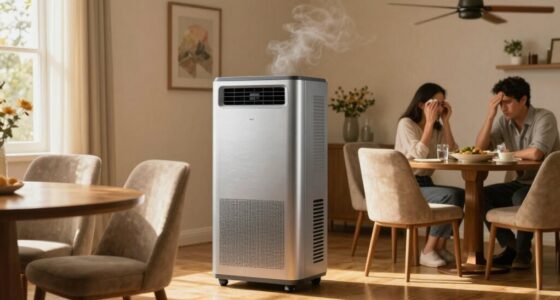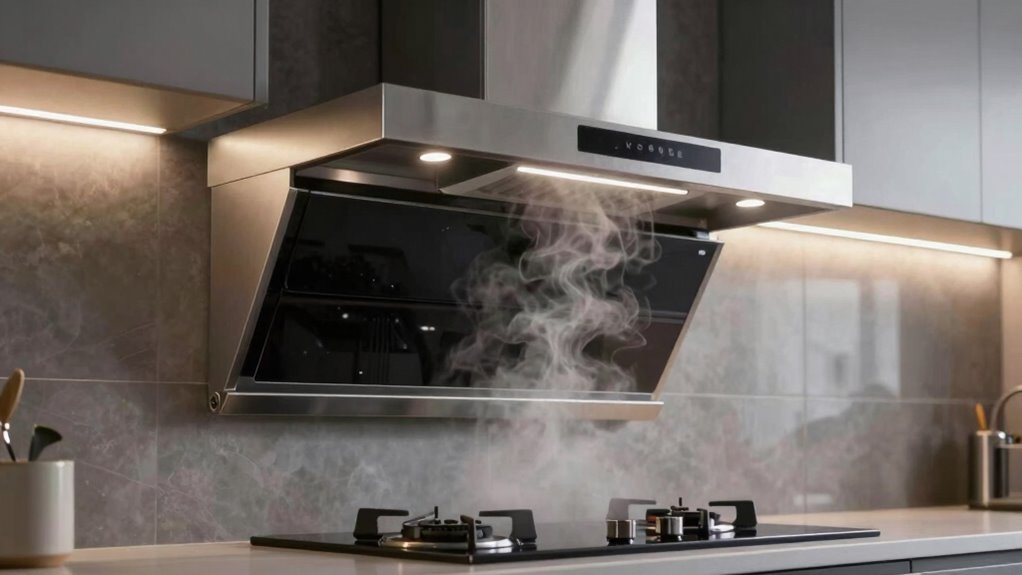
To effectively stop smoke and grease, your kitchen hood needs the right CFM (cubic feet per minute) airflow. The general rule is that your hood should provide 100 CFM per linear foot of cooktop width. For example, a 30-inch stove needs at least a 300 CFM hood. Proper airflow guarantees bad odors and particles are quickly removed without excessive noise or energy use. Keep exploring how to balance CFM and noise for the perfect kitchen environment.
Key Takeaways
- CFM measures the volume of air a hood can exhaust per minute, critical for removing smoke and grease effectively.
- Higher CFM values increase airflow capacity but may also raise noise levels; balance is essential.
- Proper duct sizing and shape optimize airflow, reducing backpressure and enhancing smoke and grease removal.
- Adjustable fan speeds allow customization, providing powerful extraction during heavy cooking and quieter operation when needed.
- Matching hood CFM to your cooking style ensures efficient ventilation while maintaining a comfortable, low-noise kitchen environment.
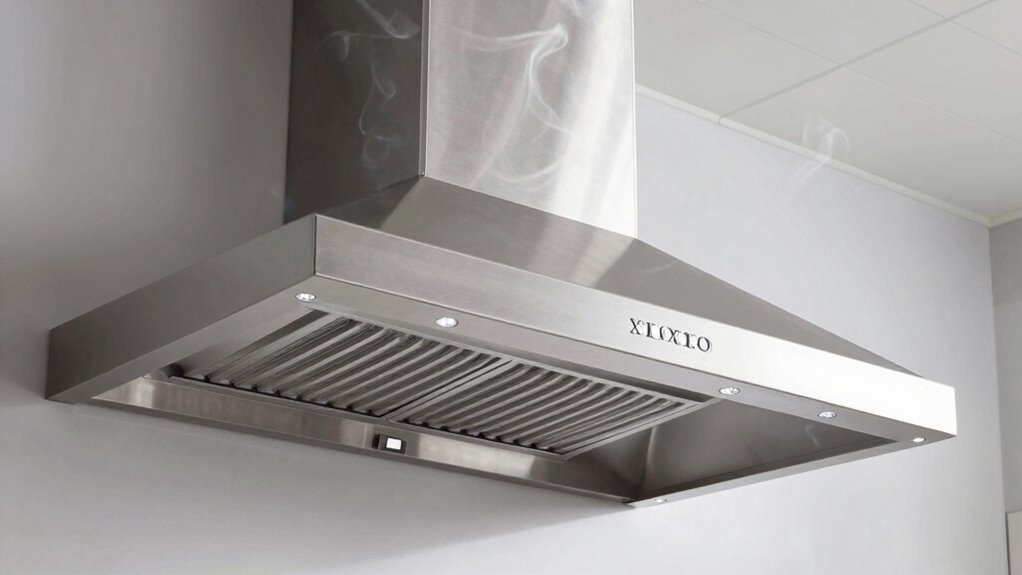
Kitchen hoods are vital appliances that help keep your cooking space clean and safe by removing smoke, steam, and odors. When choosing a hood, understanding how it handles airflow is essential. The airflow design determines how effectively the hood captures and exhausts airborne particles. A well-designed airflow system ensures that smoke and grease don’t linger, keeping your kitchen fresh and reducing the risk of buildup that can lead to odors or fire hazards. Good airflow design balances maximum extraction with minimal turbulence, which means your hood works efficiently without creating excessive noise or drafts. Proper ventilation is critical to maintaining air quality, especially in high-heat outdoor cooking setups where smoke can be more intense.
Effective airflow design keeps your kitchen fresh, safe, and quiet by balancing extraction and minimal turbulence.
Noise levels are another important factor that can influence your satisfaction with a kitchen hood. No one wants a device that sounds like a jet engine every time you cook. Modern hoods are designed to minimize noise through better motor placement, insulation, and advanced fan technology. You should pay attention to the decibel ratings, especially if you spend a lot of time cooking or if your kitchen is open to other living spaces. A quieter hood allows you to focus on your tasks without distraction and makes your overall cooking experience more pleasant. Keep in mind that some models with higher airflow capacities might produce more noise, but advances in noise reduction mean you can often find a balance that suits your needs.
When evaluating airflow design, look for features like adjustable fans or multiple speed settings. These give you control over the extraction rate, allowing you to optimize airflow based on what you’re cooking. For heavy-duty tasks like frying or grilling, higher fan speeds help remove smoke and grease more effectively. For light cooking, lower speeds prevent unnecessary noise and energy use. A good airflow design also considers duct size and shape, ensuring that the exhaust system doesn’t restrict airflow or cause backpressure, which can reduce efficiency.
Combining thoughtful airflow design with low noise levels results in a kitchen hood that’s both powerful and discreet. You get the benefit of clean air without the constant hum or loud operation that can disrupt your cooking or conversations. When researching options, check product specifications for airflow capacity in CFM (cubic feet per minute) and noise ratings in decibels. This way, you’ll select a hood that meets your cooking demands while maintaining a comfortable environment. Ultimately, understanding the interplay between airflow design and noise levels helps you choose a kitchen hood that keeps your space spotless and peaceful.
Frequently Asked Questions
How Often Should I Clean My Kitchen Hood Filters?
You should clean your kitchen hood filters at least once a month to maintain proper filter maintenance. If you cook frequently or notice grease buildup, consider cleaning them every two weeks. Regular cleaning prevents grease accumulation, reduces fire hazards, and keeps your kitchen air fresh. Remember, proper cleaning frequency guarantees your hood functions efficiently, effectively trapping smoke and grease, so stay on top of filter maintenance for the best results.
Can a Higher CFM Hood Be Too Powerful for My Kitchen?
Think of a hood with too much CFM like a turbocharged engine in a small car—powerful, but potentially overwhelming. A higher CFM hood isn’t necessarily too powerful; it can create a power imbalance, causing excessive airflow noise and draft issues. If your kitchen is small, too much airflow might be disruptive. Choose a hood with CFM matching your space to balance power and noise for ideal performance.
Does Hood Size Impact Overall Kitchen Air Quality?
Yes, hood size impacts your kitchen’s air quality by influencing ventilation efficiency and overall kitchen airflow. A properly sized hood ensures smoke, grease, and odors are effectively removed, preventing buildup and improving air quality. If your hood is too small, it won’t circulate air well, leading to lingering fumes. Conversely, an oversized hood can create excessive airflow, causing discomfort. Choose a hood size that complements your kitchen’s layout for ideal ventilation and cleaner air.
Are There Energy-Efficient Options for Powerful Kitchen Hoods?
Yes, there are energy-efficient options for powerful kitchen hoods. Did you know that some models use up to 30% less energy while maintaining high airflow? Look for energy-saving appliances with eco-friendly filters, which reduce waste and improve air quality. These hoods save you money on electricity and help the environment, all without sacrificing performance. Choosing the right eco-friendly filters guarantees your kitchen stays fresh while keeping energy consumption low.
How Do I Choose the Best Hood for My Cooking Style?
To choose the best hood for your cooking style, first consider how much smoke, grease, and steam you generate. If you cook often with high heat or fry, opt for a powerful hood with higher CFM. For lighter cooking, a less powerful, energy-efficient model suffices. Look for features like adjustable fan speeds and proper size to match your cooking habits. Hood selection should prioritize your specific needs for peak performance.
Conclusion
Now that you understand the CFM math behind kitchen hoods, you’re one step closer to mastering your space. But here’s the catch: choosing the right hood isn’t just about numbers—it’s about how you use it. Will you settle for less, or will you take control and keep your kitchen pristine? The choice is yours, and the secret to a smoke-free, grease-free zone might just depend on what you decide next. Are you ready to make the right move?