To guarantee your guests feel comfortable and private instantaneously, aim for at least 24-30 inches of clearance from the booth edge to the walkway, providing enough space to move easily without feeling crowded. Additionally, leave 18 inches of space from the table edge to the seat for comfort, while maintaining good sightlines and some separation for privacy. Proper measurements like these create a welcoming, cozy atmosphere—keep exploring to learn how these details balance timeless and modern designs.
Key Takeaways
- Maintain 24-30 inches of clearance from the booth edge to walkways for comfortable movement.
- Ensure at least 18 inches of space from the table edge to the seat for guest comfort.
- Provide sufficient space around booths to promote privacy and reduce noise interference.
- Proper spacing prevents crowding, making guests feel relaxed and unhurried.
- Strategic clearance measurements enhance perceived privacy and overall guest satisfaction.
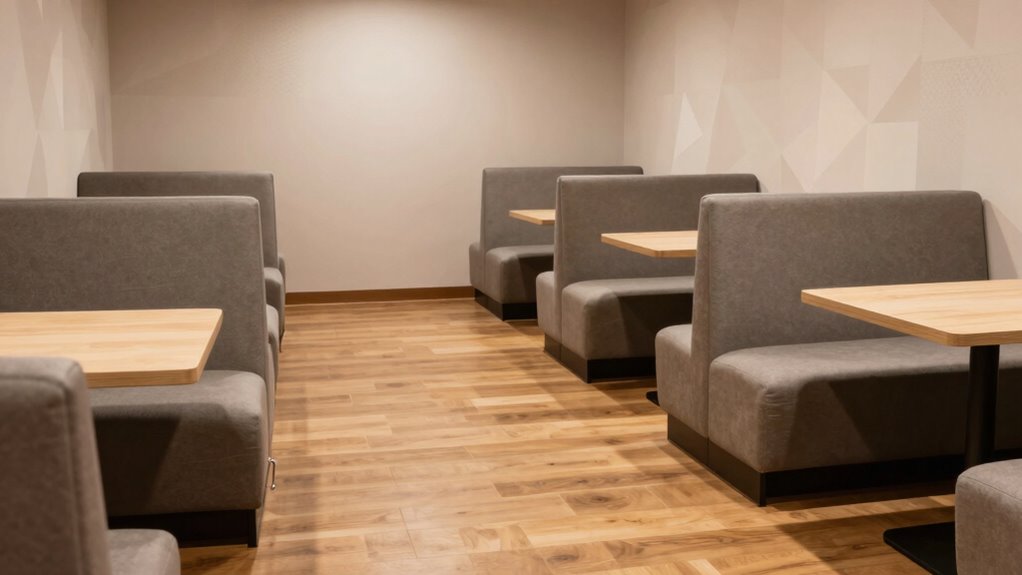
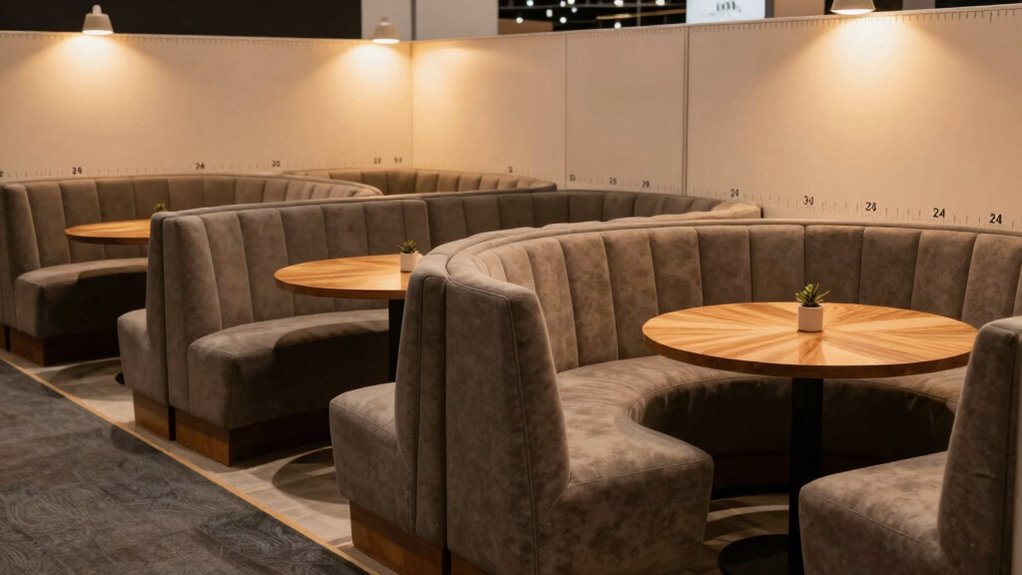
Are you unsure how to design an effective booth seating layout? If so, understanding the importance of privacy considerations and historical design trends can help you create a space that feels both inviting and functional. Privacy is a key factor that influences guest comfort, especially in settings like restaurants or cafés where conversations are private and personal. When planning your layout, think about how booth partitions, strategic placement, and the height of backrests can shield diners from view and reduce noise distractions. Incorporating privacy screens or high-backed booths not only enhances guest comfort but also signals that their space is respected, encouraging longer stays and repeat visits.
Creating private, comfortable booth seating with strategic partitions and design elements enhances guest experience and privacy.
Focusing on historical design trends offers valuable insights into what has worked well in the past and how you can adapt them for modern use. For instance, vintage diner booths with rounded edges and plush upholstery have a nostalgic appeal, while sleek, minimalist designs reflect contemporary tastes. By studying these trends, you can balance timeless elements with current preferences, ensuring your booth layout remains appealing across generations. Many historic designs emphasized intimate, cozy seating arrangements, which still resonate today because they foster a sense of belonging and comfort. You might consider using classic materials like leather or vinyl paired with warm lighting to recreate a timeless atmosphere that appeals to a broad audience.
When planning your layout, consider the clearance measurements guests feel instantly comfortable with. Adequate space between booths isn’t just about accessibility; it’s about creating an environment where guests feel unhurried and private. A general rule of thumb is to allow at least 24 to 30 inches of clearance from the edge of the booth to the walkway, ensuring ease of movement and a sense of personal space. For tables, providing at least 18 inches of space from the edge to the seat allows guests to sit comfortably without feeling cramped. These measurements help guests feel at ease immediately, reducing any sense of crowding or intrusion.
Paying attention to these details means you’re actively designing a layout that prioritizes guest comfort and privacy while respecting historical aesthetic cues. Remember, the goal isn’t just to fit as many booths as possible but to craft an environment where guests can relax and enjoy their experience. By combining privacy considerations with insights from historical design trends, you set the stage for a welcoming, timeless space that feels right from the moment guests walk in. Ultimately, the right booth seating layout enhances both the ambiance and functionality of your space, making it a memorable part of each guest’s visit.
Frequently Asked Questions
How Does Booth Clearance Impact Overall Customer Experience?
Booth clearance directly impacts your customers’ experience by balancing privacy concerns and aesthetic considerations. When clearance is sufficient, guests feel more comfortable and less crowded, enhancing privacy and intimacy. This creates a welcoming atmosphere that encourages longer stays and repeat visits. Conversely, cramped spaces can make guests feel exposed and uncomfortable, negatively affecting their overall experience. Proper clearance guarantees your booth layout feels inviting, stylish, and functional, elevating customer satisfaction.
What Are Standard Clearance Measurements for Different Booth Types?
You should aim for at least 24 inches of clearance for standard booths to guarantee booth privacy and comfortable movement. For curved or larger booths, 30 inches or more provides better privacy and enhances design aesthetics. Maintaining these measurements allows guests to feel at ease, reduces congestion, and creates a visually appealing space. Proper clearance is essential for a welcoming atmosphere and a seamless dining experience.
How Can Adjustable Booth Layouts Improve Space Utilization?
Adjustable booth layouts enhance space utilization by allowing you to customize configurations for different group sizes and event needs. With flexible spacing, you can easily expand or contract seating areas, making the most of available space. This adaptability helps you accommodate more guests comfortably, optimize flow, and create a welcoming atmosphere. By using adjustable configurations, you guarantee your seating remains versatile, efficient, and tailored to your specific space and customer demands.
What Safety Regulations Apply to Booth Seating Clearances?
You should guarantee your booth seating complies with fire safety and ADA regulations. This means maintaining clear pathways of at least 36 inches for accessibility and ensuring no obstructions hinder emergency evacuations. Regularly review local codes to verify your layout meets fire safety standards and ADA guidelines, preventing accidents and legal issues. Proper clearance not only promotes safety but also enhances guest comfort and accessibility, making your space welcoming and compliant.
How Do Clearance Measurements Vary by Restaurant Size?
You’ll find that clearance measurements vary depending on your restaurant’s size, with larger spaces allowing more generous table spacing and comfort zones. Smaller venues might have tighter arrangements, but you should still guarantee enough space for guest movement and safety. Prioritize clear pathways between booths, typically around 24-30 inches, to maintain comfort zones. Adjust your layout to balance efficient use of space with guest convenience and safety.
Conclusion
Now that you know the key clearance measurements for booth seating, you can create a comfortable space that guests love. Did you know that 78% of diners say they feel more relaxed in booths with proper spacing? By paying attention to these measurements, you guarantee your guests enjoy a cozy, inviting atmosphere. So, take the time to plan your layout carefully—your guests will notice the difference, and you’ll boost their overall experience.