
Even a tiny miscalculation like 6 inches in equipment spacing can cause big problems. It can block emergency exits, limit access for maintenance, or create safety hazards. Overlooking proper clearance disrupts workflow and can lead to OSHA violations. Small spacing errors may seem minor but can break the entire line of operations. Pay close attention to layout details—if you want to avoid costly mistakes, there’s more to contemplate.
Key Takeaways
- Small spacing errors, like 6 inches, can obstruct emergency exits and safety pathways.
- Inadequate clearance between equipment and walkways hampers workflow and increases accident risk.
- Overlooking precise spacing can lead to OSHA violations and costly operational delays.
- Rigid layouts with minimal margins hinder future reconfiguration and scalability.
- Proper attention to detailed spacing, including 6-inch margins, prevents line breakages and safety issues.
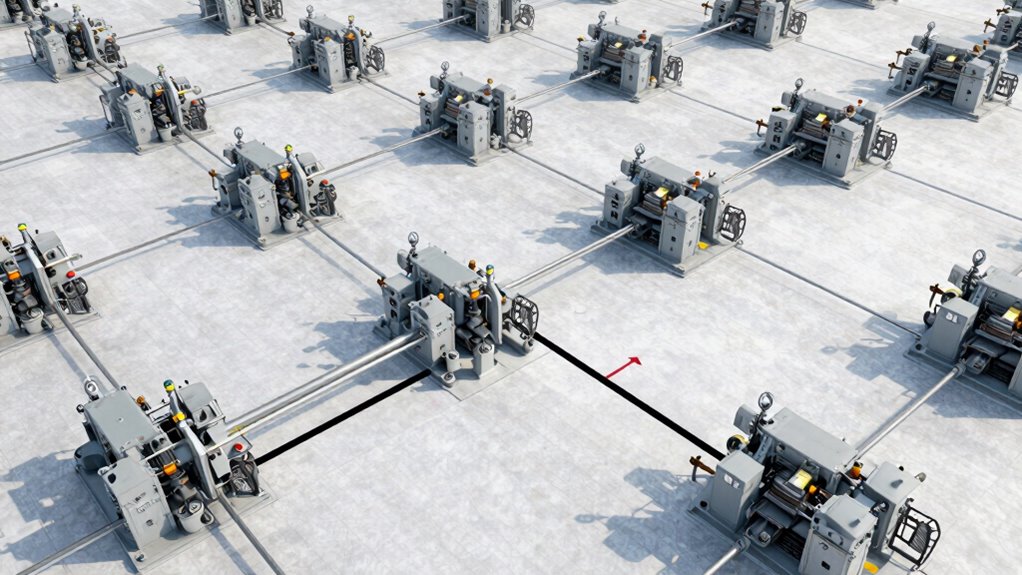
Creating an effective equipment floor plan is crucial for smooth operations, but it’s easy to overlook common mistakes that can cause delays or safety hazards. One of the most critical errors you might make involves neglecting proper spacing between equipment and walkways. Just a few inches too close can result in safety hazards, such as employees tripping or colliding with machinery. These safety issues not only put workers at risk but also lead to costly downtime and potential OSHA violations. Furthermore, tight spacing hampers workflow efficiency, forcing employees to navigate around obstacles or wait for clearance, which slows down productivity. When designing your layout, always prioritize enough space for safe movement and quick access to equipment.
Prioritize proper spacing between equipment and walkways to ensure safety and efficiency.
Another common mistake is misjudging the operational flow of your facility. If your equipment isn’t arranged logically, it can create bottlenecks that disrupt workflow efficiency. For example, placing machines in a way that forces workers to backtrack or cross paths unnecessarily increases the risk of accidents and slows down production lines. You might think that fitting everything snugly in a small area saves space, but in reality, it can lead to clutter and confusion, making it harder for staff to perform their tasks smoothly. By analyzing how work moves through your facility—from raw material input to finished product—you can optimize your floor plan to minimize unnecessary movement, reduce safety hazards, and improve overall efficiency.
Furthermore, overlooking the importance of clear, unobstructed emergency exits and pathways is a mistake that can have serious safety consequences. Even a small miscalculation in spacing can block escape routes or access to safety equipment. This oversight can turn a manageable incident into a dangerous situation during emergencies. You must ensure that every safety hazard—such as protruding sharp edges, obstructed exits, or unstable stacking—is addressed during the planning stage. Regularly reviewing your layout and consulting safety standards can help you identify and correct these hazards before they cause harm. Additionally, considering standard spacing guidelines can help prevent these issues from occurring in the first place.
Finally, ignoring the importance of flexibility in your floor plan can backfire as your operations evolve. Rigid layouts that don’t account for future expansion or changes in equipment can create safety hazards and reduce workflow efficiency over time. You need to leave enough space for upgrades, maintenance, and reconfiguration. Remember, an effective equipment floor plan isn’t static; it should adapt to your needs while maintaining safety and efficiency. Paying attention to detail, especially that seemingly small 6-inch difference, can mean the difference between a smoothly running facility and one plagued by delays, hazards, or accidents.
Frequently Asked Questions
How Can Small Measurement Errors Affect Equipment Installation?
Small measurement errors can considerably impact your equipment installation by reducing measurement accuracy and compromising layout precision. When you don’t double-check measurements, even a slight miscalculation can cause equipment to be misaligned or improperly spaced. This can lead to operational issues, safety hazards, or costly adjustments later. To prevent these problems, always prioritize precise measurements and verify your layout to ensure everything fits perfectly from the start.
What Are the Best Tools for Precise Floor Plan Measurements?
You should use laser distance meters and digital tape measures for precise floor plan measurements. These tools enhance measurement accuracy and guarantee layout precision, reducing costly errors. Laser devices quickly provide accurate distances over long spans, while digital tape measures are great for close-range, detailed measurements. Combining these tools helps you avoid small mistakes that can lead to big equipment installation issues, keeping your project on track and within specifications.
How Do I Correct a Misaligned Equipment Layout?
Did you know that even a tiny misalignment can cause a 20% drop in equipment efficiency? To correct a misaligned equipment layout, start by rechecking measurements with precise tools. Adjust the equipment carefully to make certain proper equipment alignment, then verify layout accuracy with a level or laser guide. Regularly double-checking helps prevent costly errors, ensuring your entire system operates smoothly and efficiently.
What Safety Risks Arise From Incorrect Equipment Spacing?
Incorrect equipment spacing can create serious safety hazards, such as increased risk of trips, falls, or accidental contact with moving parts. When spacing isn’t properly maintained, you might also face electrical hazards or fire risks due to overcrowding or inadequate clearance. To guarantee safety, regularly check equipment spacing, follow manufacturer guidelines, and keep clear pathways. Proper spacing minimizes hazards and helps maintain a safe working environment for everyone.
Can Software Prevent Planning Mistakes in Equipment Layouts?
Software can indeed prevent planning mistakes in equipment layouts, saving you from chaos that’s almost apocalyptic. Automation tools enhance measurement accuracy, ensuring every inch is precise and aligned. These programs flag potential issues early, reducing costly errors and rework. By integrating smart software into your planning process, you gain confidence that your layout is optimized, minimizing risks and maximizing efficiency—making mistakes as rare as a comet sighting.
Conclusion
So, next time you’re designing your equipment floor plan, remember that those small 6-inch mistakes can cause big disruptions. It’s funny how something so tiny can lead to a whole line break, almost like a coincidence that’s too perfect to ignore. Pay close attention to the details, because often it’s the overlooked inches that make all the difference. Don’t let small errors turn into big problems—your equipment and workflow will thank you.