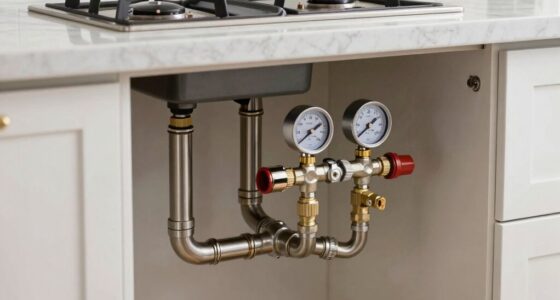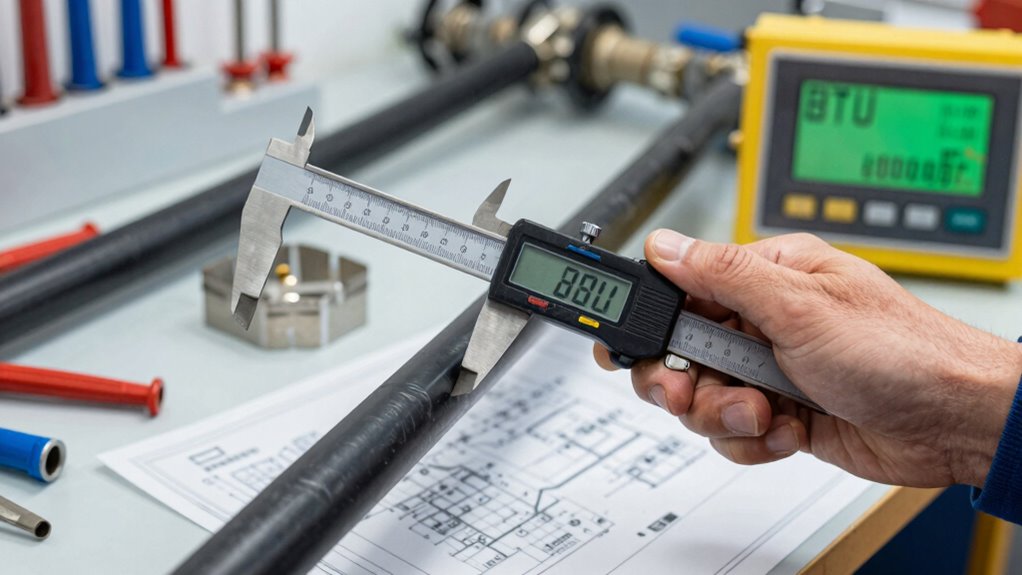

To prevent weak flames, you need to size your gas line properly based on the total BTU load of your appliances. This involves calculating how much gas pressure and flow are required and matching that with the correct pipe size and material. Proper sizing maintains consistent pressure, ensuring safe, efficient operation. If you keep these factors in mind, you’ll avoid issues like poor combustion or low flames—stay with us to discover how to get this right every time.

Get kitchen staples and gadgets delivered free with Prime
- Fast, free delivery on millions of items
- Prime Video, Amazon Music and more included
- Member-only deals all year
Key Takeaways
- Proper pipe sizing maintains consistent pressure and flow to prevent weak flames and ensure safe appliance operation.
- Calculate total BTU load accurately to select a pipe diameter that meets the combined gas demand.
- Consider pipe material and length, as they affect pressure drop and flow capacity.
- Maintain correct gas pressure levels throughout the line to avoid ignition issues and poor combustion.
- Use industry-standard charts and formulas for precise sizing based on pressure, material, and BTU requirements.

Have you ever wondered how to determine the right size for a gas line? It’s a critical step in ensuring your appliances work efficiently and safely. The key factors you need to consider include gas pressure, pipe materials, and the total BTU load of your appliances. When selecting the appropriate pipe size, understanding how gas pressure influences flow rate is essential. Gas pressure, typically measured in inches of water column or pounds per square inch (psi), affects how much gas can flow through your pipe. If the pressure drops too much along the line, your appliances may struggle to produce a strong flame, or worse, fail to ignite altogether. Conversely, too much pressure can be dangerous and may damage your appliances or cause leaks. That’s why maintaining proper pressure levels is necessary, and it ties directly into pipe sizing. Proper gas flow capacity is essential to ensure consistent performance and safety.
Different pipe materials also play a role in determining the right size. Common options include steel, copper, and flexible plastic pipes. Steel pipes are durable and carry high pressure well but are heavier and more challenging to install. Copper pipes are corrosion-resistant and flexible, making them easier to work with in certain settings. Plastic pipes, like PE or CPVC, are lightweight and corrosion-proof but have pressure limits and may require different sizing considerations. Each material’s internal diameter and flow characteristics influence how much gas can pass through without causing a pressure drop that affects performance. Choosing the correct pipe material involves balancing these factors with your specific pressure requirements and BTU load.
Selecting pipe materials affects flow capacity and pressure drop considerations for safe, efficient gas line sizing.
To get the sizing right, you need to perform a BTU calculation for your appliances and then match that with the flow capacity of the pipe. For example, if you have a furnace that consumes 100,000 BTUs per hour, you’ll need a pipe that can handle that load without excessive pressure loss. You’ll use industry-standard charts and formulas that relate pipe diameter, length, material, and gas pressure to the BTU demand. This guarantees your line can deliver enough gas at the right pressure to keep flames strong and consistent. If your line is undersized, you risk weak flames, poor combustion, and potential safety hazards. Oversizing, while less risky, can be more costly and less efficient.
In essence, determining the right gas line size isn’t just about guessing or using rough estimates. It’s about precise calculations that account for gas pressure, pipe materials, and your appliances’ BTU needs. Proper sizing ensures safe, efficient operation and prevents weak flames that can compromise your comfort and safety. It’s worth investing time in accurate calculations or consulting professionals to get it right the first time. That way, you’ll enjoy a reliable gas supply that performs efficiently without risking leaks, damage, or inefficiency.
As an affiliate, we earn on qualifying purchases.
Frequently Asked Questions
How Often Should Gas Line Sizes Be Inspected for Safety?
You should inspect your gas line for safety at least once a year, or immediately if you notice any signs of gas leaks like hissing sounds, odd smells, or dead vegetation near the line. Regular inspection intervals help catch potential issues early, preventing dangerous leaks. If you experience any suspicion of a leak, don’t wait—schedule an inspection promptly to make certain your system remains safe and efficient.
What Are the Signs of an Undersized Gas Line?
Did you know that 60% of gas line issues stem from undersized pipes? If your gas pressure drops or you notice inconsistent flow capacity, these are signs of an undersized gas line. You might see weak flames, delayed ignition, or reduced appliance performance. These issues occur because the pipe can’t deliver enough gas, compromising safety and efficiency. Always guarantee your gas line matches your appliance’s BTU requirements for ideal operation.
Can Gas Line Sizing Affect Appliance Longevity?
Yes, gas line sizing can affect appliance longevity because improper sizing restricts gas flow, leading to inconsistent appliance efficiency. When the gas flow is insufficient, your appliances may struggle to operate properly, causing stress on components and increasing wear over time. Ensuring your gas line is correctly sized maintains steady gas flow, which helps your appliances run smoothly, last longer, and perform at their best.
What Tools Are Necessary for Gas Line Installation?
You need essential tools to ensure a safe gas line installation. Start with a gas pressure gauge to monitor pressure levels accurately. A pipe cutter and threading tools are vital for preparing the pipe, while a wrench guarantees tight connections. Don’t forget a pipe diameter gauge—it’s crucial for matching the right pipe size. With these tools, you can prevent dangerous leaks, ensuring your system operates safely and efficiently.
Are There Regional Codes Impacting Gas Line Sizing Standards?
Regional regulations can substantially impact your gas line sizing standards. You need to guarantee code compliance with local building codes and safety regulations, which may specify minimum pipe sizes or installation practices. Always check regional regulations before designing or installing gas lines, as failure to follow these codes can lead to unsafe conditions or fines. Staying informed about local requirements helps you select the right pipe sizes and avoid potential issues.
Conclusion
By understanding the BTU math behind gas line sizing, you might just find that the right size doesn’t happen by chance—it’s all about precision. When your gas flow is properly calculated, weak flames become a thing of the past, and your setup runs smoothly. Sometimes, it feels like the universe aligns just right, confirming that a little math can make all the difference. So, trust the numbers—you’ll be glad you did.
Halloween Picks
halloween
As an affiliate, we earn on qualifying purchases.