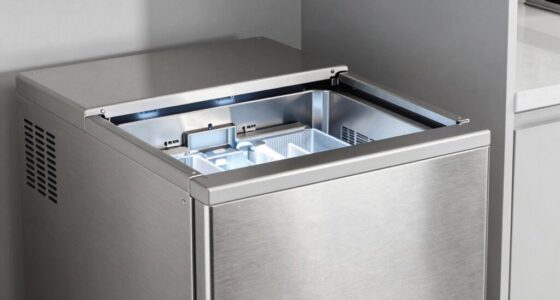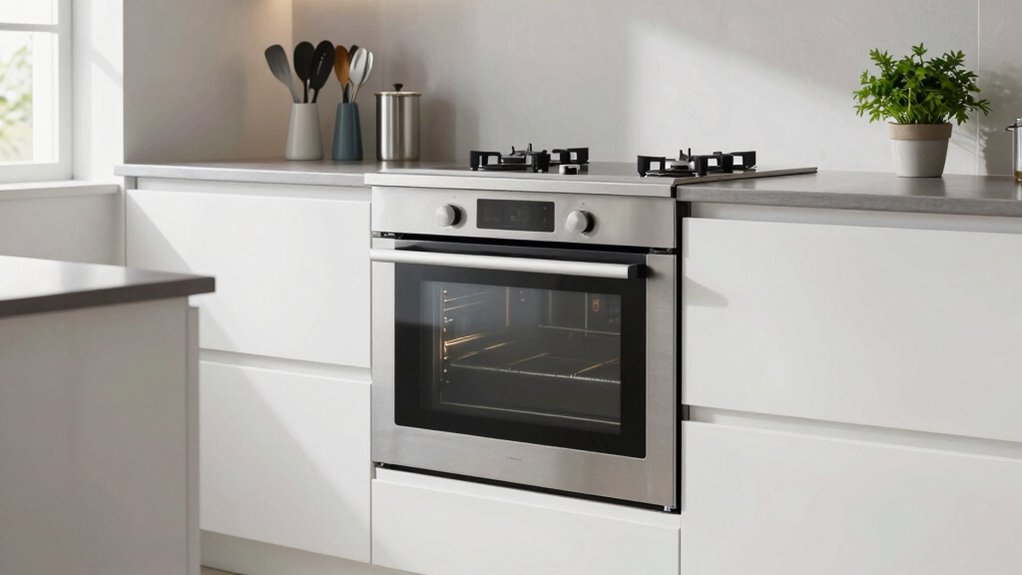
Ventless ovens are great for saving space and cutting energy bills, but they can’t handle everything in your kitchen. They excel at baking, roasting, and reheating, but struggle with high-heat tasks like broiling or frying. They may distribute heat unevenly and often require special electrical or ventilation setups, which can be costly to install. If you want to understand their true limitations and whether they fit your cooking needs, keep exploring further.
Key Takeaways
- Ventless ovens are limited to baking, roasting, and reheating; they cannot handle high-heat methods like broiling or frying.
- They may produce uneven heat distribution, leading to inconsistent cooking results.
- Their moisture sensors and heat recycling systems are not designed for intense heat or smoke.
- Installation can be complex, requiring specific electrical, ventilation, and cabinetry modifications.
- They are not suitable for open-flame, high-temperature, or specialized culinary techniques.
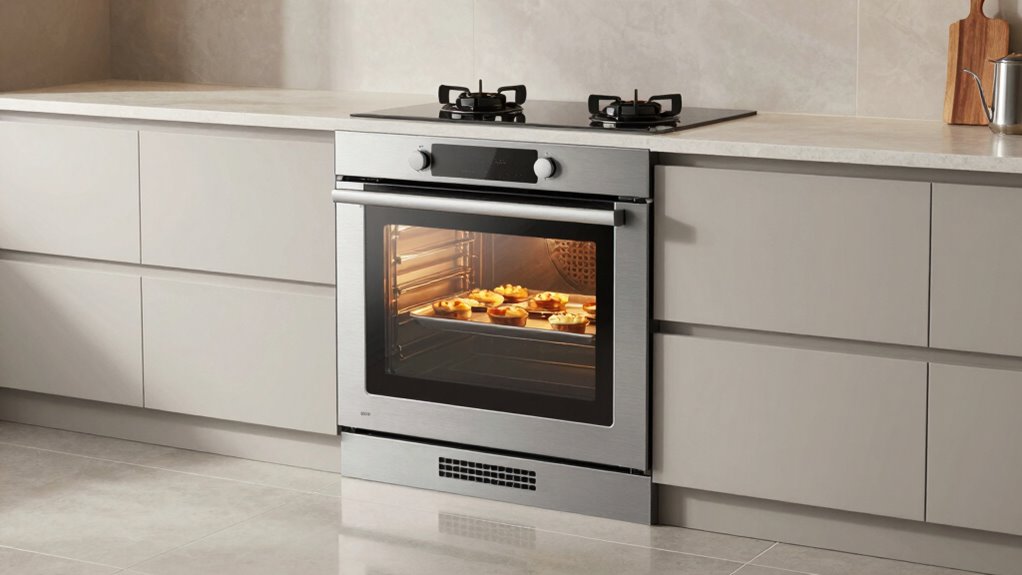
Have you ever wished you could cook without worrying about ventilation? Ventless ovens seem like an ideal solution, offering the convenience of indoor cooking without the need for exhaust hoods or external venting systems. However, before you get excited about installing one, it’s essential to understand what they can and can’t do. These appliances are designed to be energy-efficient and easy to install, but they come with their own set of limitations that could affect your cooking experience.
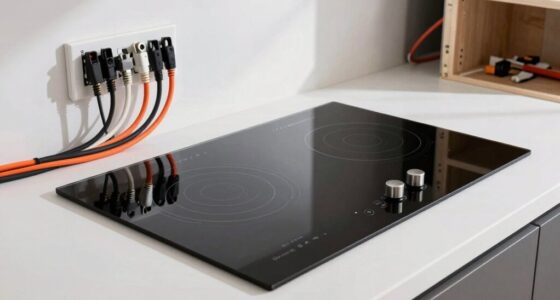
One of the main benefits of ventless ovens is their energy efficiency. Since they typically operate using advanced technology that recycles heat and moisture, they can reduce overall energy consumption compared to traditional ovens. This can save you money on utility bills and make your kitchen more sustainable. Plus, their compact design means they can fit into smaller spaces, making them attractive for apartments or kitchens with limited room. But, while energy efficiency is a clear advantage, it’s vital to recognize the installation challenges involved. Ventless ovens require specific electrical connections and proper ventilation for moisture removal, which can sometimes be tricky to set up correctly. Your existing kitchen setup might not be compatible without modifications, and installing these units could involve electrical work or alterations to your plumbing or cabinetry.
Ventless ovens save energy and space but require specific electrical and ventilation setups for proper installation.
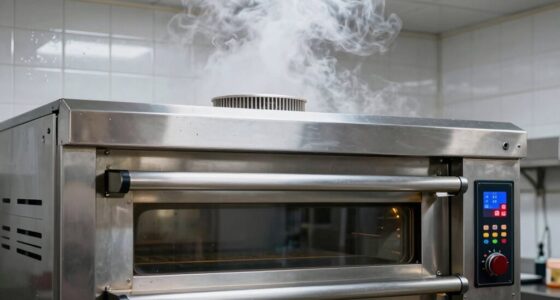
Another challenge lies in the fact that ventless ovens aren’t suitable for all types of cooking. They excel at baking, roasting, and reheating, but they struggle with high-heat methods like broiling or frying. The built-in moisture sensors and heat recycling systems aren’t designed to handle the intense heat and smoke generated by certain cooking techniques. This limitation means you might need to keep your traditional oven or range for specific tasks, especially if you’re used to cooking with high heat or open flames. Additionally, some users find that ventless ovens don’t always distribute heat evenly, which can lead to inconsistent results in baking or roasting. This inconsistency can be frustrating if you’re particular about your culinary outcomes. Furthermore, understanding the limitations of ventless ovens can help you make more informed decisions about your kitchen setup.
While ventless ovens promise convenience and energy savings, they aren’t a one-size-fits-all solution. You need to carefully evaluate your kitchen’s layout, your cooking habits, and the installation challenges before making a decision. If you’re considering one, consult with professionals who understand your home’s electrical and ventilation needs to guarantee a smooth setup. Keep in mind that these appliances have their limitations, and understanding what they can’t do will help you avoid disappointment or costly modifications later on. Ultimately, ventless ovens are a useful addition to certain kitchens, but they aren’t a complete replacement for traditional cooking appliances in every scenario.
Frequently Asked Questions
Do Ventless Ovens Work Well Outdoors?
Ventless ovens don’t work well outdoors because they aren’t designed for outdoor installation. Weather durability is a big concern, as exposure to rain, wind, or extreme temperatures can damage the unit or affect performance. You’ll likely experience issues with ventilation and safety, making them unsuitable for outdoor use. For outdoor cooking, it’s better to opt for a built-in or standalone grill specifically designed to withstand outdoor conditions.
Can Ventless Ovens Replace Traditional Kitchen Ovens Entirely?
You can’t fully replace traditional kitchen ovens with ventless ones due to cost limitations and limited cooking versatility. Ventless ovens are great for small tasks but lack the capacity and range of functions of standard ovens. If you need diverse cooking options or large batches, a traditional oven remains essential. For now, ventless models serve as supplementary appliances rather than complete replacements in most kitchens.
Are Ventless Ovens Suitable for Commercial Restaurant Use?
You might think ventless ovens are perfect for commercial use, but they’re mainly designed for indoor installation in residential settings. They lack the capacity and durability needed for busy restaurant environments, where high volume cooking and ventilation are critical. These ovens are great for small-scale, everyday cooking at home, but for a commercial restaurant, traditional vented ovens still deliver the power, airflow, and efficiency you need.
How Energy-Efficient Are Ventless Ovens Compared to Vented Models?
Ventless ovens are generally less energy-efficient than vented models because they rely on internal filtration and condensation systems that consume extra energy. When you compare the efficiency, vented ovens tend to use less energy overall, since they vent heat and moisture outside, reducing internal energy consumption. So, if you’re focused on minimizing energy use, vented models often outperform ventless options in the efficiency comparison.
What Safety Concerns Exist With Ventless Oven Operation?
Think of ventless ovens as silent cooks in your kitchen, but beware—they can pose safety risks if ventilation requirements aren’t met. Without proper airflow, indoor air quality can decline, trapping moisture or fumes that might cause health issues. Always make certain your oven’s ventilation system is adequate, and keep a close eye on air circulation. Ignoring these safety concerns could turn your cozy kitchen into an unintended hazard.
Conclusion
Ventless ovens might seem like the shining stars of modern kitchens, but they’re not magic wands. They can’t replace the full symphony of a traditional oven, nor handle every culinary demand you throw at them. Think of them as a talented soloist, not the entire orchestra. Before you tear down walls or overhaul your line, remember they’re a helpful tool, but not the hero of every kitchen adventure. Use them wisely, and your culinary journey will stay on course.