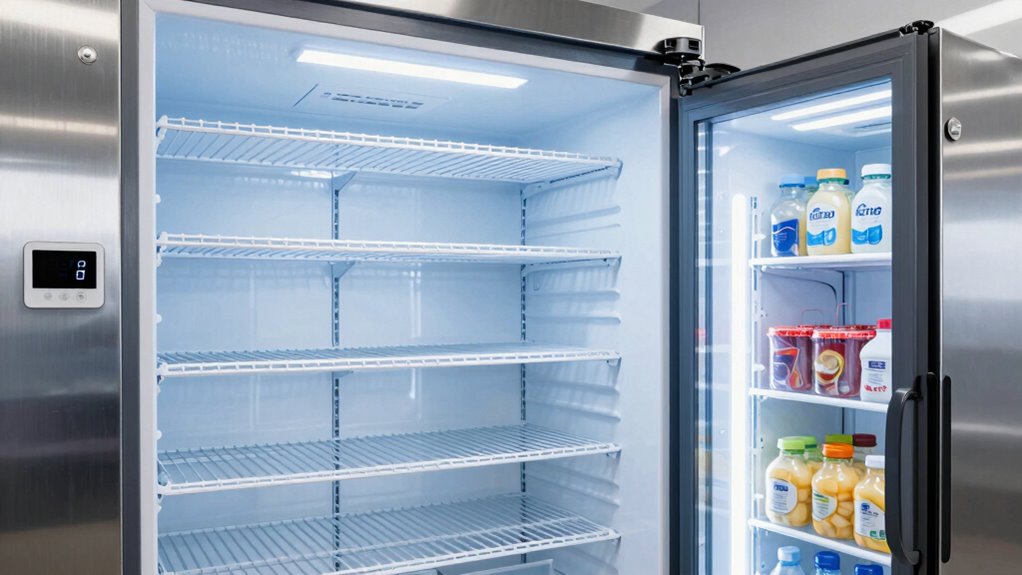

To size a walk-in freezer without paying for empty space, start by accurately evaluating your current inventory levels and peak storage needs, considering future growth. Avoid overestimating capacity to reduce unnecessary costs, and plan for efficient workflow and easy access. Focus on high-quality insulation and proper placement to maximize energy efficiency. Balancing size with operational demands will save money in the long run—if you want to learn more about precise sizing techniques, keep exploring these strategies.

Get kitchen staples and gadgets delivered free with Prime
- Fast, free delivery on millions of items
- Prime Video, Amazon Music and more included
- Member-only deals all year
Key Takeaways
- Assess current inventory volume and peak storage needs to determine essential space requirements.
- Include projected growth to ensure the freezer can accommodate future expansion.
- Optimize layout for efficient workflow, reducing unnecessary empty space and improving access.
- Match freezer size closely to actual storage demands to avoid paying for unused capacity.
- Consider insulation quality and placement to maximize energy efficiency and reduce operating costs.
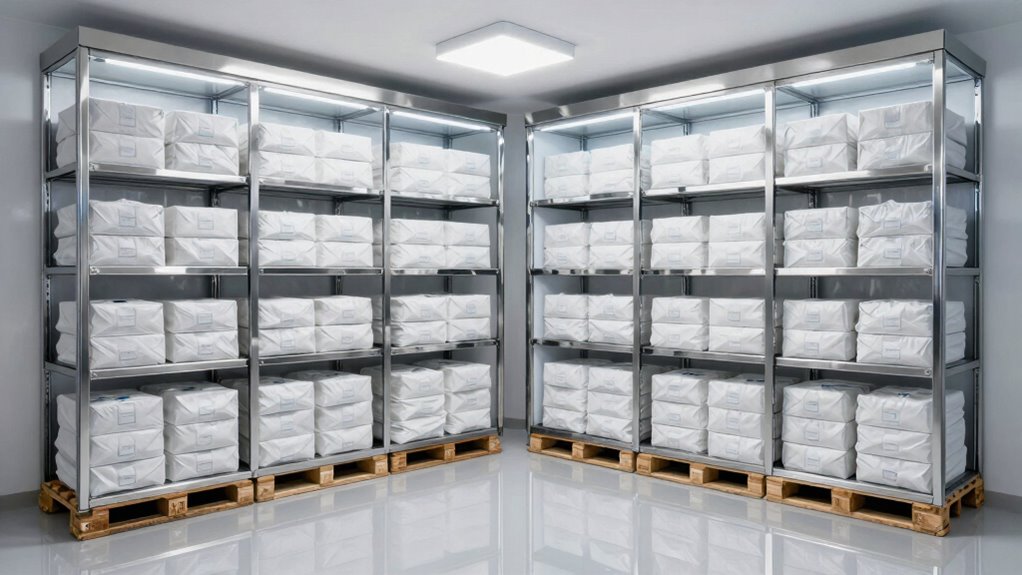
Have you ever wondered how to determine the right size for your walk-in freezer? Choosing the correct size isn’t just about fitting your current inventory; it’s about balancing capacity with efficiency to avoid wasting energy and money. A too-large freezer consumes unnecessary power, while a too-small one limits your storage and hampers operations. To get it just right, you need to focus on calculating your actual storage needs based on your typical inventory, growth forecasts, and operational flow.
Start by evaluating your current storage patterns. How much product do you typically keep on hand? What is your peak storage requirement during busy seasons? Don’t forget to include space for future growth, but avoid overestimating. Once you’ve established your essential volume, consider how much space you’ll need for movement and easy access to items. This guarantees your workflow remains efficient, preventing overcrowding or frequent reorganizing, which could lead to energy waste. Proper storage planning ensures your freezer size aligns with both current and future demands. Additionally, using thermal insulation techniques effectively can help maintain optimal temperatures and improve overall energy efficiency.
Evaluate current storage needs, plan for growth, and ensure easy access to optimize workflow and energy efficiency.
When sizing your walk-in freezer, pay close attention to energy efficiency. An oversized unit can be a significant energy drain, increasing your utility bills and environmental impact. Proper insulation is key here. Investing in high-quality insulation materials helps maintain a stable internal temperature, reducing the workload on your refrigeration system. Look for walls and doors with thick, dense insulation, such as polyurethane or polystyrene, which provide excellent thermal resistance. Proper insulation minimizes heat transfer, keeping the cold inside and the heat outside, so your compressor doesn’t have to work harder than necessary. Additionally, incorporating energy-efficient features can further optimize your freezer’s performance and reduce operating costs. Being mindful of thermal resistance when selecting insulation can significantly improve energy savings.
Additionally, consider the placement of your walk-in freezer. Position it away from heat sources, such as ovens or direct sunlight, and ensure good ventilation around the unit. These factors, combined with superior insulation materials, amplify energy efficiency, keeping your operational costs lower. Remember, a well-insulated, properly sized freezer doesn’t just save energy; it also prolongs the lifespan of your refrigeration equipment by reducing strain and wear.
walk-in freezer insulation panels
As an affiliate, we earn on qualifying purchases.
As an affiliate, we earn on qualifying purchases.
Frequently Asked Questions
Can I Customize Freezer Dimensions After Installation?
Yes, you can customize freezer dimensions after installation, especially if it has adjustable shelving and modular panels. Many walk-in freezers are designed with flexibility in mind, allowing you to modify interior configurations or add custom dimensions later. However, major structural changes might require professional assistance. It’s best to consult your installer or manufacturer to confirm modifications meet safety standards and won’t compromise the freezer’s efficiency.
How Does Door Placement Affect Freezer Efficiency?
Door placement greatly impacts your freezer’s efficiency by influencing airflow efficiency. Properly positioned doors guarantee minimal air exchange during opening, reducing cold air loss and maintaining consistent temperatures. Placing doors away from refrigeration units prevents airflow disruptions, while strategic placement allows for better circulation inside. This setup helps you save energy, lowers operational costs, and keeps your frozen goods at ideal temperatures, ensuring your freezer operates smoothly and efficiently.
What Are the Best Insulation Options for Small Freezers?
For small freezers, you should choose high-quality insulation materials like polyurethane or polystyrene foam, which act as excellent thermal barriers. These materials minimize heat transfer, keeping your freezer efficient and energy costs low. Look for insulation with a high R-value to maximize thermal resistance. Proper insulation not only maintains consistent temperature but also reduces energy consumption, making your small freezer more cost-effective and reliable over time.
How Do I Estimate Energy Costs for Different Sizes?
To estimate energy costs for different freezer sizes, start by evaluating each unit’s energy consumption, usually listed in kWh per day or year. Multiply this by your local energy rate to get the cost estimation. Larger freezers generally use more energy, but efficiency varies. Comparing these factors helps you predict operating costs accurately, so you can choose a size that balances capacity with energy efficiency and budget constraints.
What’s the Typical Lifespan of a Walk-In Freezer?
A walk-in freezer typically lasts 10 to 15 years when you follow proper maintenance tips and implement energy-saving strategies. Regularly defrost, check door seals, and clean coils to extend its lifespan. Keep the temperature consistent and avoid overloading the unit. Proper maintenance not only prolongs your freezer’s life but also helps reduce energy costs, ensuring it operates efficiently for years to come.
Conclusion
By accurately sizing your walk-in freezer, you’ll avoid paying for empty space and guarantee peak efficiency. Remember, over 60% of energy loss in commercial freezers comes from improper sizing, so taking the time to calculate your needs carefully can save you money in the long run. With proper planning and precise measurements, you’ll keep your products preserved while minimizing waste — making your investment both smart and cost-effective.
Fall Picks
fall essentials
As an affiliate, we earn on qualifying purchases.