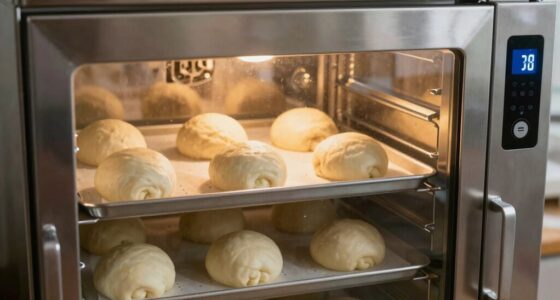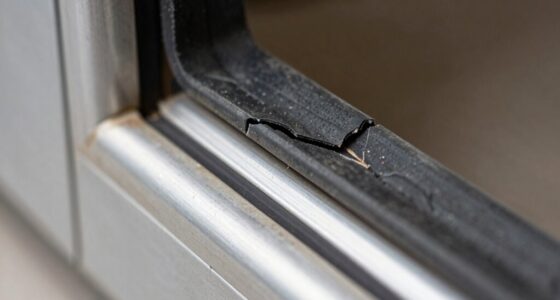
To avoid the costly ‘neglect tax,’ you should establish and follow a regular cleaning schedule tailored to your oven’s usage. Use a detailed cleaning checklist to guarantee all parts, like fans, heating elements, and door seals, are thoroughly cleaned with proper agents. Understanding your oven’s cleaning cycles helps optimize maintenance, preventing grime buildup that worsens performance. Keep in mind that sticking to these routines extends your oven’s lifespan and maintains efficiency—learn how to do it effectively step by step.
Key Takeaways
- Establish and follow a regular cleaning schedule to prevent grime buildup and maintain oven efficiency.
- Use a detailed cleaning checklist to ensure all vital components are thoroughly cleaned and inspected.
- Understand and utilize proper cleaning cycles to avoid damage and costly repairs.
- Choose appropriate cleaning agents and follow manufacturer instructions to protect surfaces and warranties.
- Dry all surfaces after cleaning to prevent rust, mold, and long-term damage caused by neglect.
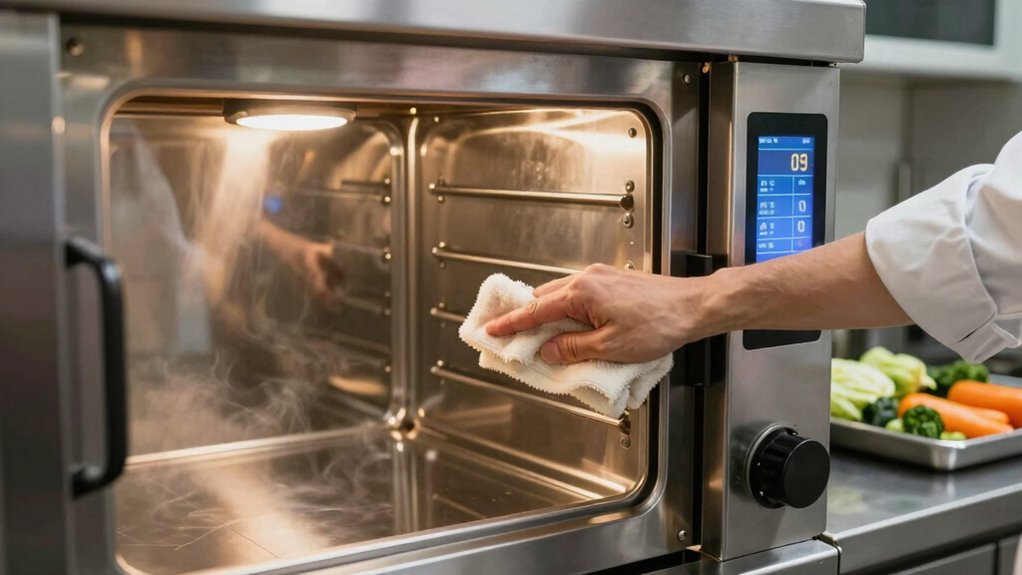
Regularly running cleaning cycles is essential to keep your combi oven in ideal condition. Neglecting this can lead to buildup of grease, food residue, and mineral deposits, which not only impair oven performance but also markedly increase energy consumption and shorten the appliance’s lifespan. To stay ahead of these issues, establishing a thorough maintenance schedule is pivotal. This schedule should outline specific cleaning intervals based on how often you use the oven, ensuring that cleaning becomes a routine part of your kitchen operations rather than an afterthought. A well-structured maintenance schedule helps prevent the accumulation of grime and guarantees that you don’t forget to perform crucial cleaning tasks, which can lead to costly repairs down the line.
Regular cleaning schedules prevent grime buildup and ensure optimal oven performance.
A key component of your maintenance plan is adhering to a detailed cleaning checklist. This checklist acts as a step-by-step guide, ensuring you don’t overlook any important areas. It should include tasks like removing and cleaning the interior panels, racks, and trays, as well as inspecting and cleaning the fans, heating elements, and door seals. Regularly wiping down the exterior and control panels keeps dust and grease from affecting sensitive components. Following a detailed cleaning checklist ensures consistency and effectiveness, helping you maintain the oven’s hygiene and operational efficiency. Additionally, understanding the importance of combi oven cleaning cycles can help you optimize your maintenance routine and avoid costly repairs caused by neglect.
Implementing a proper cleaning routine also involves choosing the right cleaning agents. Use commercial oven cleaners designed specifically for combi ovens or a mixture of mild detergents and warm water, avoiding harsh abrasives that could damage surfaces. Always follow the manufacturer’s instructions for cleaning products and procedures, as improper cleaning can void warranties or cause corrosion. After cleaning, make sure to dry all surfaces thoroughly to prevent rust and mold growth.
Frequently Asked Questions
How Often Should I Run Cleaning Cycles for Optimal Performance?
You should run cleaning cycles for your oven at least once a week to maintain ideal performance. Regular oven maintenance involves adhering to the recommended cleaning frequency, which prevents grease buildup and guarantees efficient operation. If you cook frequently or use the oven heavily, consider cleaning more often—perhaps twice weekly. Consistent cleaning not only prolongs your oven’s lifespan but also saves you money by avoiding costly repairs caused by neglect.
Can I Use DIY Cleaning Methods Instead of Professional Cycles?
They say “a stitch in time saves nine,” and that applies here. You can try DIY cleaning methods for your combi oven, but don’t skip professional maintenance. DIY cleaning can handle surface grime, but a deep clean guarantees all parts function correctly and prevents costly repairs. Regular professional maintenance, combined with DIY efforts, keeps your oven in top shape and avoids the “neglect tax” of neglecting proper care.
Are There Specific Cleaning Cycles for Different Types of Food Residues?
Yes, there are specific cleaning cycles designed for different food residue types, ensuring effective removal. For greasy residues, use a high-temperature, degreasing cycle. For baked-on food, select a steam or intensive cycle. Light food spills may only need a standard cleaning cycle. Understanding your oven’s cleaning cycle specificity helps prevent build-up and maintains ideal performance, saving you from costly repairs and excessive cleaning efforts down the line.
What Are the Signs That My Oven Needs a Cleaning Cycle?
When your oven starts emitting strong odors and residue stains linger, it’s time for a cleaning cycle. These signs highlight accumulated grease and food debris that could compromise performance. Don’t ignore the smell or stubborn stains—they’re your oven’s way of signaling neglect. Regular cleaning prevents the buildup from becoming costly, ensuring your appliance runs efficiently and stays hygienic, saving you from future repairs and expensive ‘neglect tax’.
How Can I Prevent Buildup Between Scheduled Cleaning Cycles?
To prevent buildup between cleaning cycles, you should regularly wipe down your oven after use to control residue. Use a damp cloth and mild cleaner to remove grease and food particles promptly. Avoid letting residue accumulate, which can turn into stubborn buildup. Also, consider using protective liners or mats to minimize messes. These simple steps help maintain cleanliness, reduce the need for intensive cleaning, and keep your oven running efficiently.
Conclusion
Skip those regular cleaning cycles, and watch your combi oven transform into a rusted relic faster than you can say “neglect tax.” Before long, you’ll be paying a hefty price for the “oops” of ignoring maintenance—think expensive repairs and wasted food. So, keep up with cleaning, or enjoy the thrill of watching your investment turn into a paperweight. Trust me, your wallet will thank you for the humor in avoiding that costly mistake.