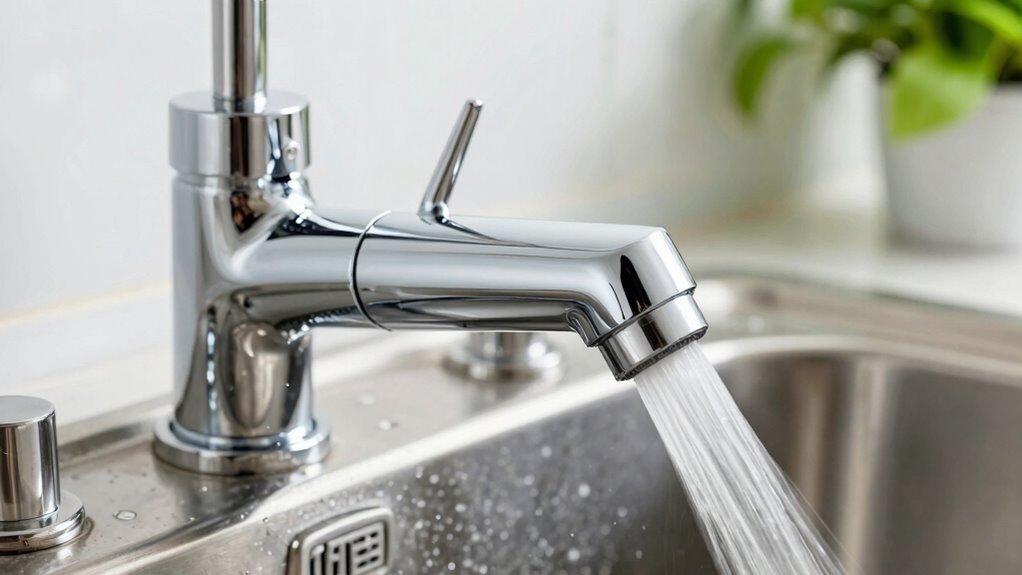

To keep your pre-rinse spray valves working with strong pressure, regular maintenance is crucial. Clean the nozzles and inspect for clogs or mineral buildup frequently to prevent flow issues. Using the right tools and solutions guarantees debris and scale don’t slow down performance. High-quality parts and adjusting pressure settings also help maintain efficiency. Staying on top of these simple steps ensures your kitchen operates smoothly—learn more tips to keep your spray valves in top shape.
Key Takeaways
- Regularly inspect and clean nozzles to prevent mineral buildup and maintain optimal water flow.
- Use appropriate cleaning tools and solutions to remove debris and sediment from spray valves.
- Check for leaks and worn components, replacing parts promptly to ensure consistent pressure.
- Utilize automated cleaning features and proper adjustment of pressure settings for routine maintenance.
- Install high-quality parts and perform scheduled maintenance to extend equipment lifespan and ensure peak performance.
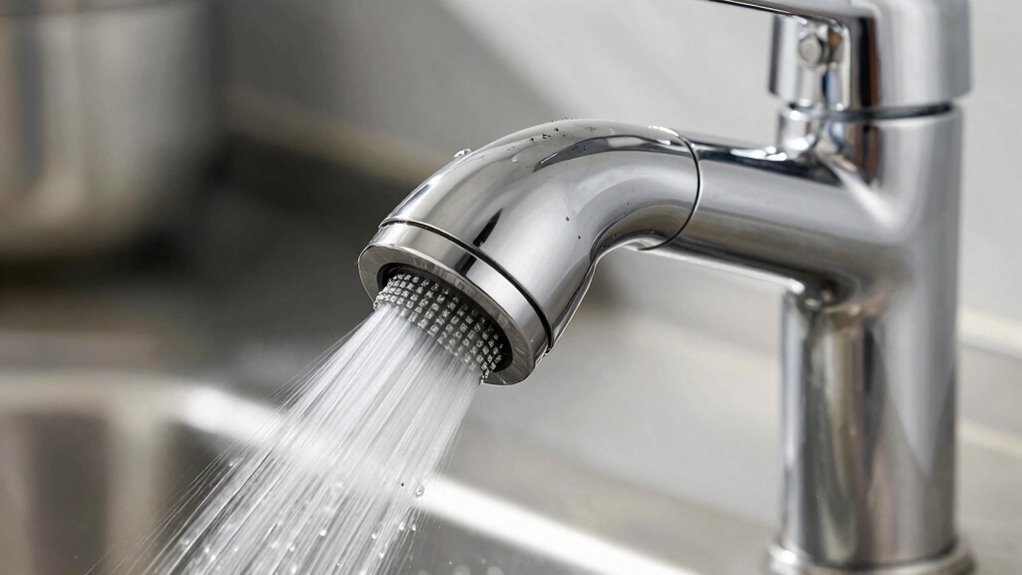
Pre-rinse spray valves are vital tools in commercial kitchens, designed to efficiently remove food debris from dishes before washing. These devices are essential for speeding up the cleaning process, reducing water usage, and guaranteeing that dishes are ready for the main wash cycle. As a user, you want your spray valve to deliver consistent pressure, so your pre-rinse tasks don’t become a hassle. Proper maintenance directly influences the performance and longevity of your spray valve, helping you save money and prevent disruptions during busy hours.
One of the key factors in keeping your spray valve performing at its best is focusing on energy efficiency. When a spray valve becomes clogged or develops mineral buildup, it can cause the system to work harder, consuming more water and energy. Regularly inspecting and cleaning the nozzle ensures that water flows freely, maintaining peak pressure. This not only minimizes water waste but also reduces the energy required to pump and operate the system. By investing time in routine maintenance, you’re actively supporting cleaner, more efficient operations that benefit your bottom line.
Cleaning technology plays a significant role in maintaining a high-performing pre-rinse spray valve. Modern spray valves often feature advanced designs that resist mineral buildup or incorporate self-cleaning components. However, no matter how sophisticated the technology, manual inspections and cleanings are essential for preserving peak performance. Using the right tools and cleaning solutions helps remove debris, scale, and sediment that can impede water flow. When your spray valve remains free of obstructions, you’ll notice a stronger, more consistent spray pressure, making pre-rinsing faster and more effective. Plus, well-maintained cleaning technology extends the lifespan of your equipment, preventing costly replacements and downtime.
You should also be mindful of the quality of your spray valve components. Investing in durable, high-quality parts can reduce the frequency of maintenance needed and ensure that cleaning technology continues to function properly over time. Simple steps like checking for leaks, replacing worn-out nozzles, and adjusting the pressure settings can make a significant difference. Additionally, understanding navigation and mapping features of automated cleaning systems can optimize maintenance routines for better performance. Remember, a well-maintained spray valve isn’t just about keeping pressure strong—it’s about creating a reliable, efficient cleaning process that supports your entire kitchen operation.
In short, maintaining your pre-rinse spray valve is a straightforward yet vital task that keeps pressure strong and cleaning technology at its best. By focusing on energy efficiency through regular cleaning and inspections, you’ll optimize water use and reduce operational costs. Incorporating advanced cleaning practices and quality components ensures your spray valve remains effective, ultimately helping you deliver faster, cleaner results every shift.
Frequently Asked Questions
How Often Should Pre-Rinse Spray Valves Be Inspected?
You should inspect pre-rinse spray valves at least once a month to guarantee peak pressure. Follow installation tips to prevent leaks and maintain performance. Regular inspections help you identify troubleshooting techniques early, like clogged nozzles or worn parts, which can reduce spray pressure. Keep a routine schedule, and don’t forget to clean or replace components as needed. Consistent checks keep your spray valves functioning efficiently, saving you time and avoiding costly repairs.
What Are Signs of a Failing Spray Valve?
Ever notice a weak spray pattern or inconsistent flow rate? These are clear signs your spray valve might be failing. You might also see leaks, sputtering, or reduced pressure during operation. When the spray pattern becomes irregular or the flow rate drops, it indicates buildup or wear. Addressing these issues promptly keeps your spray valve functioning efficiently, ensuring you maintain that strong, consistent pressure essential for effective cleaning.
Can I Replace Spray Valves Myself?
Yes, you can replace spray valves yourself if you have basic plumbing skills. Focus on DIY installation by guaranteeing valve compatibility with your existing setup. Turn off the water supply, remove the old valve carefully, and follow the manufacturer’s instructions for installing the new one. Using the correct tools and double-checking compatibility helps prevent leaks and ensures strong pressure. If unsure, consult a professional to avoid mistakes.
What Tools Are Needed for Maintenance?
For maintenance, you’ll need a tools checklist that includes adjustable wrenches, screwdrivers, and pliers. These tools help you easily remove and inspect spray valves. Follow your maintenance schedule to guarantee timely checks and cleanings, preventing pressure drops. Keep a container for parts and a lubricant handy. Regularly inspecting and maintaining your spray valves with these tools keeps pressure strong and extends their lifespan.
Are There Different Types of Pre-Rinse Spray Valves?
Don’t put all your eggs in one basket. When it comes to pre-rinse spray valves, you’ll find different types and material differences, such as manual, spring-powered, and electric models. Each type offers unique benefits, and the material—like stainless steel or plastic—affects durability and corrosion resistance. Comparing these types helps you choose the best fit for your needs, ensuring strong pressure and efficient performance over time.
Conclusion
By regularly maintaining your pre-rinse spray valves, you might just find that your pressure stays strong when you need it most. It’s funny how a simple trick—like keeping them clean—can unexpectedly prevent costly downtime. Sometimes, the smallest maintenance tasks align perfectly with smooth operation, almost as if the system’s efficiency was waiting for your attention all along. So, stay vigilant, and you’ll likely enjoy consistent performance without a hitch—proof that good habits often pay off when you least expect it.