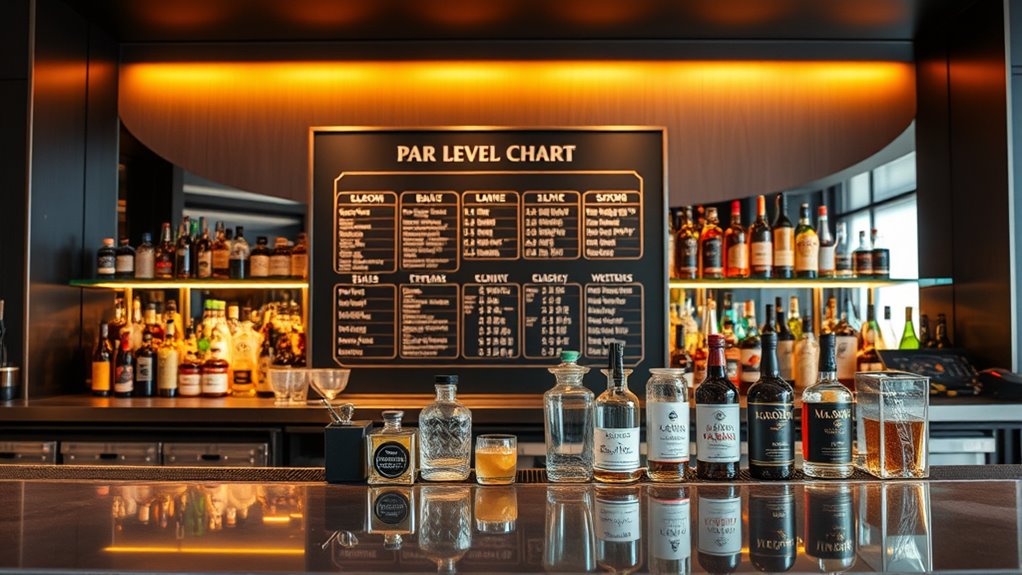

Setting bar par levels and planning batch cocktails helps you keep the right amount of ingredients available during busy hours, preventing shortages and overstocking. By establishing specific reorder points and buffer quantities, you guarantee smooth service and minimize waste. Monitoring usage and sales patterns allows you to adjust these levels efficiently over time. Mastering these practices improves inventory control and boosts profits—keep exploring to discover how to optimize your bar operations even further.
Key Takeaways
- Establish accurate par levels based on sales data to ensure ingredient availability during peak hours.
- Set reorder points aligned with par levels to automate timely replenishment and prevent stockouts.
- Use batch planning to prepare cocktails efficiently, minimizing waste and ensuring consistent quality.
- Monitor ingredient usage regularly to adjust par levels and reorder points for fluctuating demand.
- Implement inventory tracking systems to streamline stock management and improve overall operational efficiency.

Ever wondered how bars keep everything stocked without overdoing it? The secret lies in effective inventory management combined with well-planned bar par levels. These par levels are the predetermined quantities of each ingredient you aim to have on hand at all times. They act as a buffer, guaranteeing you never run out of popular spirits, mixers, or garnishes during busy hours. By setting accurate par levels, you create a system that automatically guides your inventory replenishment process, preventing both shortages and excess stock. This balance is essential because overstocking ties up cash and storage space, while understocking can lead to missed sales and unhappy customers.
Reorder points are a critical part of this system. They are specific inventory thresholds that, when reached, trigger a reorder. Think of them as your safety nets, designed to alert you before your stock hits critically low levels. For example, if your bar’s vodka stock drops to a certain number, the reorder point prompts you to place an order, ensuring a smooth flow of ingredients. Setting these points requires careful analysis of your sales patterns, so you can determine how quickly each item depletes during typical service hours. The goal is to keep your reorder points aligned with your par levels, so you’re always prepared without overstocking.
To establish effective inventory management and reorder points, start by monitoring your usage for each ingredient. Track sales over several weeks to identify average consumption rates. This data helps you set realistic par levels and reorder points that match your bar’s demand. For instance, if you notice that a particular mixer runs out rapidly on weekends, you might increase its par level or adjust your reorder point accordingly. Automating this process, either through inventory management software or manual checklists, reduces the chance of human error and keeps your stock levels optimized. Additionally, understanding well-being tips related to stress management and routine organization can help bar staff maintain focus and accuracy during inventory procedures.
Having a clear understanding of your inventory flow also allows you to plan batch cocktails more efficiently. Knowing your par levels ensures you always have enough ingredients to prepare popular drinks, while your reorder points prevent last-minute shortages. This approach streamlines operations, reduces waste, and improves profit margins. Ultimately, mastering inventory management with well-set par levels and reorder points gives you control over your stock, leading to smoother service, happier customers, and a healthier bottom line. Keeping everything balanced may take some effort initially, but once you find the rhythm, managing your bar’s supplies becomes second nature.
Frequently Asked Questions
How Often Should Par Levels Be Reviewed and Adjusted?
You should review your par levels regularly, ideally every month, to guarantee ideal inventory management. Adjust them based on sales trends, seasonal changes, and staff feedback to improve inventory optimization. Regular reviews help prevent stock shortages or overstocking. Incorporate staff training so your team understands these adjustments and can implement them efficiently. Staying proactive with updates ensures smooth operations and consistent customer service.
What Factors Influence Setting Accurate Par Levels?
You should consider sales trends, inventory turnover, and supplier lead times to set accurate par levels. These factors influence how much stock you need, how quickly you restock, and how to prevent shortages or overstocking. By analyzing sales data regularly, monitoring supplier reliability, and adjusting for seasonal demand, you optimize inventory, minimize waste, and guarantee your bar runs smoothly. Consistently reviewing these factors keeps your par levels precise and effective.
How Do Par Levels Differ Between Bars and Restaurants?
You’ll find that par levels differ between bars and restaurants because bars often have higher inventory turnover due to frequent cocktail service. Restaurants typically maintain lower par levels for ingredients used in both food and drinks. You should consider supplier lead times to avoid shortages, especially in busy times, and adjust par levels accordingly. Staying attentive to demand patterns guarantees you keep the right stock without overordering, optimizing both service and costs.
What Are Common Mistakes When Establishing Par Levels?
You often make mistakes when establishing par levels by not accounting for inventory discrepancies, which can lead to shortages or overstocking. Relying solely on past sales data without adjusting for seasonal changes or special events also causes issues. Overstocking strategies that aren’t flexible can result in excess inventory, increasing waste. Regularly reviewing and adjusting par levels helps prevent these mistakes, ensuring you keep the right stock without tying up too much capital.
How Do Seasonal Changes Affect Par Level Planning?
Seasonal shifts considerably impact your par level planning by shaping seasonal inventory needs and demand fluctuations. During busy seasons, you’ll want to stock more to meet increased demand and prevent shortages. Conversely, slow seasons call for trimming inventory to avoid waste. By closely monitoring these fluctuations, you guarantee your par levels are properly poised, balancing supply with sales so you’re prepared without overstocking or understocking.
Conclusion
By mastering bar par levels and batch cocktail planning, you set yourself up for success behind the bar. Think of it as the secret recipe to efficiency and consistency—without it, chaos could reign. So, why leave your bar to chance? Embrace these strategies, and watch your service flourish like a perfectly shaken cocktail. After all, isn’t it worth stirring up a little organization to serve up excellence every time?