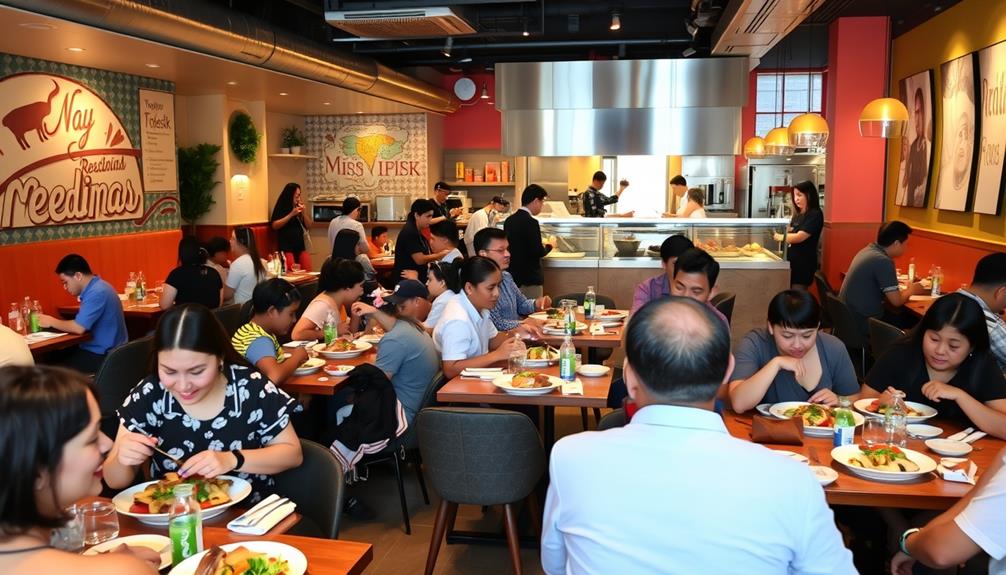

Choosing the right restaurant franchise to own involves weighing factors like initial investment, brand strength, support systems, and growth potential. The best overall pick, Subway, stands out for its extensive network and proven track record, while options like McDonald’s offer premium branding and high profitability but require larger investments. Many buyers face tradeoffs between lower startup costs and brand recognition or between franchise support and flexibility. Continue reading for a detailed breakdown of the top options to help you make an informed decision.

Get kitchen staples and gadgets delivered free with Prime
- Fast, free delivery on millions of items
- Prime Video, Amazon Music and more included
- Member-only deals all year
Key Takeaways
- The top-ranking franchises combine strong brand recognition with scalable business models.
- Lower-cost options tend to offer less comprehensive support, making them better suited for experienced operators.
- Premium franchises like McDonald’s demand significant capital but provide unmatched profitability potential.
- Emerging brands can be attractive for innovative concepts but often lack the stability of established franchises.
- Understanding the franchise support system and initial investment are key to aligning with your goals.
| So You Want to Own a Subway Franchise?: A Decade in the Restaurant Business |  | Best for Practical Industry Insights | Format: Paperback | Page Count: 200 pages | Language: English | VIEW ON AMAZON | See Our Full Breakdown |
| How to Start, Run & Grow a Successful Restaurant Business: A Lean Startup Guide |  | Best for Lean Startup Methodology | Format: Paperback | Page Count: 180 pages | Language: English | VIEW ON AMAZON | See Our Full Breakdown |
| Ronald McDonald’s Franchise Buyers Guide: How To Buy A Fast Food Franchise |  | Best for Fast Food Franchise Buyers | Format: Paperback | Page Count: 150 pages | Language: English | VIEW ON AMAZON | See Our Full Breakdown |
| The Franchise Formula: How to Multiply Your Restaurant |  | Best for Expansion Strategies | Format: Hardcover | Page Count: 220 pages | Language: English | VIEW ON AMAZON | See Our Full Breakdown |
| The Franchise MBA: Mastering the 4 Essential Steps to Owning a Franchise |  | Best for Beginners and Strategic Clarity | Format: Paperback | Page Count: 210 pages | Language: English | VIEW ON AMAZON | See Our Full Breakdown |
| Restaurant Success by the Numbers, Second Edition: A Money-Guy’s Guide to Opening the Next New Hot Spot |  | Best for Financial Planning and Metrics | Focus: Financial metrics and operational strategies | Edition: Second Edition | Industry Focus: Restaurant management | VIEW ON AMAZON | See Our Full Breakdown |
| Opening a McDonald’s Franchise: An Independent Guide to Qualification, Financing, Training, Due Diligence, and Owner-Operator Success |  | Best for Aspiring McDonald’s Franchisees | Brand Focus: McDonald’s | Coverage: Qualification, financing, training | Intended Audience: First-time franchisees | VIEW ON AMAZON | See Our Full Breakdown |
| Running a Restaurant For Dummies |  | Best for Beginners and Operations | Target Audience: Beginners | Coverage Area: Operations and management | Edition: Latest | VIEW ON AMAZON | See Our Full Breakdown |
| Franchising Fundamentals: Your Guide to Selecting, Financing, and Thriving with Your Franchise Investment |  | Best for Franchise Selection and Financing | Scope: Franchise selection and financing | Audience: Beginners and experienced entrepreneurs | Case Studies: None | VIEW ON AMAZON | See Our Full Breakdown |
| Fast Food and Franchising: The Beginner’s Guide to Quick Service Restaurants |  | Best for Quick Service Industry Starters | Industry Focus: Fast food and quick service | Audience: Beginners | Content Depth: Introductory overview | VIEW ON AMAZON | See Our Full Breakdown |
| restaurant franchise to own | Format | Page Count | Language | Publisher |
|---|---|---|---|---|
| So You Want to Own a Subway Fr | Paperback | 200 pages | English | Industry Press |
| How to Start | Paperback | 180 pages | English | StartUp Press |
| Ronald McDonald’s Franchise Bu | Paperback | 150 pages | English | Franchise Insights |
| The Franchise Formula: How to | Hardcover | 220 pages | English | Growth Press |
| The Franchise MBA: Mastering t | Paperback | 210 pages | English | Entrepreneurial Press |
| Restaurant Success by the Numb | Print and digital | — | — | — |
| Opening a McDonald’s Franchise | — | — | — | |
| Running a Restaurant For Dummi | — | — | — | |
| Franchising Fundamentals: Your | — | — | — | |
| Fast Food and Franchising: The | — | — | — |
More Details on Our Top Picks
So You Want to Own a Subway Franchise?: A Decade in the Restaurant Business
This book stands out for its firsthand perspective, sharing a decade of experience in Subway franchise ownership. Compared with more strategic guides like The Franchise MBA, it offers real-world lessons rather than step-by-step frameworks. While it provides valuable operational insights, it lacks detailed content on financial specifics or franchise processes, making it less suited for those seeking comprehensive technical guidance. This pick is ideal for aspiring owners who want an authentic look at daily franchise management, but less so for investors needing precise financial models.
Pros:- Shares real-world experiences from a decade of Subway ownership
- Provides practical insights into daily franchise management
- Authentic perspective on challenges and successes
Cons:- Lacks detailed financial or legal guidance
- Limited content on franchise acquisition processes
Best for: Prospective franchise owners interested in the operational realities of Subway and practical advice from experienced insiders
Not ideal for: First-time franchise buyers seeking detailed financial and legal frameworks, or those wanting a broad franchise overview without industry-specific anecdotes
- Format:Paperback
- Page Count:200 pages
- Language:English
- Publisher:Industry Press
- Publication Date:2013
- ISBN:1609764277
Our verdict“This book is best suited for those wanting an insider’s view of Subway franchise operations, but it may not satisfy buyers seeking detailed technical guidance.”
How to Start, Run & Grow a Successful Restaurant Business: A Lean Startup Guide
This guide excels at helping both new and experienced restaurateurs apply lean startup principles to minimize initial risks and test concepts quickly. Unlike The Franchise Formula, which emphasizes franchise expansion strategies, this book focuses on building a solid foundation through iterative testing and customer feedback. Its practical advice is accessible, but it doesn’t delve into detailed case studies or digital tools, which may limit its usefulness for those needing step-by-step operational plans. It’s perfect for entrepreneurs willing to experiment and adapt early on, but less ideal for those seeking comprehensive franchise development strategies.
Pros:- Provides actionable strategies grounded in lean principles
- Fits both newcomers and experienced restaurateurs
- Reduces risk through quick testing and feedback loops
Cons:- Lacks detailed case studies or digital resources
- Does not cover all aspects of full-scale restaurant management
Best for: Start-up restaurateurs looking to validate their concept efficiently and grow sustainably
Not ideal for: Owners seeking detailed franchise management, multi-location expansion plans, or in-depth case studies
- Format:Paperback
- Page Count:180 pages
- Language:English
- Publisher:StartUp Press
- Publication Date:2020
- ISBN:1977806163
Our verdict“This guide is ideal for entrepreneurs focused on lean testing and gradual growth, but it may fall short for those needing comprehensive franchise operational details.”
Ronald McDonald’s Franchise Buyers Guide: How To Buy A Fast Food Franchise
This guide offers targeted advice on purchasing a fast food franchise like Ronald McDonald’s, making it highly specific compared to broader titles like The Franchise MBA. It provides strategic tips on evaluating franchise opportunities, but falls short on detailed financial or legal specifics, which are critical for serious buyers. Its focus on Ronald McDonald’s franchise model makes it less useful for those exploring other brands or franchise types. This book is best for buyers interested specifically in fast food franchises with a quick start, though it may lack depth for those seeking comprehensive legal or financial guidance.
Pros:- Provides specific guidance for Ronald McDonald’s franchise purchase
- Focuses on evaluating franchise opportunities effectively
- Suitable for quick decision-making
Cons:- Limited detail on financial or legal complexities
- No customer reviews or in-depth case studies
Best for: Potential franchise buyers focused on fast food brands, particularly Ronald McDonald’s, and seeking a clear buying strategy
Not ideal for: Investors looking for broad franchise management advice or detailed financial analysis across multiple brands
- Format:Paperback
- Page Count:150 pages
- Language:English
- Publisher:Franchise Insights
- Publication Date:2015
- ISBN:1413439349
Our verdict“This guide is best for fast food enthusiasts targeting Ronald McDonald’s franchise, but less suited for those needing extensive legal or financial details.”
The Franchise Formula: How to Multiply Your Restaurant
This book makes the most sense for existing restaurant owners aiming to scale through franchising, offering practical growth strategies that complement the more general guidance found in The Franchise MBA. Unlike So You Want to Own a Subway Franchise?, which focuses on operational insights, The Franchise Formula emphasizes expansion tactics and managing multiple locations. Its content leans toward experienced owners ready to grow, but it might be overwhelming for newcomers lacking a solid foundation. It’s an essential read for those interested in scaling, although less helpful for initial startup advice or single-unit owners.
Pros:- Provides actionable strategies for franchise growth
- Focuses on managing multiple locations effectively
- Suitable for experienced restaurant owners
Cons:- Less relevant for beginners or those without expansion plans
- No detailed specifications or case studies included
Best for: Restaurant owners planning to expand their operations via franchising and seeking structured growth strategies
Not ideal for: First-time restaurant entrepreneurs or those only interested in a single-unit operation without expansion plans
- Format:Hardcover
- Page Count:220 pages
- Language:English
- Publisher:Growth Press
- Publication Date:2022
- ISBN:B0CPYKCJQF
Our verdict“This book is best for established restaurateurs looking to grow through franchising, but less so for startups or single-unit owners.”
The Franchise MBA: Mastering the 4 Essential Steps to Owning a Franchise
This book offers a clear, structured framework for aspiring franchise owners, making it particularly useful for those new to the process. Unlike Ronald McDonald’s Franchise Buyers Guide, which is very specific, The Franchise MBA provides a broad overview of the key steps involved in franchise ownership, from selection to operation. Its straightforward approach makes it accessible for beginners, though it may lack depth for seasoned entrepreneurs seeking advanced strategies. It’s ideal for those wanting a comprehensive yet digestible guide to starting a franchise journey, but less suitable for users needing detailed legal or financial analysis.
Pros:- Provides a simple, step-by-step framework for franchise ownership
- Accessible for beginners with no prior experience
- Covers all four essential steps comprehensively
Cons:- Lacks detailed technical or legal guidance
- No customer reviews or ratings available
Best for: New entrepreneurs or those seeking a structured, easy-to-understand path into franchise ownership
Not ideal for: Experienced franchise owners seeking in-depth financial, legal, or multi-unit expansion strategies
- Format:Paperback
- Page Count:210 pages
- Language:English
- Publisher:Entrepreneurial Press
- Publication Date:2019
- ISBN:1484958659
Our verdict“This book is perfect for newcomers seeking a straightforward, structured approach to franchise ownership, but may not satisfy those needing advanced details.”
Restaurant Success by the Numbers, Second Edition: A Money-Guy’s Guide to Opening the Next New Hot Spot
This book stands out for its focus on financial metrics and operational strategies, making it a valuable resource for those who want a solid foundation in restaurant economics. Compared with ‘Running a Restaurant For Dummies,’ which offers broader operational advice, this guide zeroes in on key numbers that influence profitability, helping entrepreneurs make data-driven decisions. However, it doesn’t provide step-by-step instructions or detailed operational procedures, which might leave some readers wanting more practical implementation. This pick makes the most sense for aspiring restaurateurs who already have a business concept but need clarity on financial management and performance benchmarks.
Pros:- Focuses on practical financial insights and key performance metrics
- Includes real-world examples to illustrate concepts
- Updated with current industry data and trends
Cons:- Lacks detailed, step-by-step operational instructions
- May be too focused on financials for those needing broader business guidance
Best for: Prospective restaurant owners seeking a quantitative approach to managing profitability and operational efficiency
Not ideal for: Beginners looking for comprehensive step-by-step startup guidance or technical restaurant management procedures
- Focus:Financial metrics and operational strategies
- Edition:Second Edition
- Industry Focus:Restaurant management
- Includes:Real-world examples
- Update Status:Current industry insights
- Format:Print and digital
Our verdict“Ideal for entrepreneurs who want a strong grasp of restaurant financials but need additional operational support elsewhere.”
Opening a McDonald’s Franchise: An Independent Guide to Qualification, Financing, Training, Due Diligence, and Owner-Operator Success
This guide provides comprehensive coverage of the entire McDonald’s franchise process, making it ideal for those specifically targeting this brand. Unlike ‘Franchising Fundamentals,’ which offers broad franchise advice, this book details the qualification process, financing options, and training requirements unique to McDonald’s, helping prospective owners understand what it takes to succeed with this specific franchise. Its lack of user reviews or recent updates might leave some questions about current procedures, and it doesn’t highlight advanced franchise strategies. This book is best suited for individuals committed to owning a McDonald’s and wanting a detailed, brand-specific roadmap.
Pros:- Detailed guidance on qualification and financing specific to McDonald’s
- Covers training and operational success strategies
- Useful for first-time franchisees with a clear brand focus
Cons:- Lacks recent updates or user reviews
- No specific features or technological tools included
Best for: Individuals focused on becoming McDonald’s franchise owners who need detailed qualification and training insights
Not ideal for: Those interested in other franchise brands or seeking general franchising advice without brand-specific details
- Brand Focus:McDonald’s
- Coverage:Qualification, financing, training
- Intended Audience:First-time franchisees
- Format:Print
- Update Status:No recent updates
- Additional Resources:None
Our verdict“A must-have for dedicated McDonald’s franchise aspirants wanting an in-depth, brand-specific guide.”
Running a Restaurant For Dummies
This book offers practical advice for managing a restaurant, covering essential operational and business strategies, making it a good starting point for newcomers. Compared with ‘Fast Food and Franchising,’ which provides industry-specific franchising insights, this guide offers broader operational tips applicable to a variety of restaurant types, making it more versatile for general restaurateurs. Its lack of detailed technical content or recent updates means it’s less suited for owners seeking advanced or industry-specific guidance. This pick makes sense for aspiring restaurateurs who need a comprehensive overview of daily operations and management principles.
Pros:- Broad coverage of restaurant management essentials
- Easy-to-understand for beginners
- Includes practical operational tips
Cons:- No recent updates or detailed technical guidance
- Lacks specific franchise or industry case studies
Best for: Beginners or industry newcomers aiming to understand core restaurant management practices
Not ideal for: Experienced restaurateurs looking for advanced technical strategies or franchise-specific insights
- Target Audience:Beginners
- Coverage Area:Operations and management
- Edition:Latest
- Industry Focus:General restaurant business
- Format:Print
- Update Status:No recent updates
Our verdict“Perfect for industry newcomers seeking a clear, practical overview of restaurant management fundamentals.”
Franchising Fundamentals: Your Guide to Selecting, Financing, and Thriving with Your Franchise Investment
This book provides a thorough overview of how to choose the right franchise, secure financing, and succeed in the business, making it similar in scope to ‘Fast Food and Franchising.’ Unlike that beginner’s guide, it offers more detailed advice on franchise selection and financial strategies suitable for both newcomers and experienced entrepreneurs. Its general approach means it lacks specific case studies or advanced franchise tactics, which might leave seasoned owners wanting deeper insights. It’s best for those who want a broad understanding of franchise fundamentals without brand-specific detail, especially if they are considering a variety of options.
Pros:- Detailed guidance on selecting the right franchise
- Strong focus on securing financing
- Practical advice applicable across various franchise types
Cons:- Lacks specific case studies or real-world examples
- May be too general for owners seeking advanced franchise techniques
Best for: New or experienced entrepreneurs seeking comprehensive franchise selection and financing strategies
Not ideal for: Owners looking for in-depth, brand-specific franchise guides or advanced operational tactics
- Scope:Franchise selection and financing
- Audience:Beginners and experienced entrepreneurs
- Case Studies:None
- Approach:General franchise strategies
- Format:Print
- Update Status:Current
Our verdict“Excellent for entrepreneurs who need a broad, practical guide to franchise choosing and financing, regardless of specific brand interests.”
Fast Food and Franchising: The Beginner’s Guide to Quick Service Restaurants
This book offers a straightforward overview of the fast food industry and franchising opportunities, making it a solid choice for newcomers interested in quick service restaurants. Compared with ‘Restaurant Success by the Numbers,’ which emphasizes financial metrics, this guide introduces industry concepts in an accessible way, ideal for those just starting out. However, it lacks detailed case studies or insights into advanced franchising strategies, limiting its usefulness for owners who want to go beyond basic understanding. It’s best suited for individuals exploring quick service franchising as a first step into the industry.
Pros:- Provides a clear, easy-to-understand overview of fast food franchising
- Accessible for newcomers with limited industry experience
- Covers essential industry concepts without jargon
Cons:- Lacks detailed case studies or advanced strategies
- Limited focus on specific franchise brands or tech tools
Best for: Beginners interested in fast food franchising who need a clear, simple overview
Not ideal for: Owners seeking detailed operational or financial strategies for mature franchise businesses
- Industry Focus:Fast food and quick service
- Audience:Beginners
- Content Depth:Introductory overview
- Case Studies:None
- Format:Print
- Update Status:Current
Our verdict“A good starting point for absolute beginners exploring quick service restaurant franchising for the first time.”

How We Picked
The products in this roundup were evaluated based on several key criteria: franchise brand strength, initial investment range, ongoing support and training, growth potential, and overall ease of management. We prioritized franchises with proven track records and transparent operations, focusing on options that cater to different budgets and experience levels. The ranking reflects a balance between affordability, support quality, and market stability, ensuring that each choice offers a distinct advantage for specific types of buyers.| restaurant franchise to own | Format | Publisher | Update Status |
|---|---|---|---|
| So You Want to Own a Subway Fr | Paperback | Industry Press | — |
| How to Start | Paperback | StartUp Press | — |
| Ronald McDonald’s Franchise Bu | Paperback | Franchise Insights | — |
| The Franchise Formula: How to | Hardcover | Growth Press | — |
| The Franchise MBA: Mastering t | Paperback | Entrepreneurial Press | — |
| Restaurant Success by the Numb | Print and digital | — | Current industry insights |
| Opening a McDonald’s Franchise | — | No recent updates | |
| Running a Restaurant For Dummi | — | No recent updates | |
| Franchising Fundamentals: Your | — | Current | |
| Fast Food and Franchising: The | — | Current |
Factors to Consider When Choosing Restaurant Franchise To Own
Selecting the right restaurant franchise involves more than just choosing a popular brand. Buyers should carefully consider factors like startup costs, franchise fees, and ongoing royalties. Equally important are the support systems, training programs, and the franchise’s growth outlook. By understanding these aspects, you can avoid common pitfalls such as overestimating initial profits or underestimating management requirements. A thoughtful approach aligns your investment with your experience, budget, and long-term goals.Initial Investment and Franchise Fees
Understanding the total upfront costs, including franchise fees, equipment, and location setup, is crucial. Some franchises, like Subway, offer lower initial investments, making them accessible for new investors, while brands like McDonald’s require a substantial capital commitment. Be wary of hidden costs, and always factor in working capital needs to ensure smooth operations during initial growth phases. Balancing investment size with expected returns helps avoid financial strain early on.
Brand Strength and Market Presence
A well-established brand offers higher customer trust and easier market penetration, but might come with higher franchise fees and stricter operational controls. Emerging brands can be more flexible and innovative but may lack the stability and recognition needed for rapid growth. Consider your local market dynamics and how well the franchise’s concept aligns with your target customer base to decide which level of brand strength suits you best.
Support and Training
Franchise support systems vary widely and can impact your success significantly. Look for comprehensive training programs, ongoing operational assistance, and marketing support. Franchises like McDonald’s are known for extensive training, which benefits first-time operators, whereas smaller brands may offer more personalized support but less structured assistance. Evaluate your experience level and choose a franchise that provides the right level of guidance.
Growth Potential and Market Trends
Assess the franchise’s expansion plans and adaptability to current market trends, such as health-conscious dining or delivery services. Franchises with a flexible model and a clear vision for future growth are more likely to sustain profitability long-term. Avoid brands overly reliant on outdated concepts, and instead focus on those innovating to meet evolving consumer preferences.
Management Requirements and Operational Complexity
Some franchises demand intensive daily management, while others are designed for passive ownership. Consider your own experience and available time. For example, fast-food chains often require strict operational adherence, whereas newer or niche concepts might offer more flexibility. Choosing a franchise aligned with your management style can reduce stress and improve overall satisfaction.
Frequently Asked Questions
How much capital do I need to start a restaurant franchise?
The required capital varies widely depending on the franchise. For instance, Subway can require as little as $100,000, while McDonald’s might need upwards of $1 million or more. It’s essential to account for franchise fees, equipment, real estate, and working capital. Carefully reviewing the franchise disclosure document (FDD) and consulting with financial advisors can help you determine a realistic budget for your specific situation.
What ongoing costs should I expect with a restaurant franchise?
Ongoing costs typically include royalty fees, marketing contributions, supplies, and staff wages. Royalties can range from 4% to 12% of gross sales, impacting profitability. Additionally, marketing fees support national advertising campaigns and vary by franchise. Planning for these recurring expenses helps ensure your business remains financially sustainable in the long run.
Is franchise support enough for a first-time restaurant owner?
While franchise support provides valuable training and operational guidance, success also depends on your management skills and local market understanding. Franchises like McDonald’s offer extensive support, which can be a boon for beginners, but hands-on experience and ongoing learning are equally important. Combining franchise resources with personal commitment enhances your chances of thriving.
Should I choose a franchise with a well-known brand or an emerging concept?
This decision hinges on your risk tolerance and investment goals. Established brands offer proven models, customer loyalty, and easier access to financing, but often require higher fees and stricter rules. Emerging brands might provide lower costs and more flexibility but carry higher risks due to less market history. Matching your experience and appetite for risk with the franchise’s stability is key.
What are common mistakes to avoid when buying a restaurant franchise?
Common pitfalls include underestimating total startup costs, neglecting to thoroughly review the franchise agreement, and choosing a concept that doesn’t match local market demand. Failing to evaluate ongoing royalty and marketing fees can erode profits, while skipping due diligence on franchise support can lead to operational difficulties. A careful, informed approach minimizes these risks and sets the stage for success.
Conclusion
For first-time owners or those seeking a balanced investment, Subway offers an accessible entry point with proven systems and moderate costs. Investors aiming for maximum profitability and brand strength should consider McDonald’s, despite its higher investment barrier. Those on a tighter budget or looking for innovative concepts may find emerging brands appealing, but should be prepared for higher risk. Beginners benefit from franchises with comprehensive support, while experienced operators might prioritize flexibility and growth opportunities. Tailoring your choice to your experience, budget, and long-term goals ensures the best fit in the competitive restaurant franchise landscape.
As an affiliate, we earn on qualifying purchases.Halloween Picks
halloween