
In catering operations, pricing considers ingredient costs, labor, and overhead, while logistics focus on menu planning, staffing, and timely delivery. Adjusting menus for client preferences and dietary needs helps control costs and improve satisfaction. Proper coordination between menu complexity and staffing ensures efficient service. Remaining flexible in staff scheduling and sourcing allows you to handle last-minute changes smoothly. Keep these basics in mind, and you’ll discover more strategies to make your catering services stand out.
Key Takeaways
- Establish clear pricing strategies by considering ingredient costs, labor, and overheads to ensure profitability.
- Develop detailed logistics plans covering transportation, setup, and timing to guarantee smooth event execution.
- Align menu customization with staffing levels to optimize resource allocation and meet client expectations.
- Incorporate flexibility in staffing and menu options to adapt to last-minute changes and unforeseen circumstances.
- Use accurate forecasting and inventory management to control costs and ensure availability of necessary supplies.
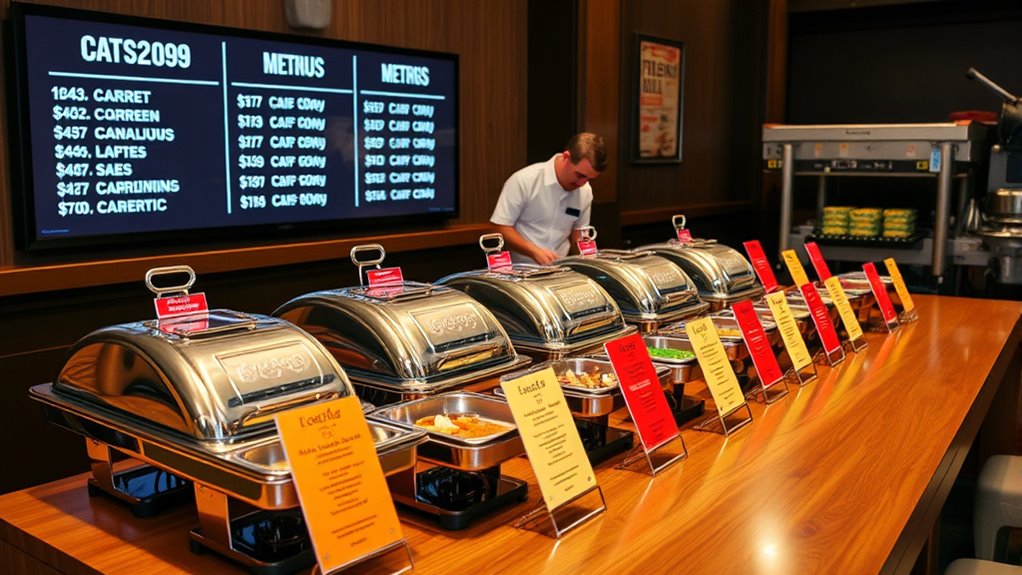
Have you ever wondered what makes catering operations run smoothly from start to finish? It all begins with understanding how to effectively manage menu customization and staffing strategies. When planning a catering event, your ability to tailor the menu to meet clients’ preferences and dietary needs is essential. Offering flexible options ensures satisfaction and sets your service apart. You want to be prepared to adapt dishes, accommodate allergies, or incorporate special themes, all while maintaining the quality and presentation standards your clients expect. This level of customization requires a clear grasp of your kitchen’s capabilities and a good relationship with suppliers to source specialty ingredients quickly. Additionally, understanding cultural and individual preferences can help you better align your offerings with client expectations.
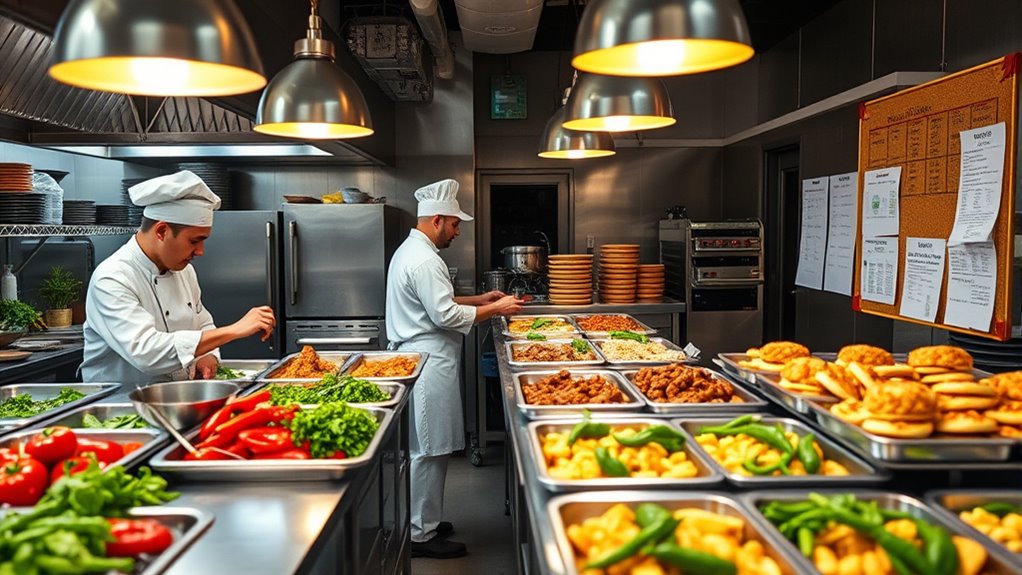
Alongside menu flexibility, staffing strategies play a critical role in streamlining operations. You need to assemble a team that’s not only skilled but also adaptable to the unique demands of each event. Proper staffing involves more than just hiring enough personnel; it’s about assigning the right roles to the right people. For instance, you might assign experienced servers to handle guest interactions and specialized chefs for complex dishes. Cross-training your staff can also boost efficiency, allowing team members to step into different roles if needed, reducing downtime and preventing bottlenecks. Planning staffing levels in advance, based on the event size and complexity, helps avoid understaffing or overstaffing, both of which can hamper smooth execution.
Effective staffing requires skill, adaptability, role assignment, cross-training, and advance planning to ensure smooth catering operations.
Effective coordination between menu customization and staffing strategies creates a seamless flow in your catering operations. When menus are tailored to client needs, you can better forecast ingredient requirements and preparation times, which in turn influences staffing needs. For example, if you’re offering a multi-course dinner with elaborate presentation, you’ll need more chefs and servers than for a simple buffet. Communicating clearly with your team about the menu and their responsibilities ensures everyone is aligned. This reduces errors, speeds up service, and enhances the overall guest experience.
Additionally, flexible staffing strategies give you the agility to handle last-minute changes, such as adding extra courses or adjusting for unexpected guest counts. Having a pool of on-call or part-time staff can be invaluable here. It also allows you to maintain consistency in your service quality, even when circumstances change unexpectedly. When you invest in both menu customization and strategic staffing, you’re setting a foundation for reliable, efficient catering operations that meet client expectations while controlling costs. Ultimately, mastering these elements helps you deliver memorable events, repeat business, and a reputation for professionalism. Knowing how to manage personnel effectively can significantly impact your service quality and client satisfaction.
Frequently Asked Questions
How Do I Handle Last-Minute Catering Order Changes?
When handling last-minute catering order changes, stay calm and communicate clearly with your client. Use menu customization options to quickly adapt items, and update your order tracking system to reflect these changes. Confirm new details promptly to avoid confusion and ensure smooth delivery. Flexibility is key; by staying organized and responsive, you can accommodate last-minute requests while maintaining excellent service quality.
What Are Effective Ways to Manage Catering Inventory?
Did you know that effective inventory management reduces waste by up to 20%? To manage catering inventory, you should use accurate inventory tracking to monitor stock levels in real-time. Implement efficient storage solutions that keep ingredients fresh and accessible, and conduct regular audits to prevent overstocking or shortages. This approach keeps your operations smooth, cuts costs, and guarantees you always have what’s needed for any event.
How Can I Reduce Catering Delivery Costs?
To reduce catering delivery costs, you should focus on pricing strategies and delivery optimization. Streamline routes by planning efficient deliveries, combining multiple orders in one trip. Negotiate better rates with delivery partners or explore in-house options. Adjust pricing strategies to include delivery fees that cover costs without overcharging clients. By optimizing delivery schedules and routes, you lower expenses and improve overall profitability, making your catering service more competitive.
What Strategies Improve Client Communication in Catering?
You can improve client communication by actively engaging with them through menu customization options and encouraging regular client feedback. Clearly explain your offerings, listen to their preferences, and adapt accordingly. Use open-ended questions to gather insights and show your commitment to meeting their needs. This approach fosters trust, ensures satisfaction, and strengthens your relationship, making clients feel valued and understood throughout the catering process.
How Do I Train Staff for Catering Logistics?
You can train staff for catering logistics by emphasizing hands-on staff training that covers logistics planning thoroughly. Start with clear instructions, real-life scenarios, and regular refreshers to build confidence. Address common challenges proactively and encourage questions. By focusing on practical skills and detailed logistics planning, your team becomes more efficient, reducing errors and ensuring smooth operations. Continuous training keeps everyone aligned and prepared for any situation that may arise during catering events.
Conclusion
Now that you understand the essentials of catering pricing and logistics, you’re ready to navigate the complex dance of delivering perfect events. Think of your operations as a well-oiled machine, where each part—pricing, planning, logistics—fits seamlessly together. Mastering these basics guarantees your catering business runs smoothly and confidently, transforming challenges into opportunities. With careful planning, you’ll steer your operations like a captain guiding a ship through calm and stormy seas alike.