A food runner playbook clearly defines your roles and how to handle callbacks efficiently. You stay alert, communicate with servers and kitchen staff, and guarantee dishes are delivered promptly and correctly. Managing special requests and callbacks helps prevent errors, maintains service flow, and keeps guests happy. Staying organized and aware of kitchen signals are key to smooth operations. Continue exploring to discover proven strategies that will elevate your service and guest experience.
Key Takeaways
- Clearly define the food runner’s role in ensuring timely, accurate meal delivery and guest satisfaction.
- Emphasize effective communication between kitchen, servers, and guests to prevent errors.
- Highlight the importance of managing callbacks for special requests and modifications efficiently.
- Encourage staying organized and aware of kitchen signals to maintain service flow.
- Focus on teamwork and awareness to enhance overall restaurant operation and guest experience.
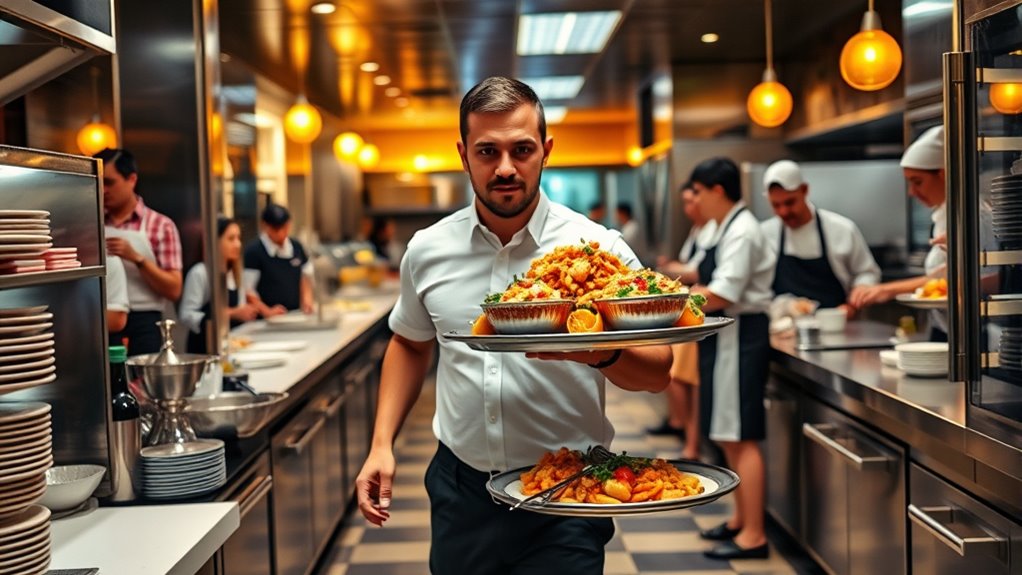
A well-organized food runner can make or break the dining experience. Your role is essential in ensuring that each guest receives their meal promptly and accurately, which directly impacts their overall satisfaction. When you understand the importance of smooth table service and seamless kitchen coordination, you become an indispensable link between the kitchen and the guests. Your ability to deliver hot, fresh dishes quickly and efficiently keeps the flow of service moving smoothly, preventing delays that can frustrate diners or disrupt the restaurant’s rhythm.
Table service isn’t just about bringing food; it’s about creating a positive experience for every guest. To do this effectively, you need to stay alert and anticipate when plates are ready, so you can deliver them without unnecessary waiting. Maintaining clear communication with servers ensures that everyone’s on the same page, especially when it comes to special orders or timing. It’s your job to understand the menu and be familiar with each dish, so you can accurately identify when a meal is prepared and ready to be served. Properly coordinated efforts between the kitchen and front-of-house staff help prevent mistakes, such as serving the wrong dish or missing components, which can ruin a guest’s experience.
Creating a positive guest experience relies on alertness, clear communication, and menu familiarity to ensure timely, accurate service.
Kitchen coordination is the backbone of your responsibilities. You act as the bridge, relaying messages between cooks and servers, and ensuring that dishes are plated correctly and in the right sequence. When the kitchen signals that a dish is finished, you need to be quick to retrieve it, double-check that it’s the right order, and deliver it efficiently. Timing is everything—if you’re too early, the food may cool down; too late, and the guest might wait longer than necessary. Your awareness of kitchen activity helps you manage this delicate balance, keeping service steady and the kitchen running smoothly. Additionally, understanding the power consumption of heated equipment can help in managing energy use during service, especially in establishments focused on efficiency.
In addition, your attentiveness to callbacks or special instructions plays an indispensable role. If a dish needs modifications or there’s a specific request from a guest, you’re the one to communicate that clearly, ensuring the kitchen understands and executes it perfectly. Your proactive approach minimizes errors and keeps the service seamless. Remember, every step you take in coordinating with the kitchen and managing table service contributes directly to a memorable dining experience. When you stay organized, communicate effectively, and prioritize efficiency, you elevate the entire restaurant operation, making sure every guest leaves satisfied and eager to return.
Frequently Asked Questions
How Do Food Runners Handle Special Dietary Requests?
When handling special dietary requests, you prioritize allergy awareness and gluten-free accommodations. You double-check the order for any allergens, making certain the kitchen knows about specific needs. You communicate clearly with the kitchen staff, confirming the meal meets the guest’s requirements. When serving, you handle the dish carefully, avoiding cross-contamination. Your attentiveness helps ensure guests with dietary restrictions enjoy their meal safely and comfortably.
What Tips Improve Communication Between Kitchen Staff and Food Runners?
Imagine catching a glimpse of a busy kitchen, where seamless teamwork makes everything run smoothly. To improve communication, focus on clear, concise ticket tracking and team coordination. Use hand signals or a designated system for quick updates, and always confirm order details with kitchen staff. Regularly check in, stay attentive, and keep lines open—these habits help guarantee orders are accurate and delivered promptly, creating a smoother flow for everyone.
How Should Food Runners Prioritize Multiple Table Requests?
You should use table assignment strategies to prioritize requests effectively. Start by addressing the closest or most urgent tables first, then move systematically through your sections. Request prioritization techniques, like handling time-sensitive orders or special requests promptly, help you stay organized. Always communicate with the kitchen if you’re overwhelmed, and keep an eye on your tables to anticipate needs. This approach ensures smooth service and happy guests.
What Safety Procedures Are Essential for Food Runners?
You should always follow essential safety procedures by practicing good food safety and hygiene protocols. Wash your hands frequently, especially after handling different dishes or touching shared surfaces. Keep hot foods hot and cold foods cold to prevent contamination. Use clean trays and utensils, and avoid crossing contamination between raw and cooked foods. Staying attentive to these safety measures guarantees everyone’s well-being and maintains high hygiene standards in your role.
How Can Food Runners Effectively Manage Peak Busy Hours?
During peak busy hours, you can effectively manage the rush by prioritizing time management and staying engaged with customers. Keep a mental checklist, move swiftly but carefully, and communicate clearly with kitchen staff. Don’t forget to check in with diners to ensure satisfaction. Remember, staying calm and focused helps you serve efficiently, even when things get hectic. Your proactive approach makes all the difference in maintaining smooth service.
Conclusion
As a food runner, you’re the essential thread weaving the dining experience together. Your quick reflexes and sharp communication keep the rhythm flowing smoothly, like a well-oiled machine. Remember, every plate you deliver is a promise kept, a smile sparked. Stay attentive, adapt to callbacks, and let your role be the guiding star that guarantees each guest feels cared for and delighted—making the restaurant’s dance a flawless performance they’ll remember.