TL;DR

Get kitchen staples and gadgets delivered free with Prime
- Fast, free delivery on millions of items
- Prime Video, Amazon Music and more included
- Member-only deals all year
A widely shared easy recipe for a soft zucchini and ricotta frittata walks home cooks through a single Italian-style dish built on courgettes, ricotta, eggs and grated cheese. The method focuses on low-heat cooking and gentle folding to keep the texture light. It contains eggs and dairy, so proper storage and cooking temperatures apply.
A recipe for a soft zucchini and ricotta frittata — an easy Italian-style omelette built from courgettes, fresh ricotta, eggs and grated cheese — is being shared widely by Italian food publishers as a fast solution for lunches and weeknight dinners. The dish requires one pan, roughly ten common ingredients and about half an hour, and its defining characteristic is a light, fluffy texture achieved by folding ricotta into beaten eggs and cooking gently over low heat rather than frying hard.
The core of the recipe is simple. For a frittata serving about four people, the standard ingredient list calls for 3 medium zucchini (about 300 g), 4 large eggs, 150–200 g of fresh ricotta (cow’s milk ricotta, well drained), 40–50 g of grated Parmesan or Grana Padano, a small handful of chopped basil or parsley, one small onion or spring onion, salt, black pepper, and a few tablespoons of olive oil. Some versions add a spoonful of milk or a pinch of baking powder to boost softness, though neither is required.
The method, as described in the published versions of the recipe, follows a clear sequence. First, the zucchini are washed, trimmed and sliced into thin rounds or half-moons. They are then cooked in a non-stick pan with olive oil and the sliced onion over medium heat for about 8–10 minutes, until softened and lightly golden but not browned, then seasoned with salt and left to cool slightly. Cooling matters, according to the recipe’s instructions, because hot zucchini added directly to eggs can begin to cook them and create streaks.
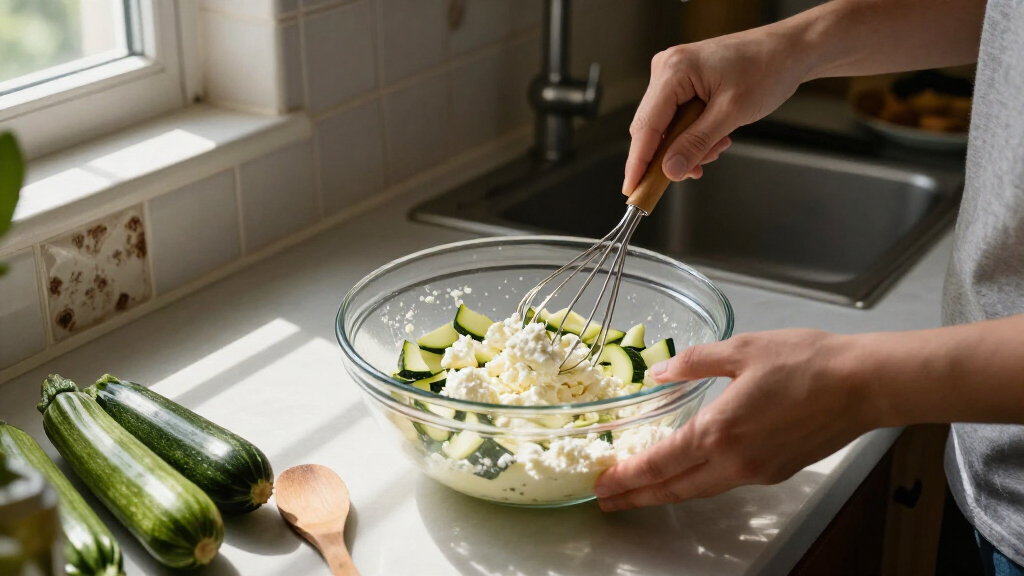
In a bowl, the eggs are beaten with salt, pepper and the grated cheese. The ricotta is added in small spoonfuls and folded through the eggs — the recipe specifies folding rather than whisking fully smooth, so that small pockets of ricotta remain and melt during cooking, giving the frittata its signature softness. The cooled zucchini and herbs are folded in last. The mixture is poured into an oiled 20–22 cm non-stick or springform pan and cooked over low heat with a lid for 12–15 minutes, until the edges are set and the centre is just barely trembling. It is finished either by flipping with a plate or by sliding the pan under a hot grill (broiler) for 3–4 minutes to set the top. The frittata should rest for five minutes before slicing, which the recipe says makes it easier to cut and serve.
From a food-safety standpoint, the dish contains two major allergens: eggs and milk (ricotta and grated cheese). Because it is egg-based, the frittata should be cooked until the centre reaches at least 74 °C (165 °F) — visually, the centre should be fully set with no liquid egg remaining. Leftovers should be refrigerated within two hours and stored at or below 4 °C (40 °F), where the frittata keeps for up to three days; it can be eaten warm, at room temperature or cold, which is traditional for Italian frittate.
Why Home Cooks Keep Returning to It
The recipe’s appeal lies in its combination of low cost, speed and reliability. Zucchini is one of the cheapest and most widely available vegetables in Italian and European markets year-round, and ricotta is an inexpensive way to add protein and moisture to eggs without cream. The folding technique addresses the most common failure point in home frittatas — a rubbery, dense texture — which usually comes from overcooking or from beating the eggs too aggressively.
The dish also fits several practical eating patterns at once: it is naturally vegetarian and gluten-free (provided the grated cheese is certified gluten-free), works as a make-ahead item for packed lunches or picnics, and can be scaled down to two eggs for a single serving. Nutritionally, a portion supplies protein from eggs and ricotta alongside the vitamins and potassium of zucchini, while remaining moderate in calories compared with cheese-heavy baked dishes. For readers meal-planning on a budget, it is a template recipe: the same method accepts other vegetables such as spinach, peppers or cooked potatoes, making it a repeatable weekly staple rather than a one-off dish.
Products Worth Considering
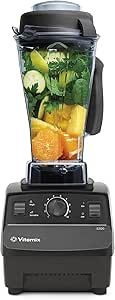
Vitamix 5200 Professional-Grade Blender, 64 oz. Container, Black

Le Creuset Enameled Cast Iron Round Dutch Oven, 5.5 Qt, Flame

De'Longhi Linea Classic Espresso Machine with Adjustable Milk Frother
As an affiliate, we earn on qualifying purchases.
Where the Frittata Fits in Italian Cooking
The frittata is a longstanding fixture of Italian home cooking, historically a frugal dish designed to use up leftovers — cooked vegetables, bits of cheese, pasta remains. Unlike the French omelette, which is folded and served soft and runny, the Italian frittata is cooked slowly, round and open-faced, and is traditionally served at room temperature rather than hot from the pan.
Zucchini-and-egg combinations appear across regional Italian cooking, particularly in spring and summer when courgettes are at their peak. The ricotta-enriched version reflects a broader trend in recent years among Italian food publishers and recipe bloggers, who increasingly promote soffice (extra-soft) variants of classic dishes — soft cakes, soft focaccia, soft frittate — by adding dairy and using covered, low-heat cooking. The covered-lid method mirrors the traditional torta in padella (pan cake) technique used in northern and central Italy, where a skillet frittata is steamed gently under a lid before being flipped or finished under the grill.
“Fold the ricotta into the beaten eggs with a spoon rather than whisking: the small lumps melt during cooking and keep the frittata soft.”
— The recipe’s instructions (as published in Italian food media)
Variations and Points of Debate
Published versions of the recipe differ on several details, and there is no single authoritative method. Some specify a pinch of baking powder or a splash of milk for extra fluffiness; others insist neither is needed if the ricotta is folded in correctly. Cooking times vary between 10 and 18 minutes depending on pan size and stove, so the visual cues — set edges, just-trembling centre — matter more than the clock.
It is also not universally agreed whether the frittata should be flipped on the stove or finished under the grill; flipping risks breaking a soft frittata, while grilling requires an oven-safe pan handle. The exact provenance of the viral ‘soffice’ version is unclear: similar recipes circulate across multiple Italian food blogs and publisher feeds without a single named original author. Finally, the stated number of servings (four) assumes the frittata is one of several dishes; as a standalone main course with bread and salad, it may realistically serve two to three.
Making It Your Own
For readers planning to try the recipe, the practical next steps are straightforward: drain the ricotta in a sieve for 20–30 minutes beforehand if it appears watery, salt the zucchini lightly during cooking rather than only at the end, and test doneness with a skewer or thermometer at the centre. Leftovers can be refrigerated for up to three days and are traditionally served at room temperature. Cooks looking to adapt the template can substitute seasonal vegetables as they become available — asparagus in spring, peppers in late summer — while keeping the same egg, ricotta and covered-pan method.
Key Questions
How do I keep the frittata soft instead of rubbery?
Cook over low heat with a lid, fold the ricotta in rather than whisking it smooth, and remove the frittata from the heat while the centre still barely trembles. Overcooking is the main cause of a dense, rubbery texture.
Can I make it ahead and eat it cold?
Yes. Italian frittate are traditionally served warm or at room temperature. Refrigerate within two hours of cooking, store at or below 4 °C (40 °F), and consume within three days.
Does the recipe contain allergens?
Yes: it contains eggs and milk (ricotta and grated cheese). It is naturally gluten-free as written, but check that the grated cheese is certified gluten-free if that matters for your household.
Can I bake it in the oven instead of on the stove?
Yes. Pour the mixture into a greased 20–22 cm pan and bake at 180 °C (350 °F) for about 25–30 minutes until set and lightly golden. The result is slightly drier than the covered-pan version but easier to manage.
How do I know when the frittata is fully cooked?
The centre should be set with no liquid egg visible; a skewer inserted in the middle should come out clean. For certainty, the internal temperature should reach at least 74 °C (165 °F).
Source: rss