TL;DR

Get kitchen staples and gadgets delivered free with Prime
- Fast, free delivery on millions of items
- Prime Video, Amazon Music and more included
- Member-only deals all year
This article explains how to make authentic Sicilian granita at home, emphasizing the importance of flavor concentration, texture, and scraping schedule. Recipes for coffee, almond, and lemon flavors are provided, along with tips for achieving regional authenticity. For more ideas, see this detailed guide.
Homemade Sicilian granita can now be made with simple kitchen tools and ingredients, according to a recent detailed guide from Mad Tasting. The process involves preparing a strongly flavored, slightly oversweetened base, then freezing and scraping it into moist, crystalline textures, as detailed in the original analysis. This approach allows home cooks to replicate the regional flavors of coffee, almond, and lemon granita, which are traditionally enjoyed in Sicily for breakfast or dessert. The key is in choosing concentrated flavors, using enough sugar, and scraping on schedule to achieve the signature texture that distinguishes true Sicilian granita from icy or overly processed versions. Learn more about traditional methods in this comprehensive article.
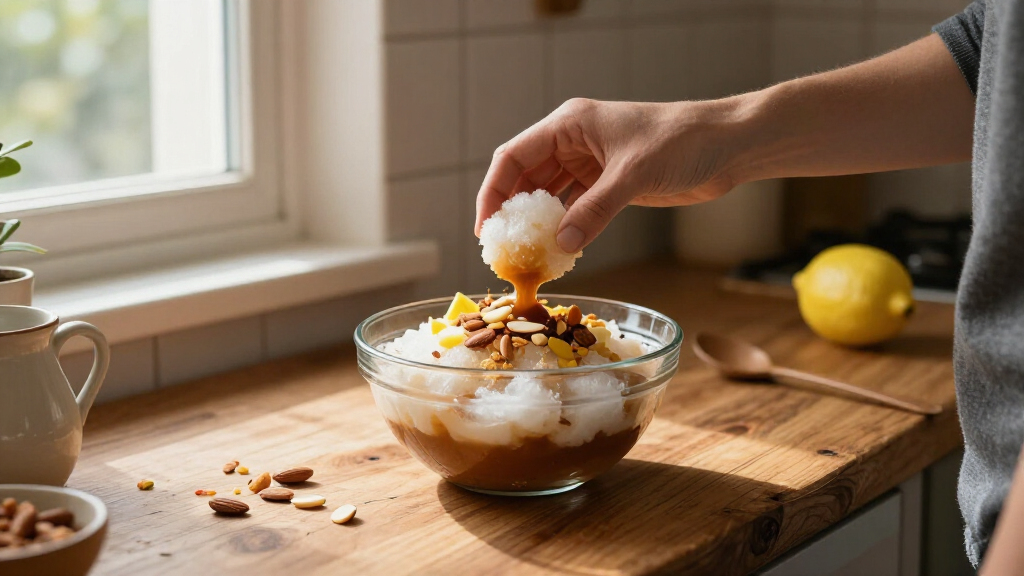
The process begins with creating a flavor base: for coffee, 500 ml of strong espresso or moka coffee is dissolved with 90–120 g of sugar while hot, then cooled fully before freezing. For almond, 500 ml of water is mixed with 180–220 g of almond paste, which provides essential fat and solids for texture. Lemon granita requires 400 ml of water, 100–130 g of sugar, and 120–150 ml of freshly squeezed lemon juice, added after cooling the syrup to preserve its floral aroma. The mixture is poured into a shallow metal pan and frozen. Every 30 minutes, the surface is scraped with a fork to break up the ice crystals and promote the formation of moist, small crystals, a process that takes about 3-4 hours.
Flavor concentration and sugar levels are crucial. For coffee, a slightly sweeter base than the desired final taste ensures the crystals remain soft and scoopable. Almond granita benefits from additional body provided by the paste, while lemon must be added after the syrup cools to maintain its fragrance. The texture is achieved by carefully timing the scraping process, which prevents the mixture from freezing into a hard block or a dry mound of ice. Practical tips include tasting the mixture before freezing to adjust sweetness and using a digital scale for precision, as small differences in sugar can alter the final consistency.
Why Authenticity and Technique Matter for Home Granita
Recreating authentic Sicilian granita at home allows enthusiasts to experience regional flavors and textures that are often lost with commercial products. The process emphasizes flavor concentration, proper freezing, and scraping, which are essential to achieve the characteristic moist, crystalline texture that defines true granita. This approach also connects home cooks to Sicilian culinary traditions, where granita is a staple for breakfast and social gatherings. Mastering these techniques ensures that homemade granita is not just icy but a flavorful, spoonable treat that respects regional authenticity, offering a taste of Sicily regardless of location.
As an affiliate, we earn on qualifying purchases.
Traditional Methods and Regional Variations of Sicilian Granita
Sicilian granita developed from older methods that used mountain snow or stored ice to chill sweetened flavorings. It has long been a regional specialty, with variations across the island. In Catania and Messina, granita often appears smoother and creamier, while other areas feature larger, brighter crystals. The defining characteristic remains the small, moist crystals that arrive on the spoon as a result of careful freezing and scraping. Historically, granita was a way to enjoy cold, flavored treats during hot Sicilian summers, and its preparation has evolved but still relies on the core principles of flavor concentration and texture control. Modern recipes adapt these traditions using household equipment, making the process accessible to home cooks.
“Granita developed in Sicily from older methods that used mountain snow or stored ice to chill sweetened flavorings. Its defining quality is a soft, spoonable texture made from countless small ice crystals.”
— Mad Tasting
Remaining Questions About Home Granita Techniques
While the guide provides detailed formulas and techniques, some variables such as the precise influence of different coffee roasts, almond paste brands, or citrus varieties on texture and flavor are still being explored. The optimal timing for scraping in different freezer models, and how to rescue batches that freeze too hard or too soft, remain areas for further experimentation. Additionally, regional preferences in texture and flavor intensity suggest that personal adjustments may be necessary for perfect results, but specific guidelines for these variations are still developing.
Next Steps for Home Cooks and Enthusiasts
Home cooks are encouraged to experiment with the provided formulas, adjusting sugar and flavor intensity based on their ingredients and preferences. Future developments may include detailed troubleshooting tips for common issues like over-hardening or inadequate crystal formation. Cooks can also explore incorporating regional variations or additional flavors, such as pistachio or strawberry, following similar principles. As more people share their results, community feedback will refine best practices for consistently making authentic Sicilian granita at home. The next step is to perfect the scraping schedule and flavor balance for individual tastes and equipment.
Key Questions
Can I use regular ice or ice cubes instead of freezing in a shallow pan?
No, traditional granita requires a shallow pan to promote rapid, even freezing and easy scraping. Using regular ice cubes won’t produce the small, moist crystals needed for authentic texture.
How do I rescue a batch that freezes too hard?
If your granita freezes too hard, let it sit at room temperature for 5-10 minutes, then scrape again. You can also re-blend it briefly with a fork or spoon to break up the crystals before serving.
Can I make granita ahead of time?
Yes, but it’s best to scrape and serve within a few hours of freezing. If stored longer, re-scrape or re-churn to restore the proper moist, crystalline texture.
Is dairy necessary for authentic Sicilian granita?
No, dairy is optional. For coffee, a layer of lightly sweetened whipped cream can be added on top, but traditional granita is dairy-free and relies on flavor concentration and texture.
What are common flavor pairings with Sicilian granita?
Popular pairings include brioche col tuppo, sweetened whipped cream, or fresh fruit. Coffee and lemon are classic flavors, but almond and pistachio are also traditional options.
Source: Mad Tasting
Columbus Day / Indigenous Peoples' Day Picks
long weekend sales
As an affiliate, we earn on qualifying purchases.