
🔍 Read the full analysis: Melanzane Alla Parmigiana: The September Eggplant Bake, Done The Southern Way on Mad Tasting

Get kitchen staples and gadgets delivered free with Prime
- Fast, free delivery on millions of items
- Prime Video, Amazon Music and more included
- Member-only deals all year
TL;DR
This article details the traditional Southern Italian preparation of melanzane alla parmigiana, emphasizing seasonal September ingredients, regional differences, and proper technique. It explains why resting the dish improves texture and how regional variations influence flavor.
In September, cooks across Southern Italy are preparing melanzane alla parmigiana using traditional methods that emphasize slow cooking, regional ingredients, and resting time for optimal texture. This dish, rooted in Southern Italian culinary tradition, remains a seasonal favorite, especially when eggplants and tomatoes are at their peak.
Melanzane alla parmigiana is a layered bake of cooked eggplant, concentrated tomato sauce, cheese, and basil. Unlike the heavily breaded American version, authentic Southern recipes focus on frying thin slices of eggplant without breading, then layering them with minimal sauce and cheese before baking until silky and cohesive.
September is considered an ideal month for this dish because the region still offers ripe, heavy eggplants and late-season tomatoes, which contribute to richer flavor. Cooks select medium-sized, firm eggplants, salt slices for 30-45 minutes to remove excess moisture, and use canned or fresh tomatoes based on ripeness. The technique involves cooking each component separately—frying eggplant, reducing sauce, draining mozzarella—to prevent excess moisture, as detailed in the original analysis.
The final step involves allowing the baked dish to rest for 20-30 minutes, enabling the layers to settle and develop a unified, silky texture. This resting period is crucial for achieving the characteristic smoothness and flavor integration that distinguishes authentic Southern-style melanzane alla parmigiana.
Melanzane alla Parmigiana: the silky Southern way
Peak-season eggplant, concentrated tomato, regional cheese, and basil become more than a layered bake. The defining technique is moisture control: cook each component separately, assemble with restraint, then let time finish the dish.
Ripe, heavy eggplants and late-season tomatoes deliver concentrated flavor as evenings begin to cool.
Thin eggplant slices are traditionally fried bare, creating tenderness without a heavy crumb coating.
A short pause after baking allows the layers to settle into a cohesive, silky whole.
Simple ingredients, disciplined preparation
Authentic Southern-style melanzane alla parmigiana depends less on abundance than on balance. Eggplant, sauce, cheese, and basil are each prepared to contribute flavor without flooding the finished bake.
Firm eggplant
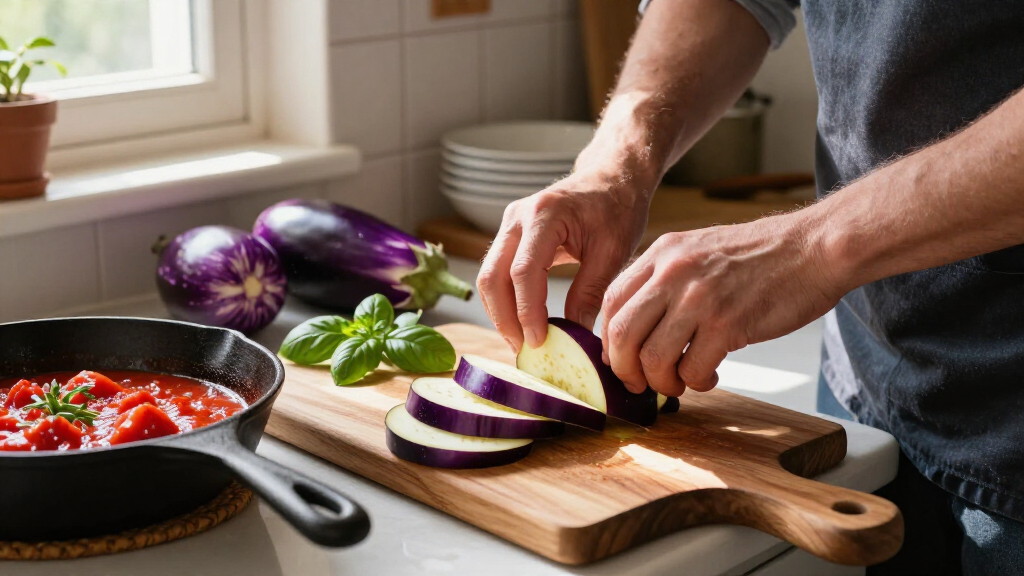
Choose medium-sized, heavy eggplants with taut skin. Slice thinly, salt, drain, and blot thoroughly before frying to remove excess surface moisture.
Reduced tomato
Use ripe fresh tomatoes or high-quality canned tomatoes. Cook the sauce until concentrated so it coats the layers instead of pooling beneath them.
Cheese with restraint
Well-drained fior di latte, caciocavallo, or a modest amount of Parmigiano may appear according to region, household, and availability.
Five steps to a cohesive bake
The components meet only after each has been prepared separately. This sequence protects texture, keeps the sauce vivid, and prevents the casserole from becoming watery or greasy.
Choose firm fruit
Medium size, substantial weight, and smooth skin.
Salt and blot
Release moisture for 30–45 minutes, then dry well.
Fry thin slices
Cook without breading until tender and lightly colored.
Build sparingly
Alternate eggplant with minimal sauce, cheese, and basil.
Bake, then rest
Let heat unite the layers; let time stabilize them.
minutes
Resting is part of the recipe
Fresh from the oven, the sauce, oil, and cheese remain highly mobile. Resting allows moisture to redistribute and the layers to set, producing cleaner slices, smoother texture, and more integrated flavor.
What changes the character of the dish?
Modern versions can still be delicious, but method determines texture. The traditional Southern approach favors fried, unbreaded eggplant and restrained layering rather than bulk or crunch.
| Decision point | Southern-style approach | Common Americanized version | Modern lighter adaptation |
|---|---|---|---|
| Eggplant coating | ✓No breading | ✗Flour, egg, or breadcrumbs | ✓Usually unbreaded |
| Primary cooking method | ✓Thin slices fried until tender | ~Fried with a substantial crust | ~Baked or grilled |
| Sauce quantity | ✓Reduced and applied sparingly | ✗Often abundant | ~Varies by recipe |
| Cheese profile | ✓Regional and restrained | ✗Frequently heavy and uniform | ~Reduced or substituted |
| Expected texture | ✓Silky, integrated, sliceable | ✗Crunchier, heavier, cheesier | ~Lighter but less yielding |
The symbols describe alignment with the traditional Southern technique, not whether a variation is enjoyable or valid for an individual cook.
One dish, many Southern accents
Naples and Sicily are central to the dish’s story, yet no single definitive origin or universal formula has been established. Local cheese, sauce consistency, and household technique keep the tradition flexible.
Campania
Fior di latte and tomato often lead, with soft dairy richness balanced by well-reduced sauce and tender fried eggplant.
Sicilia
Local cheese traditions and family methods shape the layers. One proposed linguistic root is the Sicilian word parmiciana, linked to overlapping slats.
Family tradition
Caciocavallo, Parmigiano, sauce thickness, and frying style may shift from kitchen to kitchen without erasing the dish’s Southern identity.
The traditional texture profile
The intended effect is harmony: no single layer should overpower the eggplant or release enough moisture to break the structure.
Seasonality changes the equation
September sits at a useful intersection: late-summer produce can still be full-flavored, while cooler evenings make a slow, layered bake especially welcome.
Ripe produce, cooler nights
Heavy eggplants provide flesh and structure. Late tomatoes contribute sweetness and acidity. The oven turns both into a comforting bridge between summer and autumn.
The September flavor window
Produce quality varies by region and weather, but the traditional seasonal target is ripe—not overgrown—eggplant paired with tomatoes concentrated enough to need little correction.
Peak ingredients
Firm eggplant and flavorful tomato establish the foundation.
Separate cooking
Draining, frying, reducing, and drying control moisture.
Restrained layers
Minimal sauce and cheese keep eggplant at the center.
Rested cohesion
The finished bake settles into a unified, silky texture.
Answers for the home kitchen
The central principles are stable even when ingredients change: remove excess water, build thin layers, use concentrated sauce, and give the baked dish time to settle.
Can the eggplant be baked or grilled?
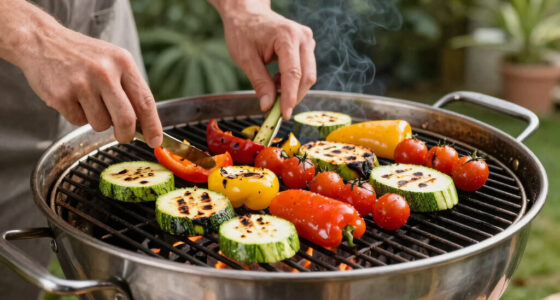
Yes. Both methods reduce oil use, though they produce a lighter, less silky texture than traditional frying.
Are canned tomatoes acceptable?
Yes. High-quality canned tomatoes, including San Marzano DOP, can yield a concentrated sauce when fresh tomatoes lack peak flavor.
Which cheeses are traditional?
Fior di latte, caciocavallo, and Parmigiano may all appear. The choice reflects locality, household preference, and availability.
How is excess moisture prevented?
Salt and drain the eggplant for 30–45 minutes, blot it thoroughly, reduce the sauce, and drain fresh mozzarella before assembly.
Why wait before serving?
A 20–30 minute rest lets the layers settle, redistributes moisture, integrates flavor, and makes the finished dish easier to slice cleanly.
Authenticity is a family map, not a fixed border
Regional cheese choices, sauce thickness, frying details, and modern baked versions remain subjects of variation rather than settled rules. Documenting household recipes and local practice is essential to preserving the dish’s living culinary history.
Why Authentic Southern Melanzane alla Parmigiana Matters
This dish exemplifies regional Italian cooking rooted in seasonal produce, simple techniques, and regional cheese varieties. Understanding its authentic preparation helps preserve culinary traditions and offers a balanced, flavorful alternative to Americanized versions. It also highlights how regional ingredients and methods influence flavor and texture, making the dish a reflection of local culinary identity rather than a fixed recipe.
For home cooks and food enthusiasts, mastering these techniques ensures a richer, less greasy result that celebrates the produce of September and regional flavors, fostering appreciation for Southern Italian culinary heritage.
As an affiliate, we earn on qualifying purchases.
Regional Roots and Seasonal Timing of Melanzane alla Parmigiana
While often associated with Naples and Sicily, melanzane alla parmigiana has no single definitive origin. Food historians suggest the name may derive from Parmigiano cheese, the cooking style, or regional dialects such as Sicilian parmiciana, referring to overlapping layers. Eggplant, introduced to Europe via Arab trade, became a staple in Southern Italy, where local varieties and regional cheeses like fior di latte and caciocavallo shaped different versions of the dish.
September is a traditional time for preparing the dish because the region’s late-summer harvest produces ripe, heavy eggplants and tomatoes. These ingredients are at their peak flavor, and the cooler evenings make baking a comforting choice. The technique of frying and layering is consistent across regions, but ingredient choices—such as cheese type and sauce consistency—vary by locale and family tradition.
Understanding regional differences enriches appreciation for the dish, which remains a flexible, family-oriented recipe rather than a rigid standard.
Unresolved Aspects of Regional Variations and Modern Adaptations
While the core principles of Southern Italian melanzane alla parmigiana are clear, regional variations—such as the choice of cheese, sauce thickness, and frying technique—continue to differ among families and localities. It is not yet confirmed whether specific variations are more authentic or traditional, as recipes are passed down informally. Additionally, modern adaptations, such as baking without frying or using different cheeses, are gaining popularity but lack widespread consensus on authenticity.
Further research is needed to document regional differences comprehensively and to understand how contemporary cooks adapt the dish while maintaining its traditional essence.
Next Steps for Home Cooks and Culinary Historians
Food enthusiasts and home cooks are encouraged to experiment with regional ingredients and techniques, such as selecting specific regional cheeses or adjusting sauce reduction times. Culinary historians may focus on documenting regional variations and family traditions to preserve authentic methods. Additionally, chefs might develop new recipes that honor traditional principles while exploring modern dietary preferences, such as baked or vegetarian versions.
In the upcoming months, regional markets and culinary festivals may feature demonstrations and tastings of different melanzane alla parmigiana styles, further enriching understanding and appreciation of this regional classic.
Key Questions
Why is resting the baked dish important?
Resting the melanzane alla parmigiana for 20-30 minutes allows the layers to settle and the flavors to meld, resulting in a silky, cohesive texture and better slicing.
Can I make this dish without frying the eggplant?
Yes, some modern recipes bake or grill eggplant slices to reduce oil use, but frying traditionally creates the tender, silky texture characteristic of authentic Southern versions.
What cheeses are traditionally used in Southern Italian melanzane alla parmigiana?
Common regional cheeses include fior di latte (fresh mozzarella), caciocavallo, and occasionally Parmesan cheese, depending on family tradition and regional availability.
Is canned tomato sauce acceptable for making the dish?
Yes, high-quality canned tomatoes like San Marzano DOP often produce more concentrated, flavorful sauce, especially when fresh tomatoes are not at their peak in September.
What is the best way to prevent excess moisture during preparation?
Salting eggplant slices and letting them drain for 30-45 minutes helps remove excess water, and thoroughly blotting them before frying prevents spitting and sogginess.
Source: Mad Tasting
Halloween Picks
halloween
As an affiliate, we earn on qualifying purchases.