

Before performing a line check, you should thoroughly inspect the electrical system and protective devices. Check wiring for damage, corrosion, or wear, and guarantee all connections are secure. Confirm circuit breakers and fuses are properly rated and in the correct position, with no signs of overheating or tripping. Use test equipment to verify instrument accuracy, and look for physical signs of issues. Continuing further will help you master a detailed pre‑service inspection process.
Key Takeaways
- Verify wiring integrity, looking for damage, corrosion, or wear in electrical circuits.
- Ensure circuit breakers are properly seated, not tripped, and functioning correctly.
- Check calibration of critical instruments like altimeters and airspeed indicators against known standards.
- Inspect electrical panels for secure connections, signs of overheating, corrosion, or physical damage.
- Confirm all protective devices are correctly rated and operational to ensure system safety and reliability.
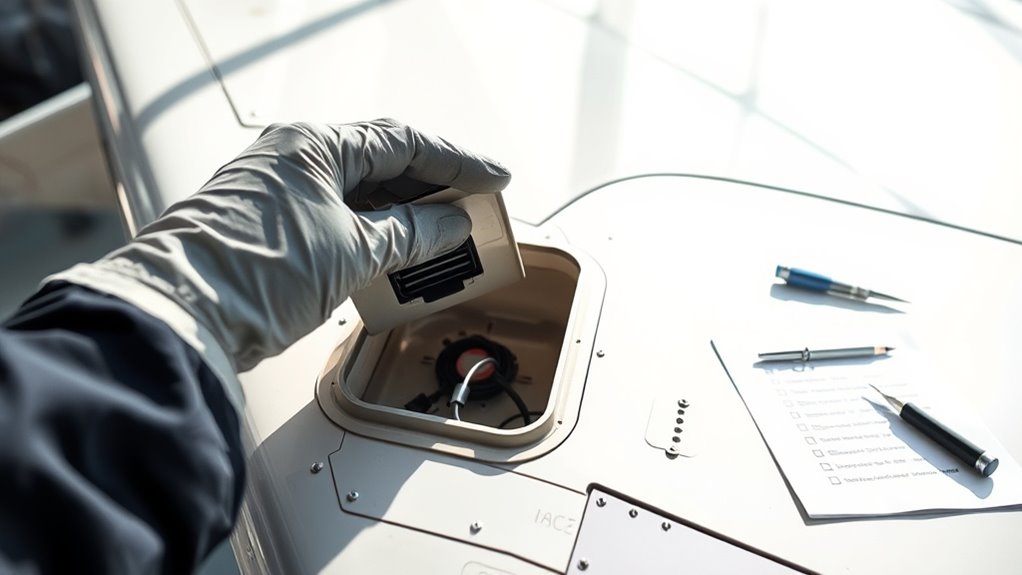
A line check routine is a essential process that guarantees all aircraft systems and controls are functioning correctly before flight. It’s your last line of defense in ensuring safety and operational readiness. During this routine, you systematically inspect critical systems, focusing on circuit safety and equipment calibration, to prevent any issues that could compromise the flight. Circuit safety is paramount; you need to verify that all wiring, circuit breakers, and protective devices are in proper condition, properly seated, and free from damage or corrosion. Faulty wiring or tripped circuit breakers can lead to system failures mid-flight, so paying close attention here is necessary. You should also confirm that circuit protection devices are correctly rated and functioning as intended, preventing overloads that could cause electrical fires or system shutdowns. Regular maintenance checks on electrical components help ensure ongoing system reliability.
Next, you turn your focus to equipment calibration. Proper calibration ensures that instruments and controls display accurate readings, which is essential for safe operation. You check that altimeters, airspeed indicators, and navigation instruments are calibrated according to manufacturer specifications. Miscalibrated equipment can give false readings, leading to navigational errors or unsafe flight conditions. When inspecting calibration, you compare instrument readings against known references or standards, and if discrepancies are found, recalibrate or document the issue for maintenance. This step helps maintain the integrity of the aircraft’s data systems and ensures that all controls respond accurately to your inputs.
Your inspection of circuit safety and equipment calibration isn’t a quick glance; it requires careful, deliberate checks. You systematically go through each electrical panel, verifying that all connections are secure and that there are no signs of overheating, corrosion, or damage. You also inspect fuses and circuit breakers, ensuring they are in the correct position and have not been tripped or damaged. When checking calibration, you use certified test equipment to validate the readings of critical instruments, making adjustments if necessary. This process not only prevents potential electrical issues but also guarantees that all measurement devices provide reliable data during flight.
Frequently Asked Questions
How Often Should the Line Check Routine Be Performed?
You should perform the line check routine regularly based on your inspection frequency and maintenance scheduling. Typically, it’s recommended to do this before each service to guarantee safety and proper functioning. Additionally, schedule thorough inspections at intervals specified by manufacturer guidelines or regulatory standards. Consistent checks help catch issues early, prevent breakdowns, and uphold peak performance, making routine inspections an essential part of your maintenance plan.
What Tools Are Essential for a Thorough Line Check?
Ever wondered what tools are crucial for a thorough line check? You’ll need a calibrated sensor to guarantee accurate readings and reliable leak detection, helping you spot issues early. A pressure gauge is essential for testing system integrity, while a flashlight helps inspect hard-to-see areas. A digital multimeter can verify electrical connections, and calibration tools make certain sensors function correctly. These tools keep your system safe and compliant, preventing costly failures down the line.
Are There Safety Precautions to Consider During Inspection?
Yes, you should always wear personal protective equipment, like gloves and goggles, to protect yourself during inspection. Make sure to identify hazards such as leaks, damaged parts, or electrical issues before proceeding. Stay alert and follow safety protocols, including proper grounding and confirming equipment is de-energized. By doing so, you minimize risks and ensure a safe, thorough line check, safeguarding both yourself and the system.
How Do Environmental Conditions Affect the Line Check Process?
Environmental conditions, especially ambient factors and weather impacts, directly influence your line check process. Harsh conditions like rain, snow, or extreme heat can obscure visual inspections or cause equipment to behave unpredictably. Wind might shift components or debris, while cold temperatures can affect lubrication or material flexibility. You must adapt your routine, allowing extra time and caution, ensuring safety and accuracy despite these weather impacts that challenge your ability to perform thorough, reliable checks.
What Are Common Signs of Equipment Malfunction During Inspection?
You should look for visual indicators like leaks, corrosion, or loose connections that signal equipment issues. Audible alerts, such as alarms or beeps, also warn you of malfunctions. If you notice any abnormal sounds or visual signs during inspection, it’s a clear sign the equipment may be malfunctioning. Address these issues promptly to guarantee safety and proper operation before service begins. Always stay attentive to both visual and audible cues.
Conclusion
By following this line check routine, you guarantee your aircraft’s safety is as solid as a mountain. Think of it as your shield against unseen dangers, guarding every flight like a trusted guardian. Remember, a thorough inspection isn’t just a task; it’s the silent guardian of countless journeys. Stay vigilant, stay prepared, and let your routine be the steady heartbeat that keeps every flight safe and sound.