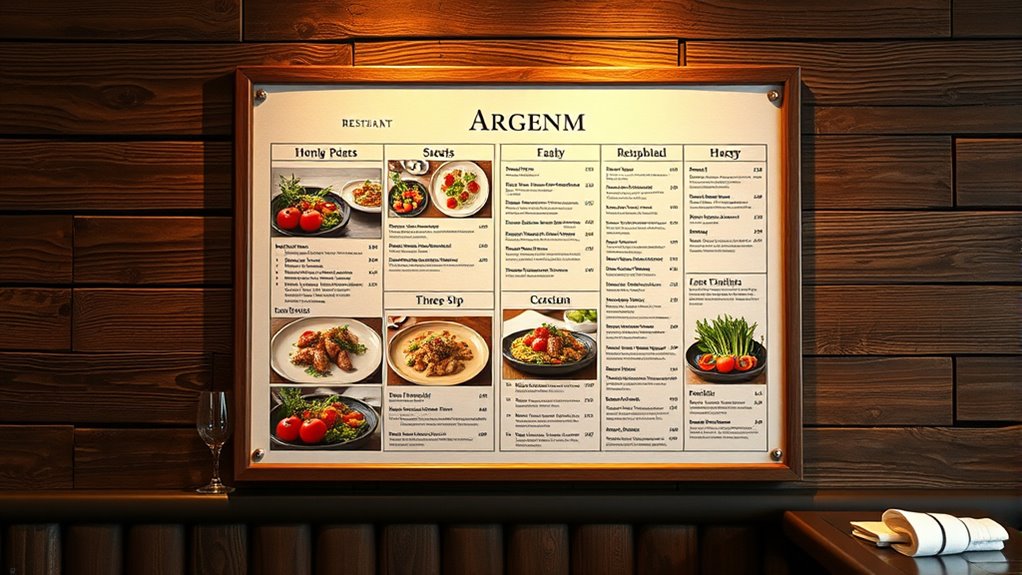

To create effective menus and boards, focus on compelling food photography that uses natural light, vibrant colors, and appealing angles to showcase freshness and details. Pair these visuals with persuasive, descriptive copy that highlights unique qualities, ingredients, and brand story. Consistency in style reinforces your identity and builds trust. Combining attractive visuals with clear, enticing words turns your menu into a powerful storytelling tool. Keep exploring more tips to elevate your branding even further.
Key Takeaways
- Use bright, natural lighting to showcase true colors and textures of dishes in photos.
- Incorporate consistent brand colors, themes, and tone to reinforce visual identity across menus and boards.
- Write descriptive, sensory language highlighting unique features like freshness, secret recipes, or sourcing.
- Arrange ingredients neatly with vibrant garnishes to create a compelling visual story that stimulates cravings.
- Combine high-quality imagery with clear, concise copy to craft a cohesive, emotionally engaging brand narrative.
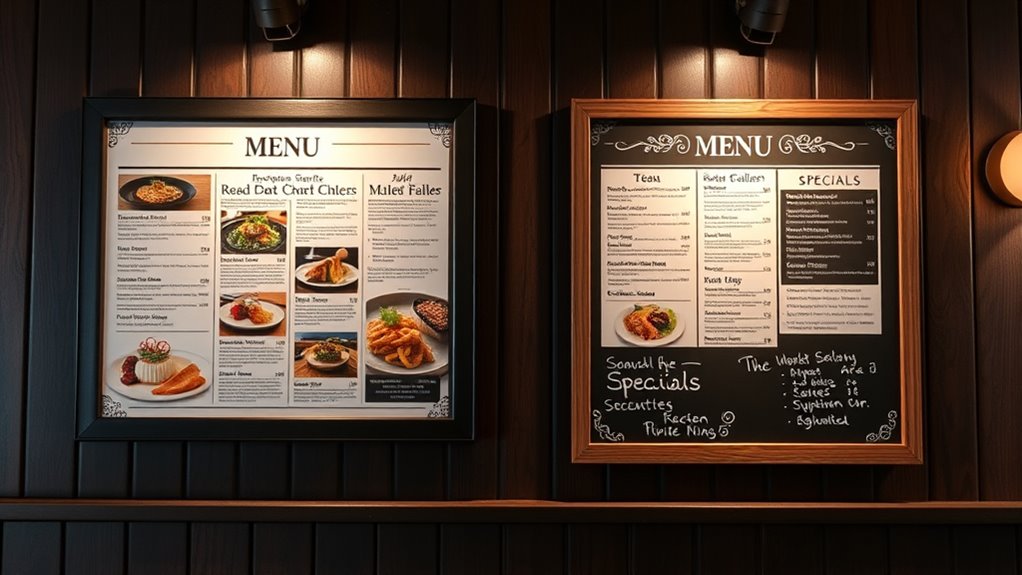
Are you unsure how to create compelling photos and copy that effectively communicate your message? When it comes to menus and boards, your goal is to catch attention quickly and convey what makes your offerings unique. To do that, you need to focus on food presentation and brand messaging. Food presentation isn’t just about making dishes look appealing; it’s about creating a visual story that draws customers in and makes them crave what’s on offer. Pay attention to how you arrange ingredients, use garnishes, and select plating styles that highlight freshness and quality. Bright, vibrant colors can make dishes pop in photos, while clean, neat arrangements suggest professionalism and care. Remember, the way you present your food influences how customers perceive its taste and quality before they even take a bite.
Your photos should be sharp, well-lit, and styled to reflect your brand’s personality. Natural light often works best, emphasizing the true colors and textures of your dishes. Use angles that showcase the most enticing elements—sometimes a top-down shot captures the overall presentation, while a close-up highlights details and textures. Consistency in style across your photos helps reinforce your brand identity, making your menu or board instantly recognizable. Incorporate your brand’s colors, themes, and tone into the visuals to create a cohesive look that aligns with your overall messaging.
Speaking of brand messaging, every photo and piece of copy should work together to tell your story. Use descriptive language that evokes senses and emotions—words like “crispy,” “succulent,” or “richly flavored” stimulate cravings and give customers a vivid idea of what to expect. Your copy should complement the photos by emphasizing what makes your dishes special, whether it’s locally sourced ingredients, a secret recipe, or a commitment to sustainability. Clear, concise descriptions help customers quickly understand their options, while highlighting what sets your brand apart. Consistency in tone and messaging across your menu and boards builds trust and reinforces your brand’s identity. Additionally, understanding visual storytelling can elevate your presentation by creating an emotional connection with your audience.
Ultimately, effective food presentation combined with compelling copy creates a powerful visual and verbal narrative that resonates with your audience. When you pay attention to these elements, you help customers see, taste, and feel what your brand stands for. By aligning your food presentation with your brand messaging, you craft a memorable experience that encourages patrons to choose you over competitors. Your menu and boards become more than just lists—they become tools to communicate your story, lure customers in, and turn their curiosity into loyal patronage.
Frequently Asked Questions
How Often Should Menu Photos Be Updated for Freshness?
You should update your menu photos every 3 to 6 months to keep them vibrant and appealing. Consider the menu photo renewal rate in relation to your seasonal menu updates, so photos reflect current offerings. Regularly revitalizing images ensures customers see the latest dishes, boosting interest. Align your photo updates with seasonal changes or new menu items, creating a dynamic, inviting experience that encourages repeat visits.
What Are the Best Color Schemes for Menu Boards?
Think of your menu board as a canvas where color psychology paints the mood; choose warm tones like reds and yellows to energize or cool blues for calm. Aim for contrast balance—use dark text on light backgrounds or vice versa—to make your menu pop. Bright, harmonious schemes guide the customer’s eye effortlessly, inviting them to plunge into your offerings while ensuring readability remains sharp as a knife.
How Can I Make My Menu More Accessible Visually?
To make your menu more accessible visually, focus on contrast enhancement by choosing high-contrast color combinations, like dark text on a light background. Guarantee font legibility by selecting clear, easy-to-read fonts and maintaining a sufficient size for readability from a distance. Avoid cluttered layouts and use simple language, so your customers can quickly find what they need. These steps will improve overall visibility and accessibility for all customers.
Are There Legal Restrictions on Menu Wording or Images?
No, there aren’t any strict legal restrictions on menu wording or images, but you must respect menu copyright and image licensing. You can’t just copy someone else’s words or use images without permission, or you risk huge legal trouble. Always guarantee your menu content is original or properly licensed. Protect your business by understanding copyright laws and licensing requirements—when you follow these rules, you avoid costly legal pitfalls.
What Digital Tools Assist in Menu Photo and Copy Creation?
You can use digital tools like Canva, Adobe Spark, or Figma to assist in menu photo and copy creation. These platforms help you design menu layouts that guarantee branding consistency and professional visuals. They offer templates and editing features that simplify menu design, allowing you to focus on creating appealing images and clear copy. With these tools, you’ll easily produce cohesive menus that enhance your brand and attract customers.
Conclusion
Now, as you follow these photo and copy guidelines, you’ll notice your menus and boards come alive—drawing customers in just like that perfect moment when a photo feels just right. It’s no coincidence that clear, appealing images and inviting words create a connection. When you pay attention to these details, you’re not just showcasing your offerings; you’re inviting people to experience something memorable. Sometimes, the smallest touches make the biggest difference—like a smile that turns a visitor into a loyal customer.