
To build an effective equipment rollout plan, start by evaluating your current inventory and creating a detailed list of new equipment, ensuring seamless integration into your workflow. Coordinate closely with suppliers to meet delivery deadlines, and train your staff beforehand with hands-on sessions. Choose quieter times for installations, communicate clearly, and track progress with checklists. Establish feedback channels to improve the process continuously. Keep stepping through these strategies to discover how to make your rollout smoother and more efficient.

Get kitchen staples and gadgets delivered free with Prime
- Fast, free delivery on millions of items
- Prime Video, Amazon Music and more included
- Member-only deals all year
Key Takeaways
- Assess current inventory systems and create detailed equipment lists for seamless integration.
- Develop a comprehensive timeline, considering off-peak periods to minimize operational disruption.
- Train staff thoroughly beforehand with hands-on sessions and clear documentation.
- Coordinate closely with suppliers to ensure timely delivery and quality standards.
- Establish feedback mechanisms to monitor, refine, and improve equipment deployment continuously.
Launching new equipment in a restaurant requires careful planning to guarantee a smooth and efficient shift. When you’re expanding or upgrading your restaurant, the way you introduce new tools and machinery can make or break your operations. The key is to develop a structured equipment rollout plan that minimizes disruptions and maximizes staff readiness. To do that effectively, you need to focus on two critical aspects: inventory management and staff training.
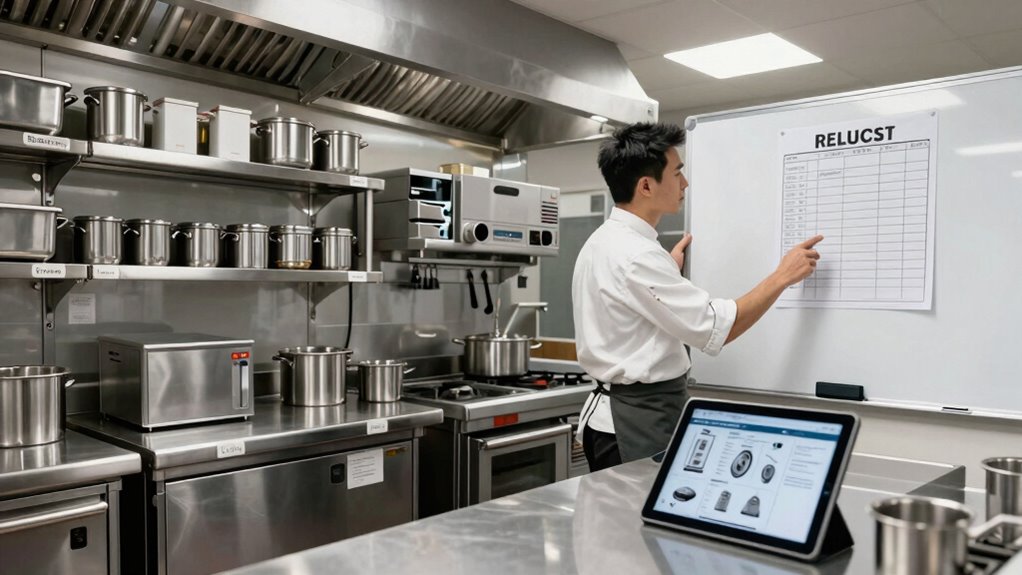
Start by assessing your current inventory management system. Before bringing in new equipment, you must know what you already have and how the new items will fit into your existing setup. Inventory management isn’t just about keeping track of supplies; it’s about ensuring your new equipment integrates seamlessly into your workflow. Create a detailed list of the equipment you plan to install, including models, serial numbers, and delivery timelines. This helps you avoid delays caused by missing parts or miscommunications. Proper inventory management also means coordinating with suppliers to ensure timely delivery and verifying that all equipment meets safety and quality standards before installation. Effective inventory management is essential for avoiding delays and ensuring a smooth transition. Additionally, implementing technology-enabled tracking systems can further improve accuracy and efficiency in managing your equipment inventory. Incorporating these systems can also enhance your overall asset management practices, leading to better planning and resource allocation. Moreover, leveraging digital tools can provide real-time updates and streamline communication among team members during the rollout process. Utilizing comprehensive planning techniques can also help anticipate potential challenges and prevent last-minute surprises.
Assess your inventory first to ensure smooth integration and prevent delays in your equipment rollout.
Once your inventory is organized, shift your focus to staff training. No matter how advanced or user-friendly your new equipment is, your team needs to understand how to operate it correctly and safely. Schedule training sessions well in advance of the rollout. You want your staff to feel confident using the new tools, so consider hands-on demonstrations, step-by-step guides, and Q&A sessions. Engage your team during training to identify potential issues and address questions early, which reduces the risk of errors once the equipment goes live. Remember, well-trained staff can troubleshoot minor problems, reducing downtime and preventing accidents.
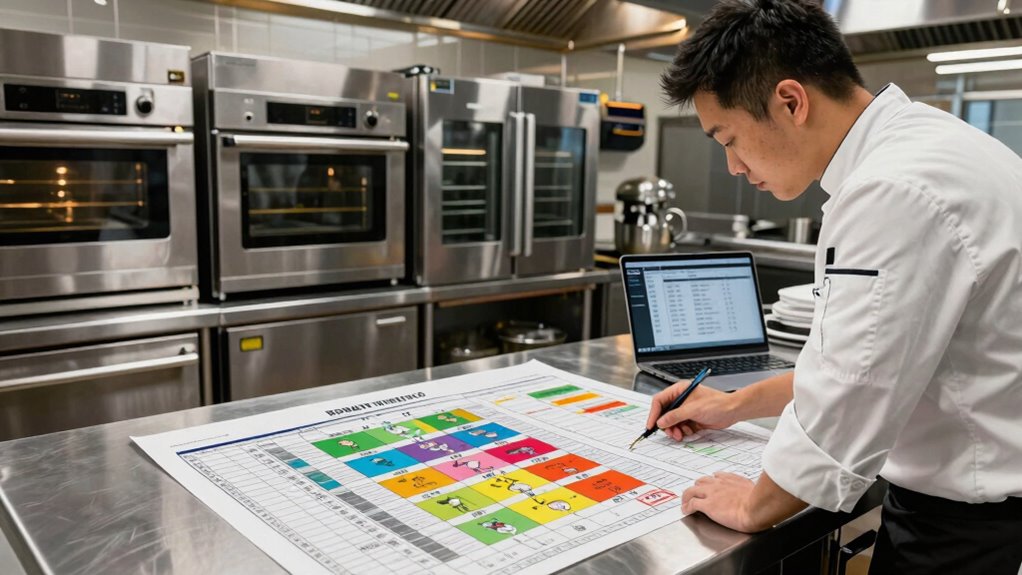
Timing is crucial in a rollout plan. Choose a date when your restaurant is less busy, giving your team ample time to familiarize themselves with the new equipment without the pressure of peak hours. During the installation, communicate clearly with your staff about what to expect and any temporary changes in workflow. Keep a detailed checklist to track progress and ensure nothing gets overlooked. After installation, schedule follow-up training or refresher sessions to reinforce proper usage and maintenance procedures.
Finally, establish a feedback loop. Encourage your team to share their experiences and report any issues with the new equipment. Use this input to refine your procedures and address problems swiftly. A successful equipment rollout isn’t just about the initial installation; it’s about building a system that supports ongoing learning and improvement. By paying close attention to inventory management and staff training, you’ll set your restaurant up for a smooth transition and long-term success.
restaurant equipment inventory management system
As an affiliate, we earn on qualifying purchases.
As an affiliate, we earn on qualifying purchases.
Frequently Asked Questions
How Do I Prioritize Equipment Purchases During Rapid Growth?
You should prioritize equipment purchases by focusing on essential items first, guaranteeing equipment budgeting aligns with your growth plans. Identify critical tools that support daily operations and plan for future expansion. During vendor selection, compare costs, quality, and reliability to get the best value. This approach helps you allocate resources wisely, avoid unnecessary expenses, and ensure your restaurant’s growth is supported by the right equipment at the right time.
What Are Common Pitfalls When Scaling Equipment for a Restaurant?
Did you know 60% of restaurant startups face operational hiccups due to poor equipment scaling? When scaling equipment, common pitfalls include neglecting vendor coordination, which causes delays, and misallocating the budget, leading to shortages or excess. To prevent these, plan early, establish clear communication channels with vendors, and allocate funds wisely. Proper oversight ensures smooth growth without costly setbacks or operational disruptions.
How Can I Ensure Staff Are Trained on New Equipment?
To guarantee staff are trained on new equipment, prioritize thorough staff training and seamless equipment onboarding. You should schedule hands-on training sessions, demonstrating proper use and safety procedures. Encourage questions and provide easy-to-access training materials. Regularly assess staff understanding, offering refresher courses as needed. By investing in all-encompassing training and onboarding, you ensure your team feels confident and competent with new equipment, minimizing errors and maximizing efficiency.
What Is the Ideal Timeline for Rolling Out New Equipment?
Rome wasn’t built in a day, and neither should your equipment rollout be. Typically, plan for a phased approach over 4-8 weeks, aligning with your equipment financing timeline. Start with priority areas, then coordinate vendor negotiations to guarantee timely deliveries. Allow buffer time for staff training and troubleshooting. This steady pace minimizes disruption, ensures smooth integration, and keeps your restaurant growing without missing a beat.
How Do I Manage Equipment Maintenance During Expansion?
You should proactively manage equipment maintenance during expansion by tracking each item’s equipment lifecycle and scheduling regular maintenance. Create a detailed maintenance schedule aligned with your expansion timeline, guaranteeing minimal downtime. Regular inspections prevent costly repairs and extend equipment lifespan. Keep detailed records to monitor performance, and coordinate maintenance tasks to avoid disrupting kitchen operations. This approach guarantees your equipment stays reliable and supports your growing restaurant’s success.
Conclusion
By following a strategic equipment rollout plan, you’ll set your restaurant up for success. Remember, proper planning can reduce costs by up to 30% and minimize downtime during setup. Staying organized and prioritizing essential equipment guarantees smooth operations and excellent customer experiences from day one. With a clear plan in place, you’ll be ready to grow confidently—so take the time now to map out your rollout and watch your restaurant thrive.
Fall Picks
fall essentials
As an affiliate, we earn on qualifying purchases.